
水通道蛋白1驱动的迁移独立于其他已知的不利因素,但在神经母细胞瘤中需要缺氧未分化细胞状态。
AQP1-Driven Migration Is Independent of Other Known Adverse Factors but Requires a Hypoxic Undifferentiated Cell Profile in Neuroblastoma.
作者信息
Pini Nicola, Huo Zihe, Kym Urs, Holland-Cunz Stefan, Gros Stephanie J
机构信息
Department of Pediatric Surgery, University Children's Hospital Basel, 4031 Basel, Switzerland.
Department of Clinical Research, University of Basel, 4031 Basel, Switzerland.
出版信息
Children (Basel). 2021 Jan 15;8(1):48. doi: 10.3390/children8010048.
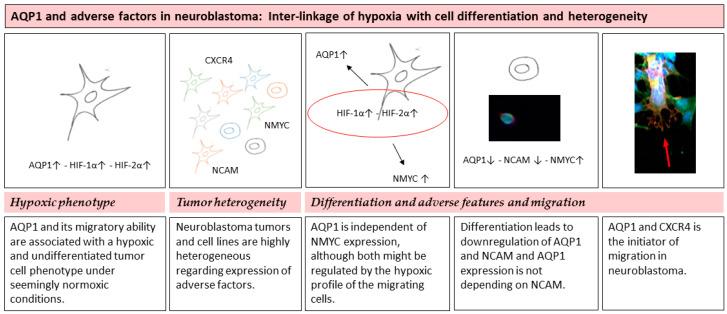
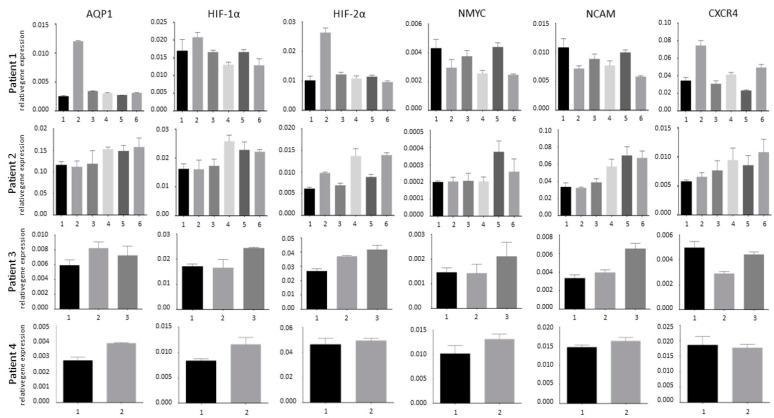
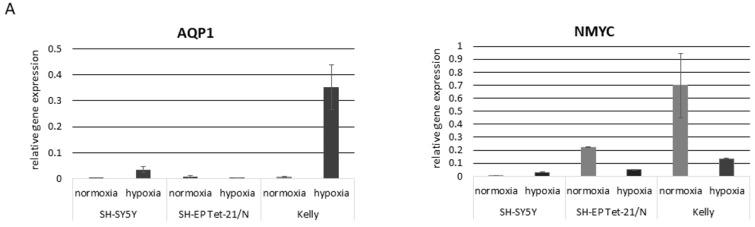
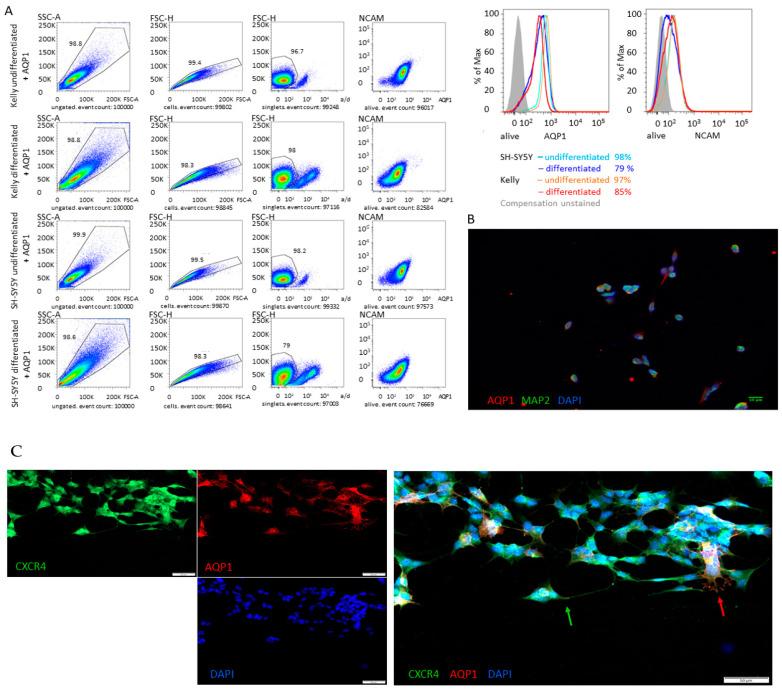
Neuroblastoma is a biologically very heterogeneous tumor with its clinical manifestation ranging from spontaneous regression to highly aggressive metastatic disease. Several adverse factors have been linked to oncogenesis, tumor progression and metastases of neuroblastoma including NMYC amplification, the neural adhesion molecule NCAM, as well as CXCR4 as a promoter of metastases. In this study, we investigate to what extent the expression of AQP1 in neuroblastoma correlates with changing cellular factors such as the hypoxic status, differentiation, expression of known adverse factors such as NMYC and NCAM, and CXCR4-related metastatic spread. Our results show that while AQP1 expression leads to an increased migratory behavior of neuroblastoma cells under hypoxic conditions, we find that hypoxia is associated with a reduction of NMYC in the same cells. A similar effect can be observed when using the tetracycline driven mechanism of SH-EP/Tet cells. When NMYC is not expressed, the expression of AQP1 is increased together with an increased expression of HIF-1α and HIF-2α. We furthermore show that when growing cells in different cell densities, they express AQP1, HIF-1α, HIF-2α, NMYC and NCAM to different degrees. AQP1 expression correlates with a hypoxic profile of these cells with increased HIF-1α and HIF-2α expression, as well as with NMYC and NCAM expression in two out of three neuroblastoma cell lines. When investigating cell properties of the cells that actually migrate, we find that the increased APQ1 expression in the migrated cells correlates with an increased NMYC and NCAM expression again in two out of three cell lines. Expression of the tumor cell homing marker CXCR4 varies between different tumor areas and between cell lines. While some migrated tumor cells highly express CXCR4, cells of other origin do not. In the initial phase of migration, we determined a dominant role of AQP1 expression of migrating cells in the scratch assay.
神经母细胞瘤是一种生物学特性高度异质的肿瘤,其临床表现从自发消退到具有高度侵袭性的转移性疾病不等。几种不利因素与神经母细胞瘤的肿瘤发生、进展和转移有关,包括NMYC扩增、神经粘附分子NCAM以及作为转移促进因子的CXCR4。在本研究中,我们调查了水通道蛋白1(AQP1)在神经母细胞瘤中的表达与诸如缺氧状态、分化、已知不利因素(如NMYC和NCAM)的表达以及与CXCR4相关的转移扩散等细胞因素变化之间的关联程度。我们的结果表明,虽然AQP1表达会导致神经母细胞瘤细胞在缺氧条件下迁移行为增加,但我们发现缺氧与同一细胞中NMYC的减少有关。当使用四环素驱动的SH-EP/Tet细胞机制时,也能观察到类似的效果。当NMYC不表达时,AQP1的表达会增加,同时缺氧诱导因子-1α(HIF-1α)和缺氧诱导因子-2α(HIF-2α)的表达也会增加。我们还表明,当细胞以不同的细胞密度生长时,它们对AQP1、HIF-1α、HIF-2α、NMYC和NCAM的表达程度不同。在三种神经母细胞瘤细胞系中的两种中,AQP1表达与这些细胞的缺氧特征相关,表现为HIF-1α和HIF-2α表达增加,以及与NMYC和NCAM表达相关。当研究实际迁移细胞的特性时,我们发现在三种细胞系中的两种中,迁移细胞中增加的AQP1表达再次与增加的NMYC和NCAM表达相关。肿瘤细胞归巢标记物CXCR4的表达在不同肿瘤区域和细胞系之间有所不同。虽然一些迁移的肿瘤细胞高度表达CXCR4,但其他来源的细胞则不表达。在迁移的初始阶段,我们在划痕试验中确定了迁移细胞的AQP1表达起主导作用。
 Zotero 插件