
探索氧化锌纳米颗粒(ZnO-NPs)在生物医学应用中的历程。
Exploring the Journey of Zinc Oxide Nanoparticles (ZnO-NPs) toward Biomedical Applications.
作者信息
Islam Fahadul, Shohag Sheikh, Uddin Md Jalal, Islam Md Rezaul, Nafady Mohamed H, Akter Aklima, Mitra Saikat, Roy Arpita, Emran Talha Bin, Cavalu Simona
机构信息
Department of Pharmacy, Faculty of Allied Health Sciences, Daffodil International University, Dhaka 1207, Bangladesh.
Department of Biochemistry and Molecular Biology, Faculty of Life Science, Bangabandhu Sheikh Mujibur Rahman Science and Technology University, Gopalganj 8100, Bangladesh.
出版信息
Materials (Basel). 2022 Mar 15;15(6):2160. doi: 10.3390/ma15062160.
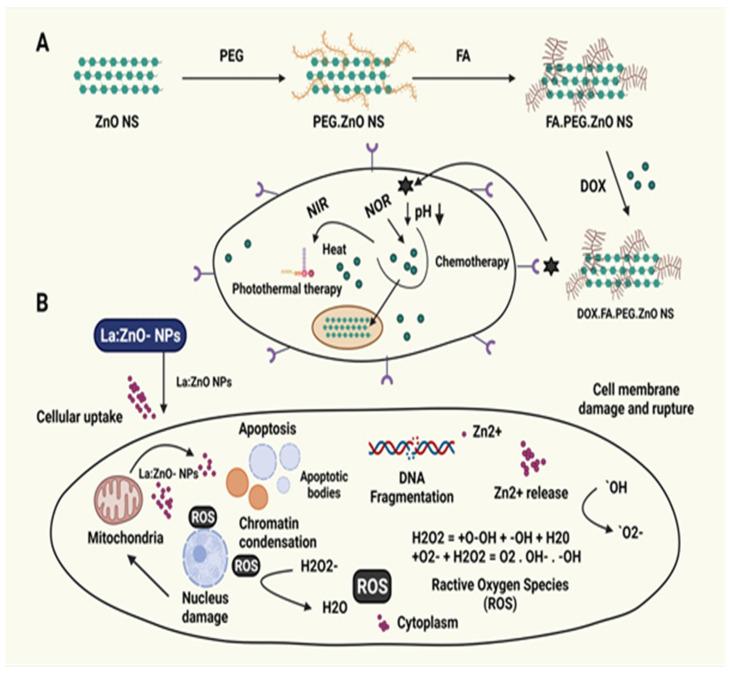
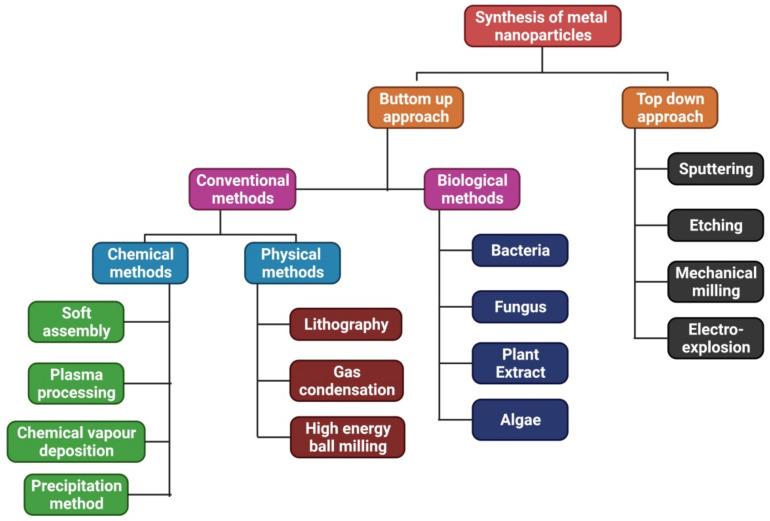
The field of nanotechnology is concerned with the creation and application of materials having a nanoscale spatial dimensioning. Having a considerable surface area to volume ratio, nanoparticles have particularly unique properties. Several chemical and physical strategies have been used to prepare zinc oxide nanoparticles (ZnO-NPs). Still, biological methods using green or natural routes in various underlying substances (e.g., plant extracts, enzymes, and microorganisms) can be more environmentally friendly and cost-effective than chemical and/or physical methods in the long run. ZnO-NPs are now being studied as antibacterial agents in nanoscale and microscale formulations. The purpose of this study is to analyze the prevalent traditional method of generating ZnO-NPs, as well as its harmful side effects, and how it might be addressed utilizing an eco-friendly green approach. The study's primary focus is on the potential biomedical applications of green synthesized ZnO-NPs. Biocompatibility and biomedical qualities have been improved in green-synthesized ZnO-NPs over their traditionally produced counterparts, making them excellent antibacterial and cancer-fighting drugs. Additionally, these ZnO-NPs are beneficial when combined with the healing processes of wounds and biosensing components to trace small portions of biomarkers linked with various disorders. It has also been discovered that ZnO-NPs can distribute and sense drugs. Green-synthesized ZnO-NPs are compared to traditionally synthesized ones in this review, which shows that they have outstanding potential as a potent biological agent, as well as related hazardous properties.
纳米技术领域关注具有纳米级空间尺寸的材料的创造和应用。纳米颗粒具有相当大的表面积与体积比,具有特别独特的性质。已经使用了几种化学和物理策略来制备氧化锌纳米颗粒(ZnO-NPs)。然而,从长远来看,在各种基础物质(如植物提取物、酶和微生物)中使用绿色或天然途径的生物方法可能比化学和/或物理方法更环保且更具成本效益。目前正在研究纳米级和微米级配方中的ZnO-NPs作为抗菌剂。本研究的目的是分析生成ZnO-NPs的普遍传统方法及其有害副作用,以及如何利用环保的绿色方法来解决这些问题。该研究的主要重点是绿色合成的ZnO-NPs的潜在生物医学应用。与传统生产的ZnO-NPs相比,绿色合成的ZnO-NPs的生物相容性和生物医学特性得到了改善,使其成为优秀的抗菌和抗癌药物。此外,这些ZnO-NPs与伤口愈合过程和生物传感组件结合时,有利于追踪与各种疾病相关的少量生物标志物。还发现ZnO-NPs可以分布和感知药物。本综述将绿色合成的ZnO-NPs与传统合成的ZnO-NPs进行了比较,结果表明它们作为一种有效的生物制剂具有出色的潜力以及相关的有害特性。




 Zotero 插件