
靶向蛋白激酶CK2可引发对牛冠状病毒感染的抗病毒活性。
Targeting of Protein Kinase CK2 Elicits Antiviral Activity on Bovine Coronavirus Infection.
作者信息
Ramón Ailyn C, Pérez George V, Caballero Evelin, Rosales Mauro, Aguilar Daylén, Vázquez-Blomquist Dania, Ramos Yassel, Rodríguez-Ulloa Arielis, Falcón Viviana, Rodríguez-Moltó María Pilar, Yang Ke, Perera Yasser, Perea Silvio E
机构信息
Molecular Oncology Group, Department of Pharmaceuticals, Biomedical Research Division, Center for Genetic Engineering and Biotechnology, Havana 10600, Cuba.
Department of Animal and Human Biology, Faculty of Biology, University of Havana, Havana 10400, Cuba.
出版信息
Viruses. 2022 Mar 7;14(3):552. doi: 10.3390/v14030552.
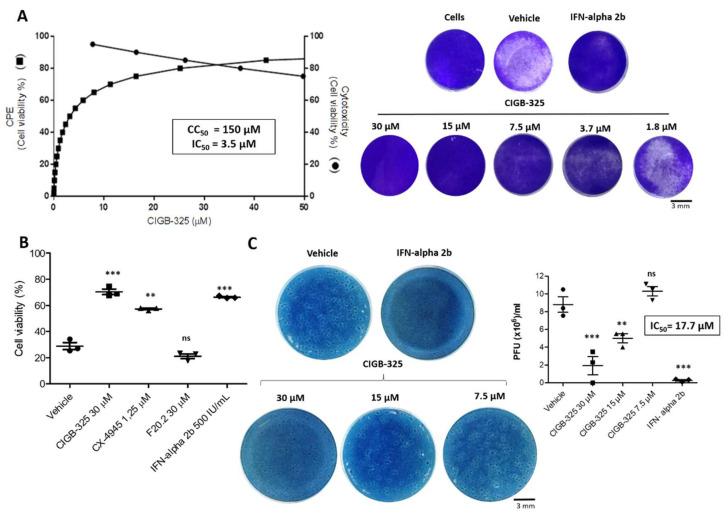
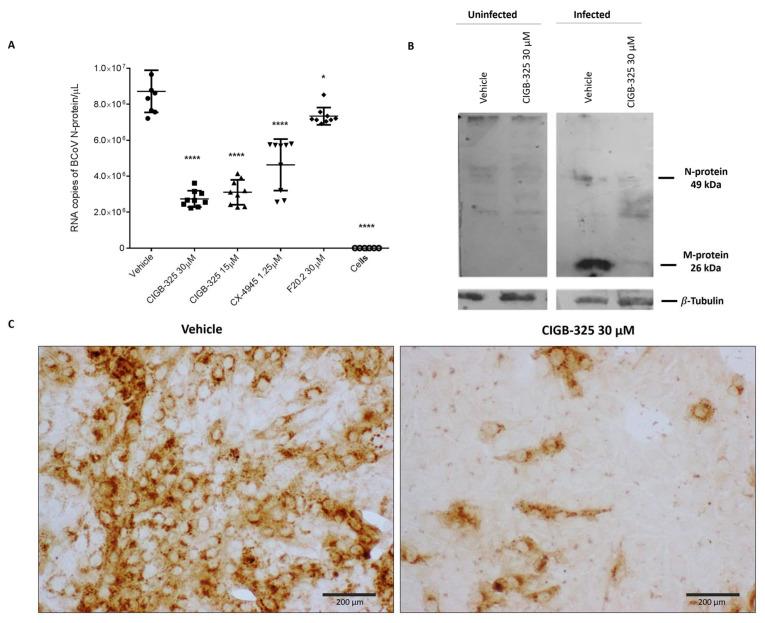
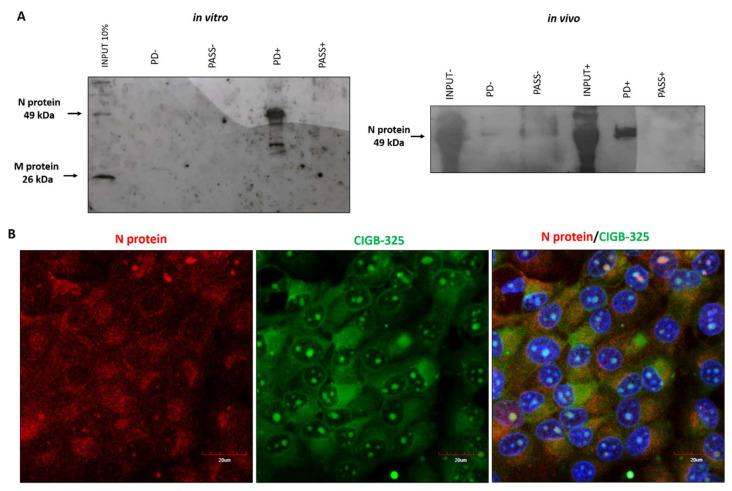
Coronaviruses constitute a global threat to the human population; therefore, effective pan-coronavirus antiviral drugs are required to tackle future re-emerging virus outbreaks. Protein kinase CK2 has been suggested as a promising therapeutic target in COVID-19 owing to the in vitro antiviral activity observed after both pharmacologic and genetic inhibition of the enzyme. Here, we explored the putative antiviral effect of the anti-CK2 peptide CIGB-325 on bovine coronavirus (BCoV) infection using different in vitro viral infected cell-based assays. The impact of the peptide on viral mRNA and protein levels was determined by qRT-PCR and Western blot, respectively. Finally, pull-down experiments followed by Western blot and/or mass spectrometry analysis were performed to identify CIGB-325-interacting proteins. We found that CIGB-325 inhibited both the cytopathic effect and the number of plaque-forming units. Accordingly, intracellular viral protein levels were clearly reduced after treatment of BCoV-infected cells, with CIGB-325 determined by immunocytochemistry. Pull-down assay data revealed the physical interaction of CIGB-325 with viral nucleocapsid (N) protein and a group of bona fide CK2 cellular substrates. Our findings evidence in vitro antiviral activity of CIGB-325 against bovine coronavirus as well as some molecular clues that might support such effect. Altogether, data provided here strengthen the rationale of inhibiting CK2 to treat betacoronavirus infections.
冠状病毒对人类构成全球威胁;因此,需要有效的泛冠状病毒抗病毒药物来应对未来再次出现的病毒爆发。由于在对该酶进行药理和基因抑制后观察到体外抗病毒活性,蛋白激酶CK2已被认为是治疗COVID-19的一个有前景的治疗靶点。在此,我们使用不同的体外病毒感染细胞实验,探究了抗CK2肽CIGB-325对牛冠状病毒(BCoV)感染的假定抗病毒作用。分别通过qRT-PCR和蛋白质印迹法测定该肽对病毒mRNA和蛋白质水平的影响。最后,进行免疫沉淀实验,随后进行蛋白质印迹和/或质谱分析,以鉴定与CIGB-325相互作用的蛋白质。我们发现CIGB-325既抑制了细胞病变效应,也抑制了空斑形成单位的数量。相应地,用免疫细胞化学法测定,在处理BCoV感染的细胞后,细胞内病毒蛋白水平明显降低。免疫沉淀实验数据揭示了CIGB-325与病毒核衣壳(N)蛋白以及一组真正的CK2细胞底物之间的物理相互作用。我们的研究结果证明了CIGB-325对牛冠状病毒具有体外抗病毒活性,以及一些可能支持这种作用的分子线索。总之,此处提供的数据强化了抑制CK2治疗β冠状病毒感染的理论依据。

 Zotero 插件