
miRNA 引导的葡萄糖和谷氨酰胺代谢重编程及其对实体瘤进展过程中细胞黏附/迁移的影响。
miRNA-guided reprogramming of glucose and glutamine metabolism and its impact on cell adhesion/migration during solid tumor progression.
机构信息
Molecular Biotechnology Center (MBC), University of Torino, Via Nizza, 52, 10126, Torino, Italy.
Department Molecular Biotechnology and Health Sciences, University of Torino, Via Nizza, 52, 10126, Torino, Italy.
出版信息
Cell Mol Life Sci. 2022 Mar 29;79(4):216. doi: 10.1007/s00018-022-04228-y.
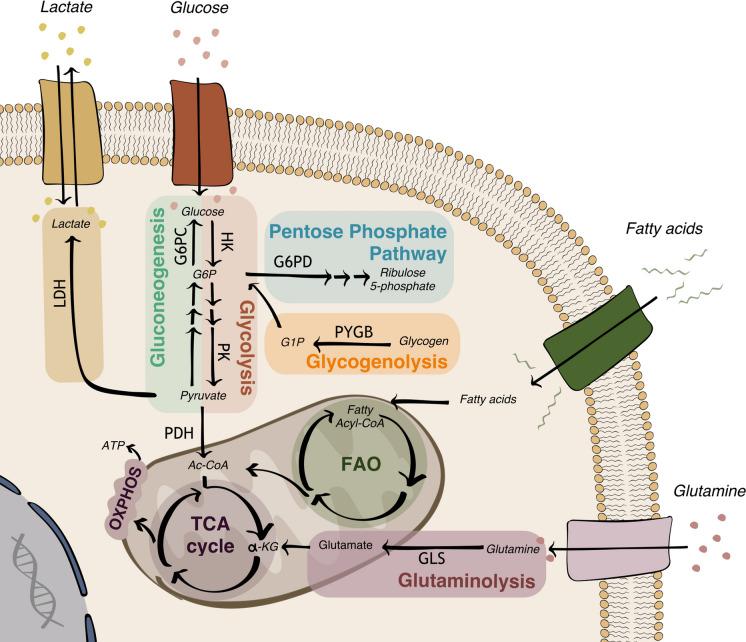
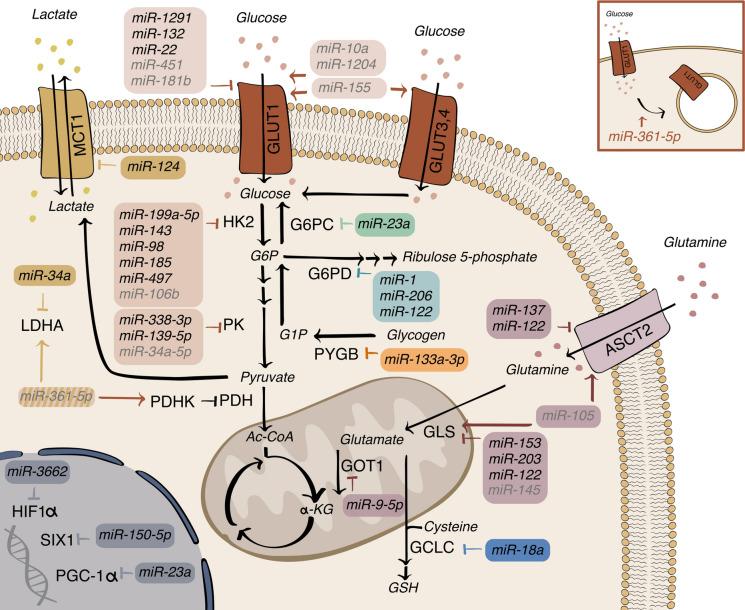
MicroRNAs (miRNAs) are small, non-coding RNAs about 22 nucleotides in length that regulate the expression of target genes post-transcriptionally, and are highly involved in cancer progression. They are able to impact a variety of cell processes such as proliferation, apoptosis and differentiation and can consequently control tumor initiation, tumor progression and metastasis formation. miRNAs can regulate, at the same time, metabolic gene expression which, in turn, influences relevant traits of malignancy such as cell adhesion, migration and invasion. Since the interaction between metabolism and adhesion or cell movement has not, to date, been well understood, in this review, we will specifically focus on miRNA alterations that can interfere with some metabolic processes leading to the modulation of cancer cell movement. In addition, we will analyze the signaling pathways connecting metabolism and adhesion/migration, alterations that often affect cancer cell dissemination and metastasis formation.
MicroRNAs (miRNAs) 是长度约为 22 个核苷酸的小非编码 RNA,可在后转录水平调节靶基因的表达,高度参与癌症的进展。它们能够影响多种细胞过程,如增殖、凋亡和分化,从而控制肿瘤的发生、肿瘤的进展和转移的形成。miRNAs 可以同时调节代谢基因的表达,而代谢基因的表达又反过来影响恶性肿瘤的相关特征,如细胞黏附、迁移和侵袭。由于代谢与黏附或细胞运动之间的相互作用尚未得到很好的理解,在本综述中,我们将特别关注可能干扰某些导致癌细胞运动调节的代谢过程的 miRNA 改变。此外,我们还将分析连接代谢和黏附/迁移的信号通路,这些改变常常影响癌细胞的扩散和转移的形成。


 Zotero 插件