
中国评估 EUCAST 快速抗微生物药敏试验在含碳青霉烯类药物血培养物中的应用。
Evaluation of the EUCAST Rapid Antimicrobial Susceptibility Test for -Containing Blood Cultures in China.
机构信息
Department of Laboratory Medicine, Zhongshan Hospital of Fudan University, Shanghai, China.
Department of Infectious Diseases, Zhongshan Hospital of Fudan University, Shanghai, China.
出版信息
J Clin Microbiol. 2022 Apr 20;60(4):e0255921. doi: 10.1128/jcm.02559-21. Epub 2022 Mar 31.
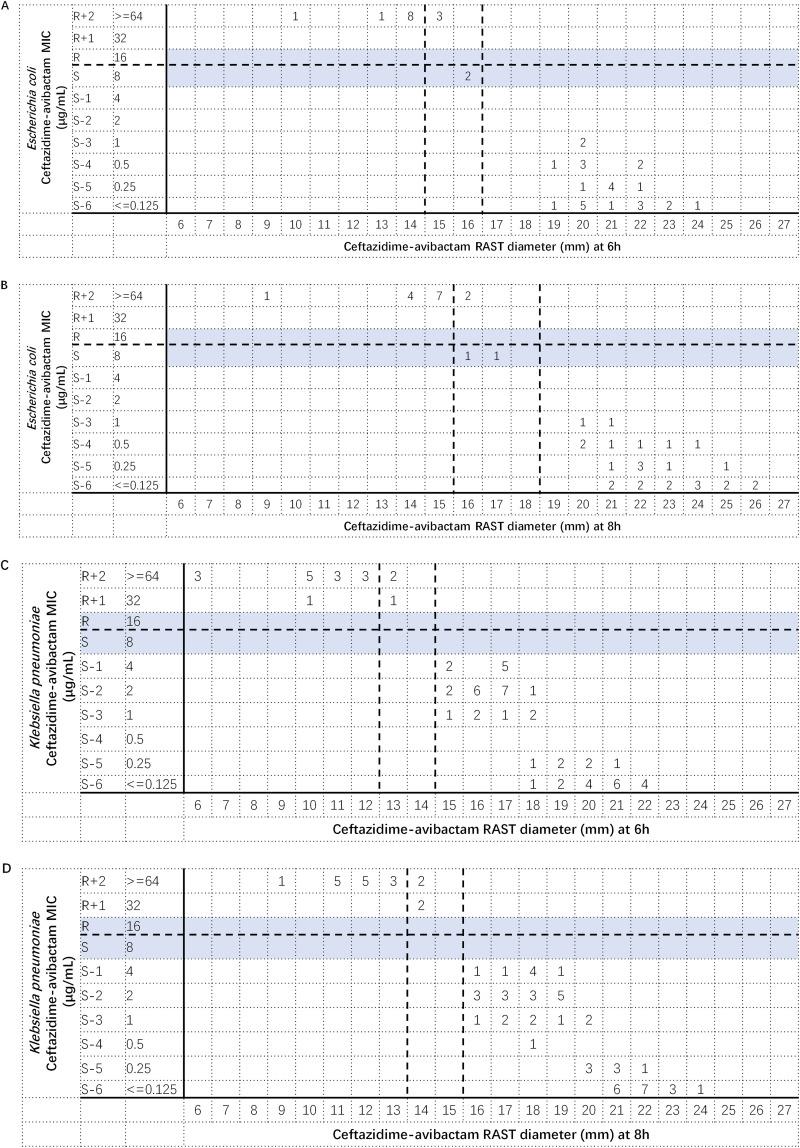
Bloodstream infection (BSI) is defined by the presence of microbes in the bloodstream and has high mortality. Early antimicrobial therapy is key to treating BSI patients. Because of potential antimicrobial resistance, rapid evaluation for the most suitable antimicrobial therapy is important for appropriate treatment. In China, the current workflow of microbiological diagnosis in BSI involves blood culture, species identification, and antimicrobial susceptibility testing, which takes around 3 days. However, this delay could lead to worse symptoms. To rapidly and accurately assess antimicrobial susceptibility, in this study, we applied EUCAST rapid antimicrobial susceptibility testing (RAST) to determine the antimicrobial susceptibilities of the most frequently detected sampled in China, including Escherichia coli and Klebsiella pneumoniae. Based on EUCAST guidelines, we evaluated its efficiencies with six commercially available antimicrobials, including imipenem (10 μg), meropenem (10 μg), ciprofloxacin (5 μg), levofloxacin (5 μg), amikacin (30 μg), and trimethoprim-sulfamethoxazole (1.25/23.75 μg), with bacterium-spiked blood cultures. In addition, we developed potential breakpoints for a recently introduced antimicrobial, 30/20 μg ceftazidime-avibactam, which has high potential for treating multidrug-resistant . Our results showed that EUCAST RAST is a reliable method for rapidly determining the antimicrobial susceptibilities of BSI-causing bacteria in China, with an overall categorical agreement rate at 8 h of ≥90%. The breakpoints developed in this study can categorize the isolates sampled in this study with an accuracy of 93%. Results from our experiments can be applied to clinically determine the microbial susceptibility of BSI-causing bacteria within 8 h and benefit clinical diagnostics for BSI patients.
血流感染(BSI)定义为血液中存在微生物,具有高死亡率。早期的抗菌治疗是治疗 BSI 患者的关键。由于存在潜在的抗菌药物耐药性,因此快速评估最合适的抗菌治疗方法对于适当的治疗非常重要。在中国,BSI 微生物学诊断的当前工作流程包括血液培养、物种鉴定和抗菌药物敏感性测试,大约需要 3 天。然而,这种延迟可能会导致更严重的症状。为了快速准确地评估抗菌药物敏感性,在这项研究中,我们应用 EUCAST 快速抗菌药物敏感性测试(RAST)来确定在中国最常检测到的采样中最常见的微生物的抗菌药物敏感性,包括大肠杆菌和肺炎克雷伯菌。根据 EUCAST 指南,我们用六种市售的抗菌药物(包括亚胺培南(10μg)、美罗培南(10μg)、环丙沙星(5μg)、左氧氟沙星(5μg)、阿米卡星(30μg)和复方磺胺甲噁唑(1.25/23.75μg)评估了其效率,并用细菌污染的血培养物进行评估。此外,我们为一种新引入的抗菌药物(30/20μg 头孢他啶-阿维巴坦)开发了潜在的折点,该药物具有治疗多重耐药菌的巨大潜力。我们的结果表明,EUCAST RAST 是一种可靠的方法,可以快速确定中国引起 BSI 的细菌的抗菌药物敏感性,在 8 小时内的总体分类一致性率≥90%。本研究中开发的折点可以准确地对本研究中采样的分离株进行分类,准确率为 93%。本实验的结果可用于在 8 小时内临床确定引起 BSI 的细菌的微生物敏感性,有助于 BSI 患者的临床诊断。

 Zotero 插件