
泛癌分析确定CTC1-STN1-TEN1复合物为癌症免疫检查点阻断的保护因子和预测生物标志物。
Pan-Cancer Analyses Identify the CTC1-STN1-TEN1 Complex as a Protective Factor and Predictive Biomarker for Immune Checkpoint Blockade in Cancer.
作者信息
Wang Lishuai, Ma Tengfei, Liu Weijin, Li Heping, Luo Zhenhua, Feng Xuyang
机构信息
Institute of Precision Medicine, The First Affiliated Hospital, Sun Yat-Sen University, Guangzhou, China.
Department of Medical Oncology, The First Affiliated Hospital, Sun Yat-Sen University, Guangzhou, China.
出版信息
Front Genet. 2022 Mar 16;13:859617. doi: 10.3389/fgene.2022.859617. eCollection 2022.
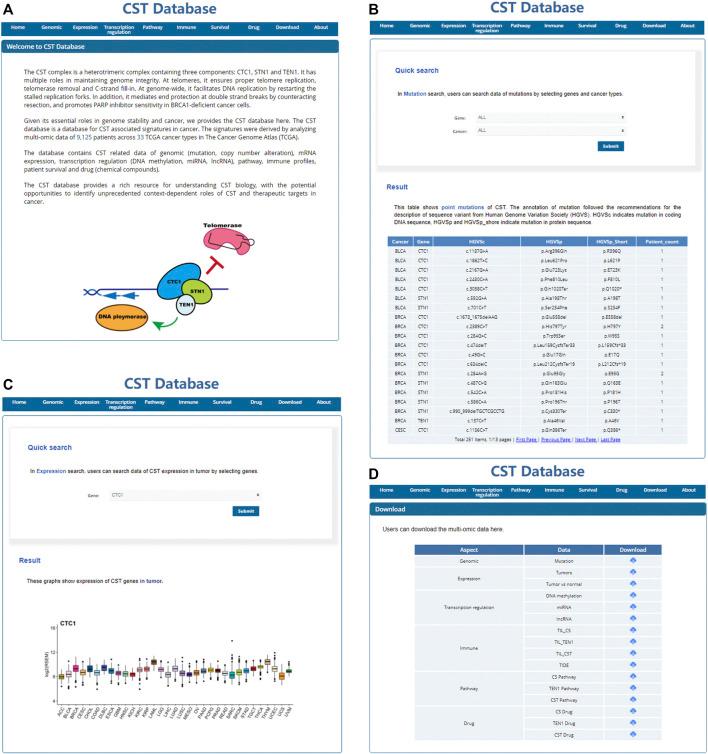
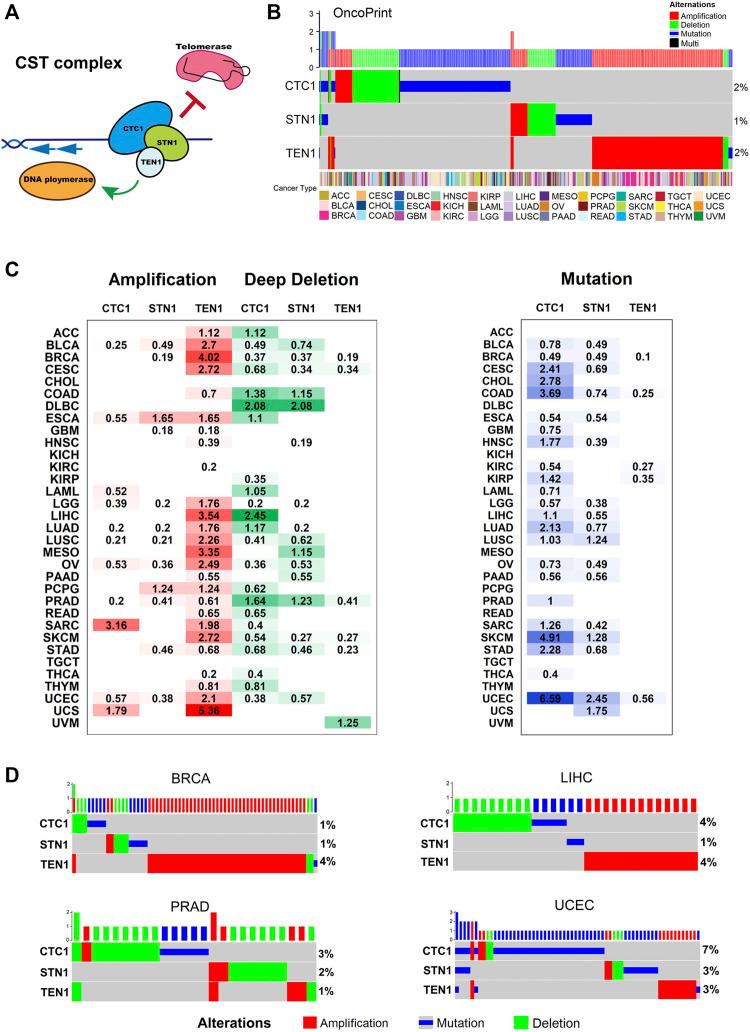
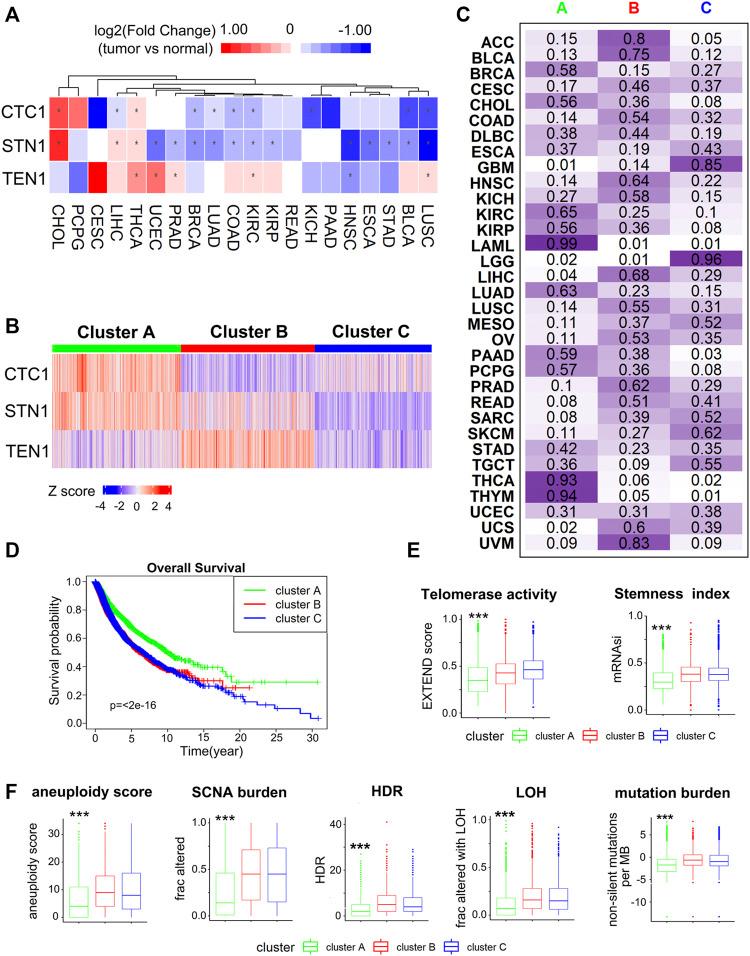
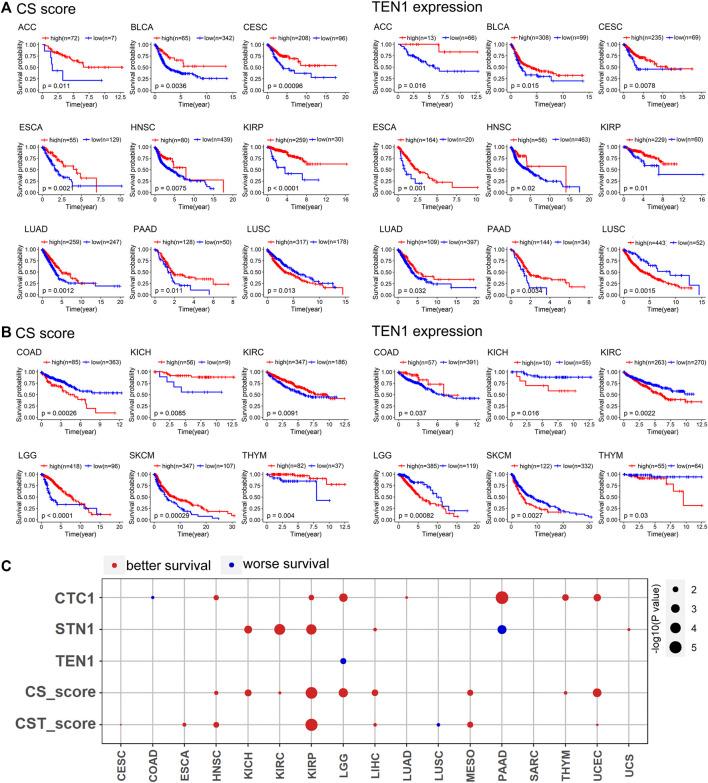
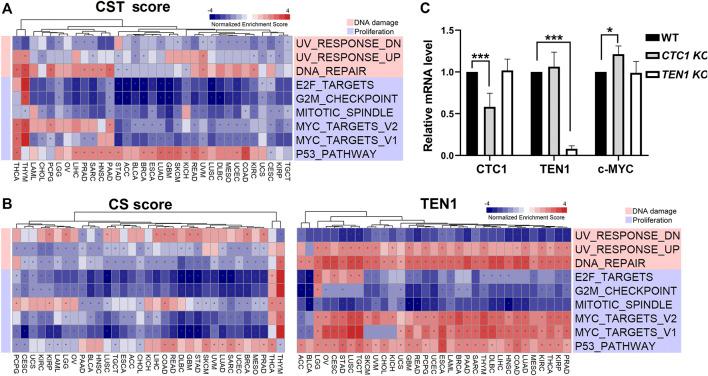
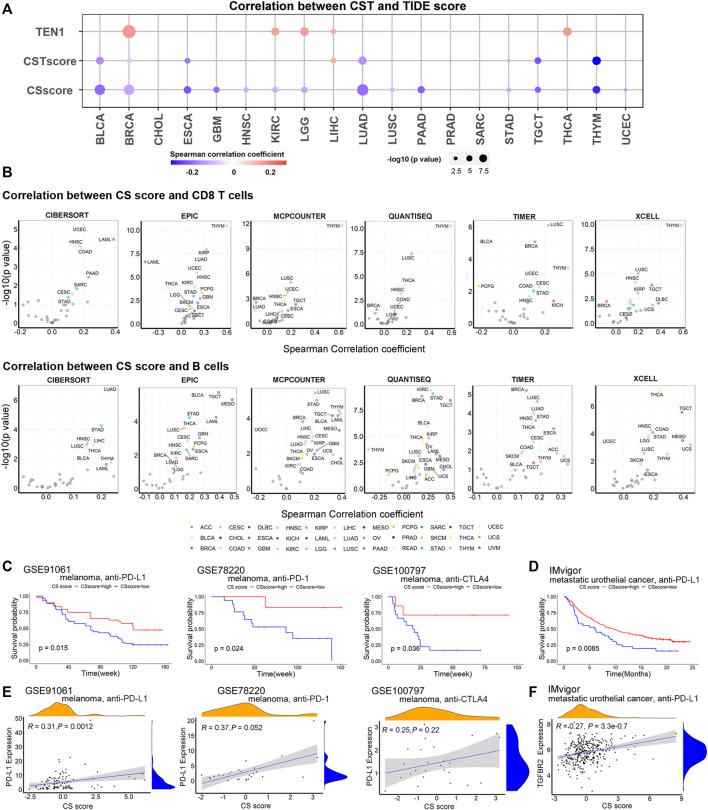
The CTC1-STN1-TEN1 (CST) complex plays a crucial role in telomere replication and genome stability. However, the detailed mechanisms of CST regulation in cancer remain largely unknown. Here, we perform a comprehensive analysis of CST across 33 cancer types using multi-omic data from The Cancer Genome Atlas. In the genomic landscape, we identify CTC1/STN1 deletion and mutation and TEN1 amplification as the dominant alteration events. Expressions of CTC1 and STN1 are decreased in tumors compared to those in adjacent normal tissues. Clustering analysis based on CST expression reveals three cancer clusters displaying differences in survival, telomerase activity, cell proliferation, and genome stability. Interestingly, we find that CTC1 and STN1, but not TEN1, are co-expressed and associated with better survival. CTC1-STN1 is positively correlated with CD8 T cells and B cells and predicts a better response to immune checkpoint blockade in external datasets of cancer immunotherapy. Pathway analysis shows that MYC targets are negatively correlated with CTC1-STN1. We experimentally validated that knockout of CTC1 increased the mRNA level of c-MYC. Furthermore, CTC1 and STN1 are repressed by miRNAs and lncRNAs. Finally, by mining the connective map database, we discover a number of potential drugs that may target CST. In sum, this study illustrates CTC1-STN1 as a protective factor and provides broad molecular signatures for further functional and therapeutic studies of CST in cancer.
CTC1-STN1-TEN1(CST)复合物在端粒复制和基因组稳定性中起着关键作用。然而,CST在癌症中的详细调控机制仍 largely未知。在这里,我们使用来自癌症基因组图谱的多组学数据对33种癌症类型的CST进行了全面分析。在基因组格局中,我们将CTC1/STN1缺失和突变以及TEN1扩增确定为主要的改变事件。与相邻正常组织相比,肿瘤中CTC1和STN1的表达降低。基于CST表达的聚类分析揭示了三个在生存、端粒酶活性、细胞增殖和基因组稳定性方面存在差异的癌症簇。有趣的是,我们发现CTC1和STN1(而非TEN1)共表达且与更好的生存相关。在癌症免疫治疗的外部数据集中,CTC1-STN1与CD8 T细胞和B细胞呈正相关,并预测对免疫检查点阻断有更好的反应。通路分析表明,MYC靶点与CTC1-STN1呈负相关。我们通过实验验证了敲除CTC1会增加c-MYC的mRNA水平。此外,CTC1和STN1受到miRNA和lncRNA的抑制。最后,通过挖掘连接图谱数据库,我们发现了一些可能靶向CST的潜在药物。总之,本研究将CTC1-STN1阐明为一种保护因子,并为进一步开展CST在癌症中的功能和治疗研究提供了广泛的分子特征。


 Zotero 插件