
二号肺痹方通过调节线粒体自噬/凋亡平衡抑制HO介导的肺泡上皮细胞氧化应激损伤。
Number 2 Feibi Recipe Inhibits HO-Mediated Oxidative Stress Damage of Alveolar Epithelial Cells by Regulating the Balance of Mitophagy/Apoptosis.
作者信息
Gu Xiaofeng, Long Qi, Wei Wan, Tong Jiahuan, Li Zhipeng, Zhang Zhengju, Jiao Yang
机构信息
Graduate School, Beijing University of Chinese Medicine, Beijing, China.
Department of Respiratory and Critical Care Medicine, Chongqing Traditional Chinese Medicine Hospital, Chongqing, China.
出版信息
Front Pharmacol. 2022 Mar 17;13:830554. doi: 10.3389/fphar.2022.830554. eCollection 2022.
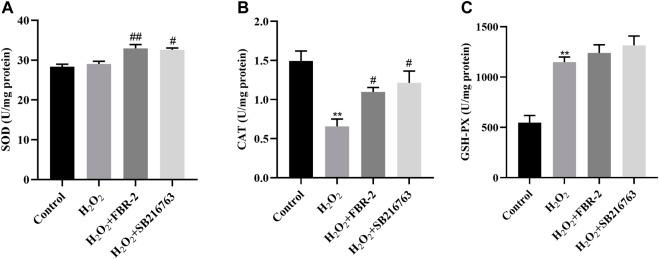
Reactive oxygen species (ROS)-mediated alveolar epithelial cell (AEC) injury and apoptosis are considered to be the initiating link of idiopathic pulmonary fibrosis (IPF), and protecting AECs can alleviate IPF. This study aimed to explore the protective effect of number 2 Feibi recipe (FBR-2) medicated serum on HO-mediated oxidative stress injury in AECs and further explore its mechanism. We found that FBR-2 can regulate downstream antioxidant enzymes expression by activating nuclear factor erythroid 2-related factor 2 (Nrf2), reducing the level of intracellular ROS, protecting mitochondrial function and improving cell survival. FBR-2 can also activate mitophagy through the PINK1/Parkin pathway. Moreover, FBR-2 can inhibit apoptosis by blocking the mitochondrial apoptosis mechanism. In summary, these data indicate that FBR-2 medicated serum can inhibit HO-mediated oxidative stress damage in AECs by regulating the balance of mitophagy/apoptosis. This study provides new evidence for the antifibrotic effect of FBR-2 and provides new drug candidates for the clinical treatment of IPF.
活性氧(ROS)介导的肺泡上皮细胞(AEC)损伤和凋亡被认为是特发性肺纤维化(IPF)的起始环节,保护AEC可减轻IPF。本研究旨在探讨2号肺痹方(FBR-2)含药血清对AEC中HO介导的氧化应激损伤的保护作用,并进一步探讨其机制。我们发现FBR-2可通过激活核因子红细胞2相关因子2(Nrf2)来调节下游抗氧化酶的表达,降低细胞内ROS水平,保护线粒体功能并提高细胞存活率。FBR-2还可通过PINK1/Parkin途径激活线粒体自噬。此外,FBR-2可通过阻断线粒体凋亡机制来抑制凋亡。综上所述,这些数据表明FBR-2含药血清可通过调节线粒体自噬/凋亡平衡来抑制AEC中HO介导的氧化应激损伤。本研究为FBR-2的抗纤维化作用提供了新证据,并为IPF的临床治疗提供了新的候选药物。




 Zotero 插件