
欧盟关于2019 - 2020年人类、动物和食物中动物源细菌及指示菌的抗菌药物耐药性总结报告。
The European Union Summary Report on Antimicrobial Resistance in zoonotic and indicator bacteria from humans, animals and food in 2019-2020.
出版信息
EFSA J. 2022 Mar 29;20(3):e07209. doi: 10.2903/j.efsa.2022.7209. eCollection 2022 Mar.
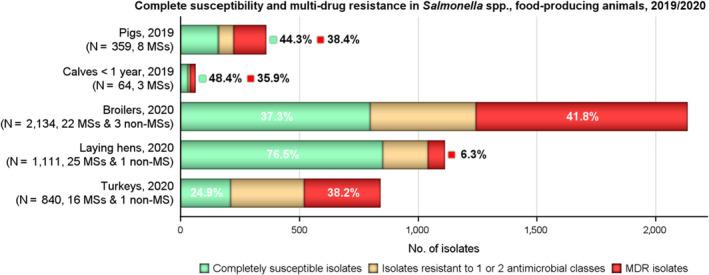
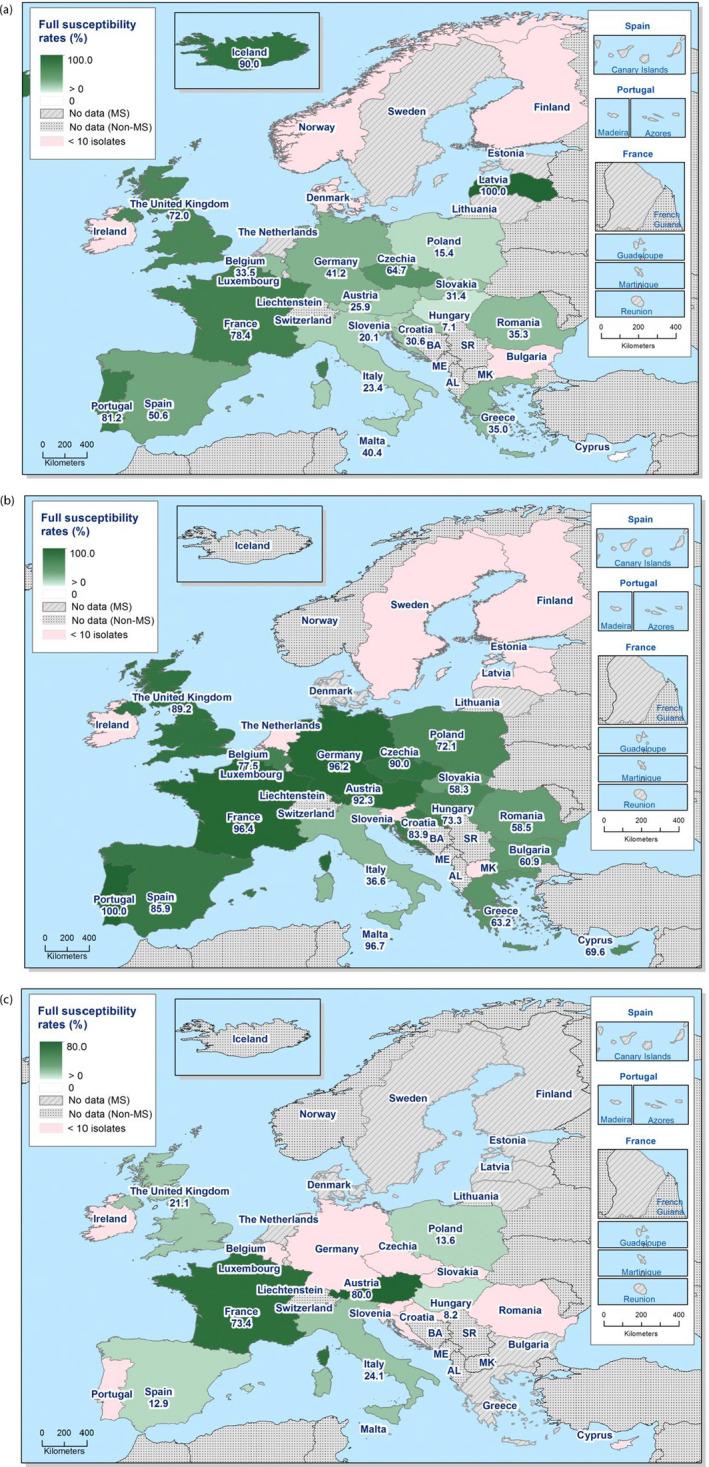
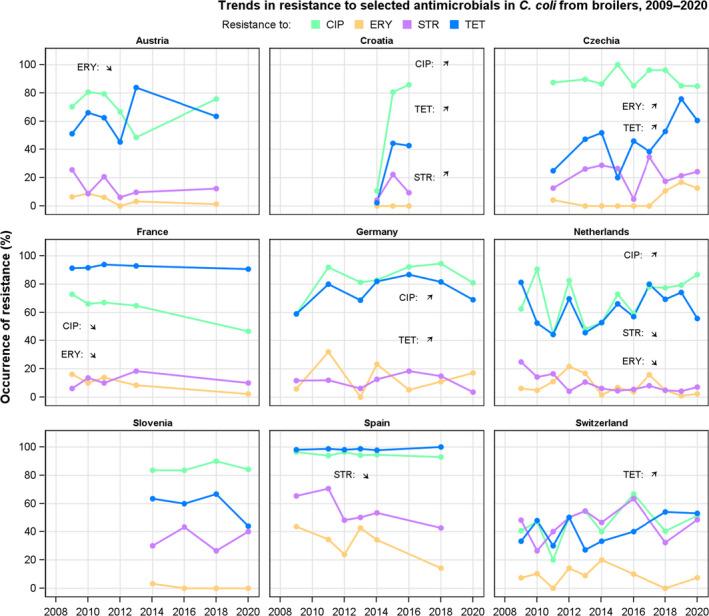
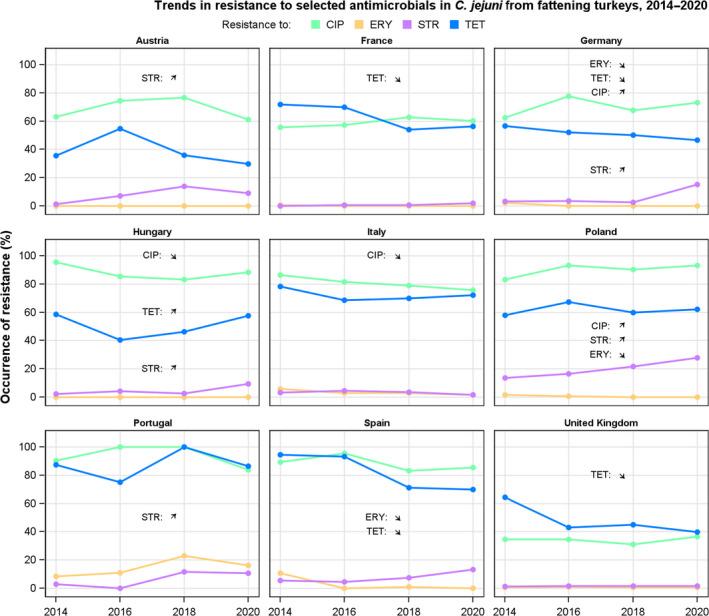
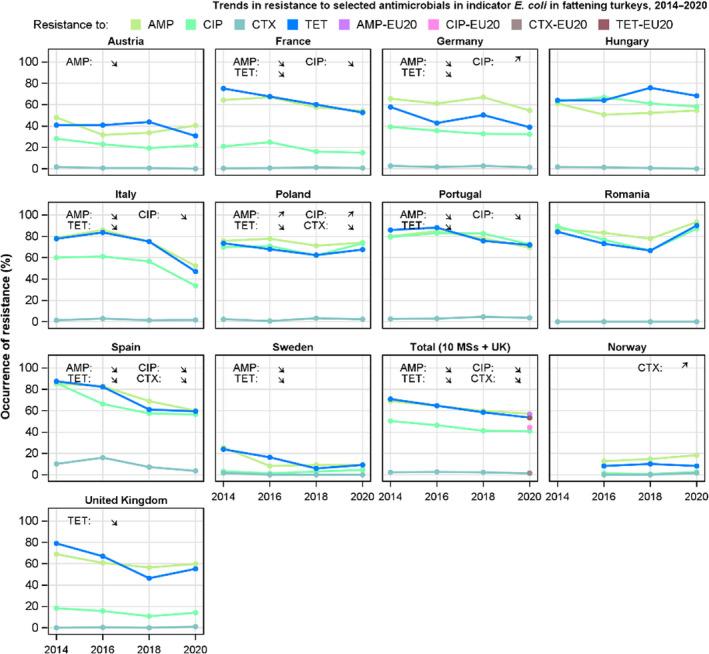
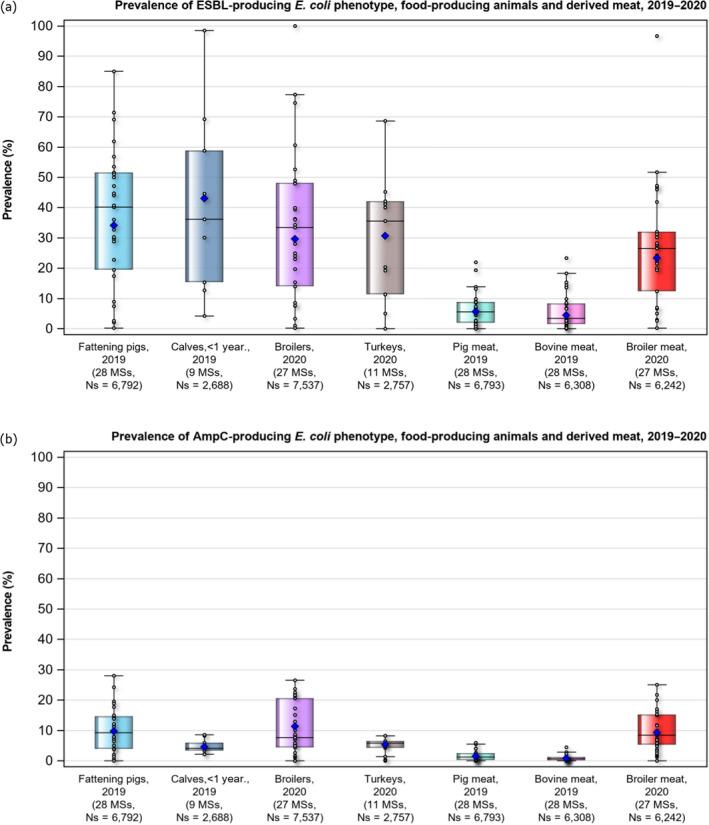
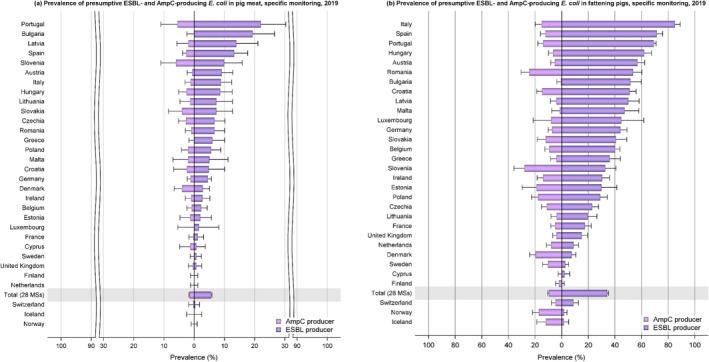
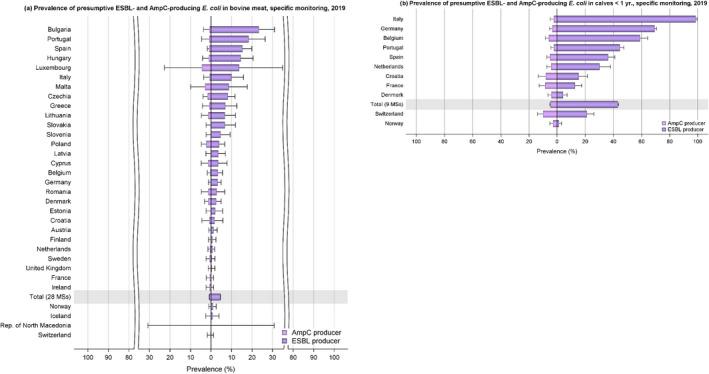
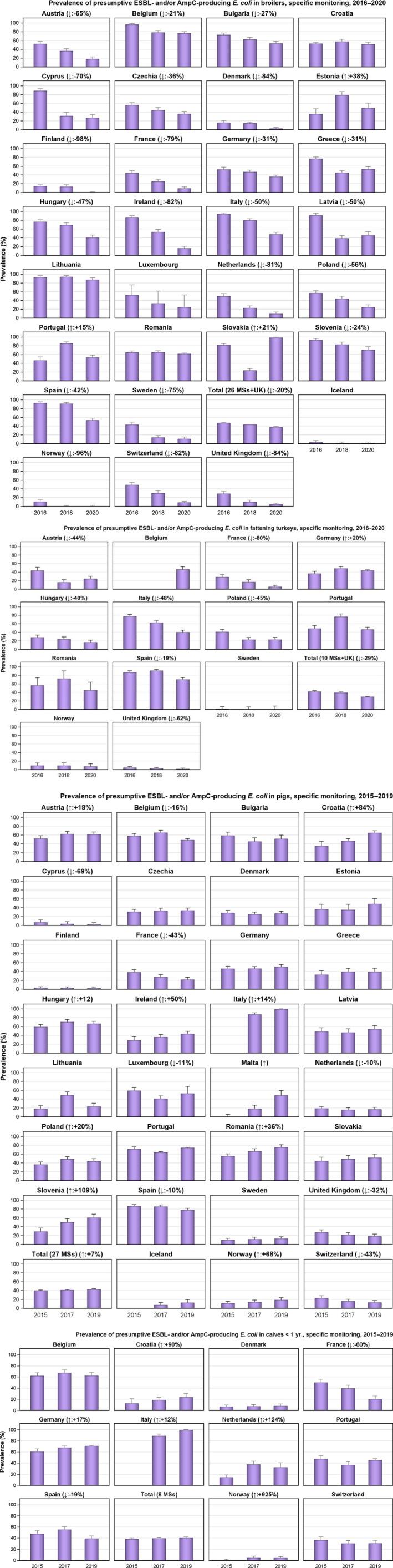
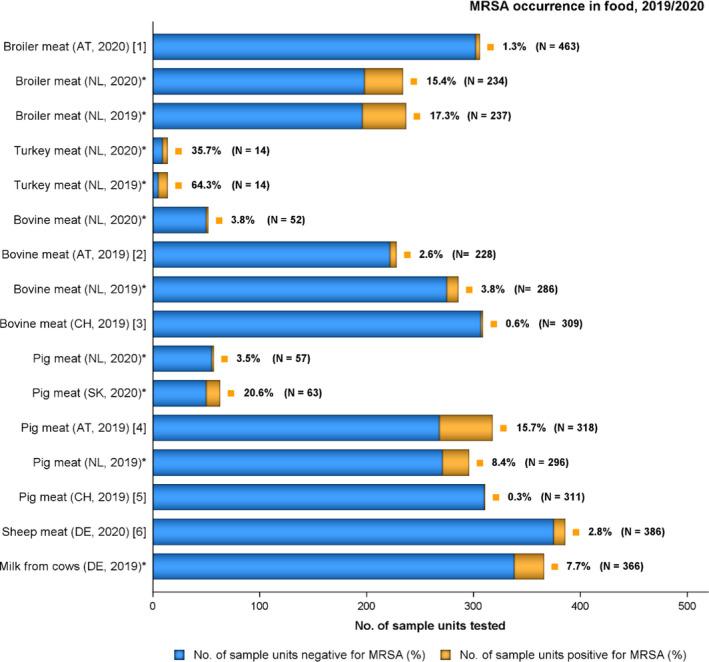
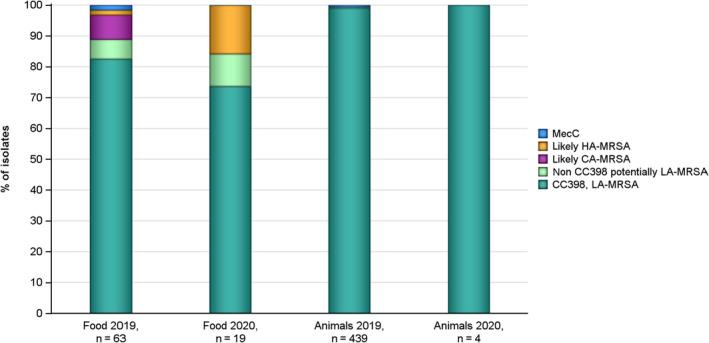
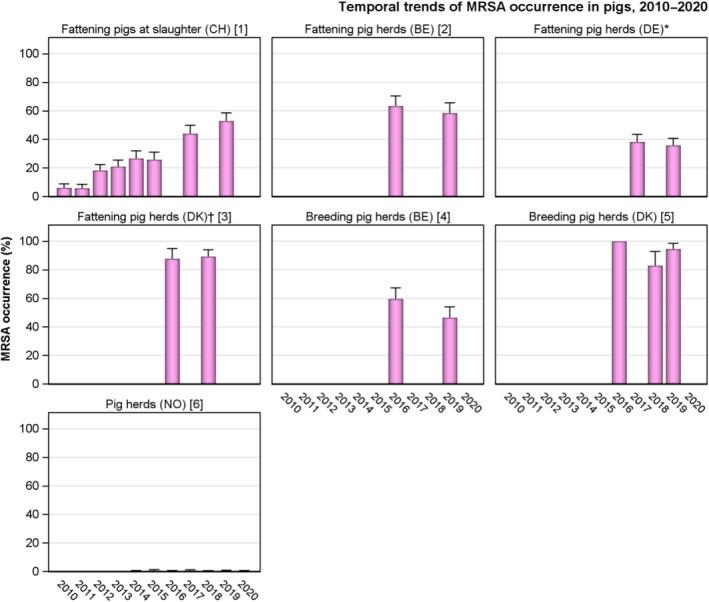
Data on antimicrobial resistance (AMR) in zoonotic and indicator bacteria from humans, animals and food are collected annually by the EU Member States (MSs), jointly analysed by the EFSA and the ECDC and reported in a yearly EU Summary Report. The annual monitoring of AMR in animals and food within the EU is targeted at selected animal species corresponding to the reporting year. The 2020 monitoring specifically focussed on poultry and their derived carcases/meat, while the monitoring performed in 2019 specifically focused on fattening pigs and calves under 1 year of age, as well as their derived carcases/meat. Monitoring and reporting of AMR in 2019-2020 included data regarding , and indicator isolates, as well as data obtained from the specific monitoring of presumptive ESBL-/AmpC-/carbapenemase-producing isolates. Additionally, some MSs reported voluntary data on the occurrence of methicillin-resistant in animals and food, with some countries also providing data on antimicrobial susceptibility. This report provides an overview of the main findings of the 2019-2020 harmonised AMR monitoring in the main food-producing animal populations monitored, in carcase/meat samples and in humans. Where available, monitoring data obtained from pigs, calves, broilers, laying hens and turkeys, as well as from carcase/meat samples and humans were combined and compared at the EU level, with particular emphasis on multidrug resistance, complete susceptibility and combined resistance patterns to critically important antimicrobials, as well as and isolates possessing ESBL-/AmpC-/carbapenemase phenotypes. The key outcome indicators for AMR in food-producing animals, such as complete susceptibility to the harmonised panel of antimicrobials in and the prevalence of ESBL-/AmpC-producing have been specifically analysed over the period 2014-2020.
欧盟成员国每年收集来自人类、动物和食物中的人畜共患病菌和指示菌的抗菌药物耐药性(AMR)数据,由欧洲食品安全局(EFSA)和欧洲疾病预防控制中心(ECDC)联合分析,并在年度欧盟总结报告中公布。欧盟对动物和食物中AMR的年度监测针对与报告年份对应的选定动物物种。2020年的监测特别关注家禽及其衍生的 carcasses/meat,而2019年进行的监测特别关注育肥猪和1岁以下的小牛及其衍生的 carcasses/meat。2019 - 2020年AMR的监测和报告包括关于 、 和指示菌分离株的数据,以及从对推定产生ESBL-/AmpC-/碳青霉烯酶的 分离株的特定监测中获得的数据。此外,一些成员国报告了动物和食物中耐甲氧西林 的发生情况的自愿数据,一些国家还提供了抗菌药物敏感性数据。本报告概述了2019 - 2020年在主要监测的产肉动物种群、carcase/meat样本和人类中进行的统一AMR监测的主要结果。在可行的情况下,将从猪、小牛、肉鸡、蛋鸡和火鸡以及carcase/meat样本和人类获得的监测数据在欧盟层面进行合并和比较,特别强调对极其重要的抗菌药物的多重耐药性、完全敏感性和联合耐药模式,以及具有ESBL-/AmpC-/碳青霉烯酶表型的 和 分离株。在2014 - 2020年期间,对产肉动物中AMR的关键结果指标进行了具体分析,如对统一抗菌药物组的完全敏感性以及产生ESBL-/AmpC的 的流行率。
注
原文中部分单词缺失,用“ ”表示,翻译时保留原样。


























 Zotero 插件