
《欧盟2020年“同一健康”人畜共患病报告》
The European Union One Health 2020 Zoonoses Report.
出版信息
EFSA J. 2021 Dec 13;19(12):e06971. doi: 10.2903/j.efsa.2021.6971. eCollection 2021 Dec.
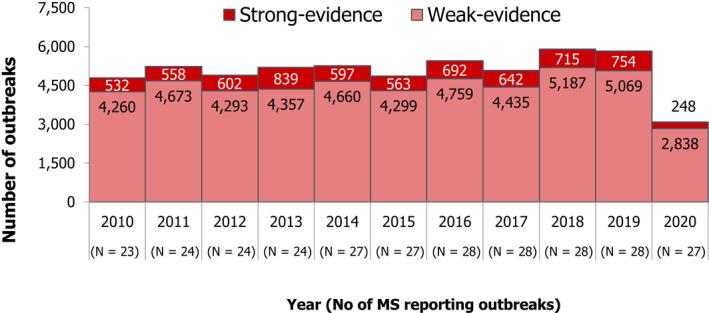
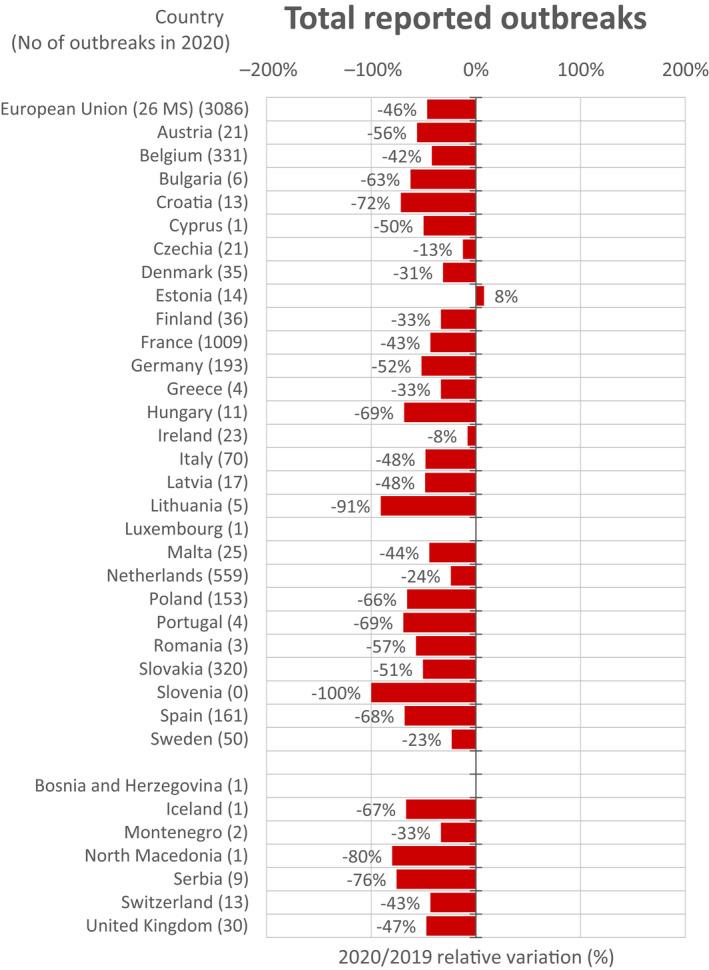
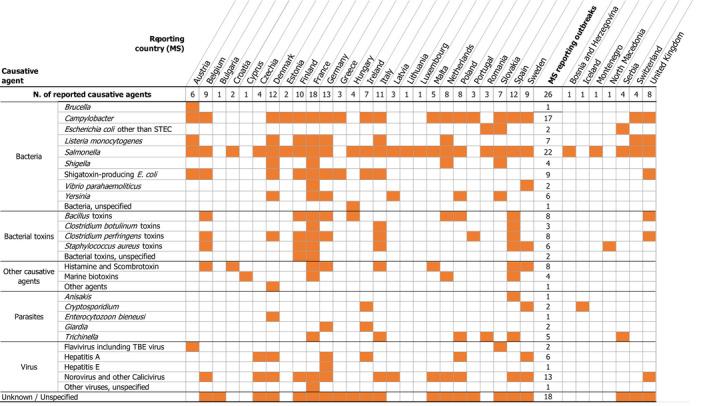
This report of the EFSA and the European Centre for Disease Prevention and Control presents the results of zoonoses monitoring activities carried out in 2020 in 27 EU Member States (MS) and nine non-MS. Key statistics on zoonoses and zoonotic agents in humans, food, animals and feed are provided and interpreted historically. Two events impacted 2020 MS data collection and related statistics: the Coronavirus Disease 2019 (COVID-19) pandemic and the withdrawal of the United Kingdom from the EU. In 2020, the first and second most reported zoonoses in humans were campylobacteriosis and salmonellosis, respectively. The EU trend for confirmed human cases of these two diseases was stable (flat) from 2016 to 2020. Fourteen of the 26 MS reporting data on control programmes in poultry met the reduction targets for all poultry categories. results for carcases of various species performed by competent authorities were more frequently positive than own-checks conducted by food business operators. This was also the case for quantification results from broiler carcases for the MS group that submitted data from both samplers, whereas overall at EU level, those percentages were comparable. Yersiniosis was the third most reported zoonosis in humans, with 10-fold less cases reported than salmonellosis, followed by Shiga toxin-producing (STEC) and infections. Illnesses caused by . and West Nile virus infections were the most severe zoonotic diseases with the highest case fatality. In 2020, 27 MS reported 3,086 foodborne outbreaks (a 47.0% decrease from 2019) and 20,017 human cases (a 61.3% decrease). remained the most frequently reported causative agent for foodborne outbreaks. in 'eggs and egg products', norovirus in 'crustaceans, shellfish, molluscs and products containing them' and in 'fish and fish products' were the agent/food pairs of most concern. This report also provides updates on tuberculosis due to or , , rabies, (Q fever) and tularaemia.
欧洲食品安全局(EFSA)和欧洲疾病预防控制中心的这份报告展示了2020年在27个欧盟成员国及9个非成员国开展的人畜共患病监测活动的结果。报告提供了关于人类、食品、动物和饲料中的人畜共患病及人畜共患病原体的关键统计数据,并进行了历史解读。有两个事件影响了2020年成员国的数据收集及相关统计:2019冠状病毒病(COVID-19)大流行和英国脱欧。2020年,人类报告最多的第一和第二大人畜共患病分别为空肠弯曲菌病和沙门氏菌病。2016年至2020年,这两种疾病确诊的人类病例在欧盟呈稳定(持平)趋势。在报告家禽控制计划数据的26个成员国中,有14个达到了所有家禽类别的减排目标。主管当局对各类动物尸体检测的结果阳性率高于食品企业经营者的自查结果。对于同时提交了两个采样者数据的成员国组的肉鸡尸体定量结果也是如此,而在欧盟层面总体上,这些百分比是可比的。耶尔森氏菌病是人类报告的第三大人畜共患病,报告病例数比沙门氏菌病少10倍,其次是产志贺毒素大肠杆菌(STEC)感染。由……引起的疾病以及西尼罗河病毒感染是致死率最高的最严重人畜共患病。2020年,27个成员国报告了3086起食源性疾病暴发事件(比2019年减少47.0%)和20017例人类病例(减少61.3%)。……仍然是食源性疾病暴发最常报告的病原体。“蛋类和蛋制品”中的……、“甲壳类、贝类、软体动物及其制品”中的诺如病毒以及“鱼类和鱼制品”中的……是最受关注的病原体/食品组合。本报告还提供了关于由……或……引起的结核病、……、狂犬病、……(Q热)和兔热病的最新情况。

















 Zotero 插件