
欧盟2016年人畜共患病、人畜共患病原体及食源性疾病暴发的趋势与来源总结报告
The European Union summary report on trends and sources of zoonoses, zoonotic agents and food-borne outbreaks in 2016.
出版信息
EFSA J. 2017 Dec 12;15(12):e05077. doi: 10.2903/j.efsa.2017.5077. eCollection 2017 Dec.
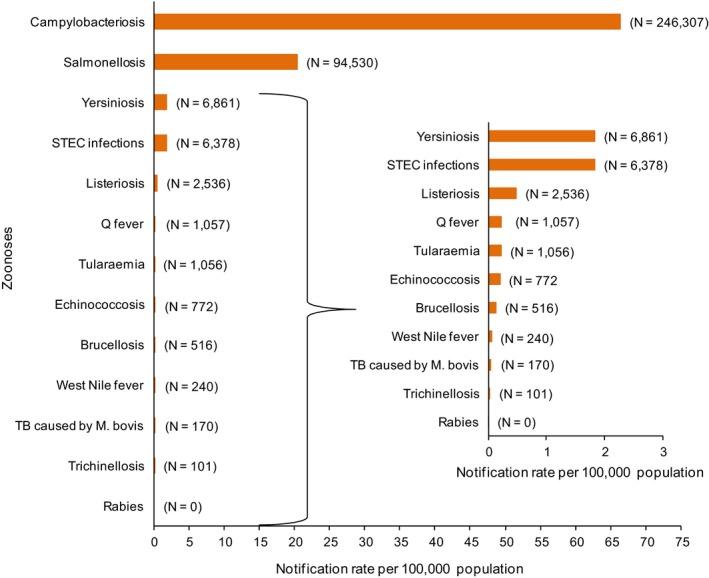
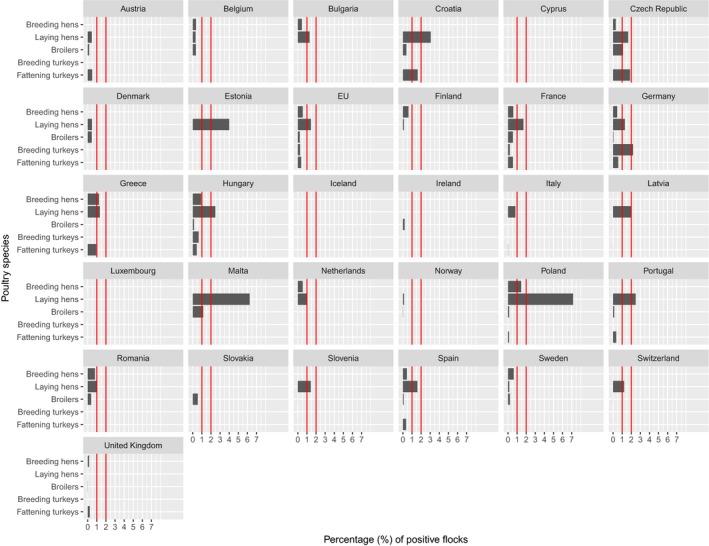
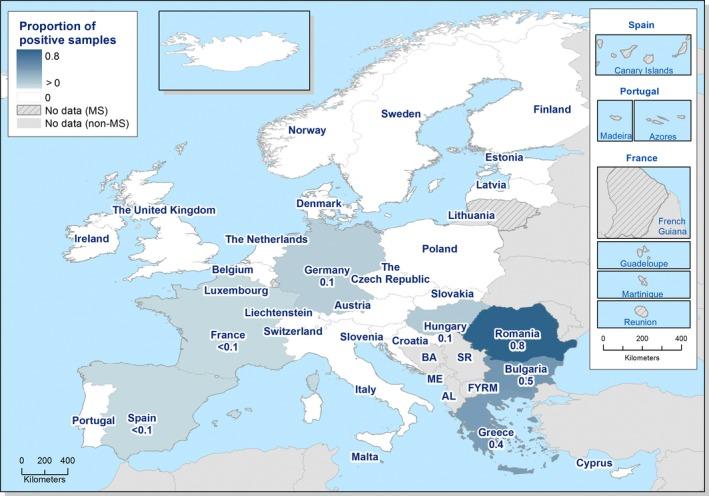
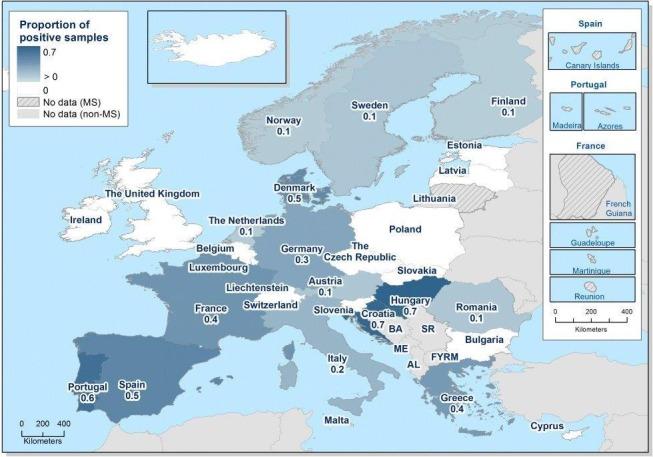
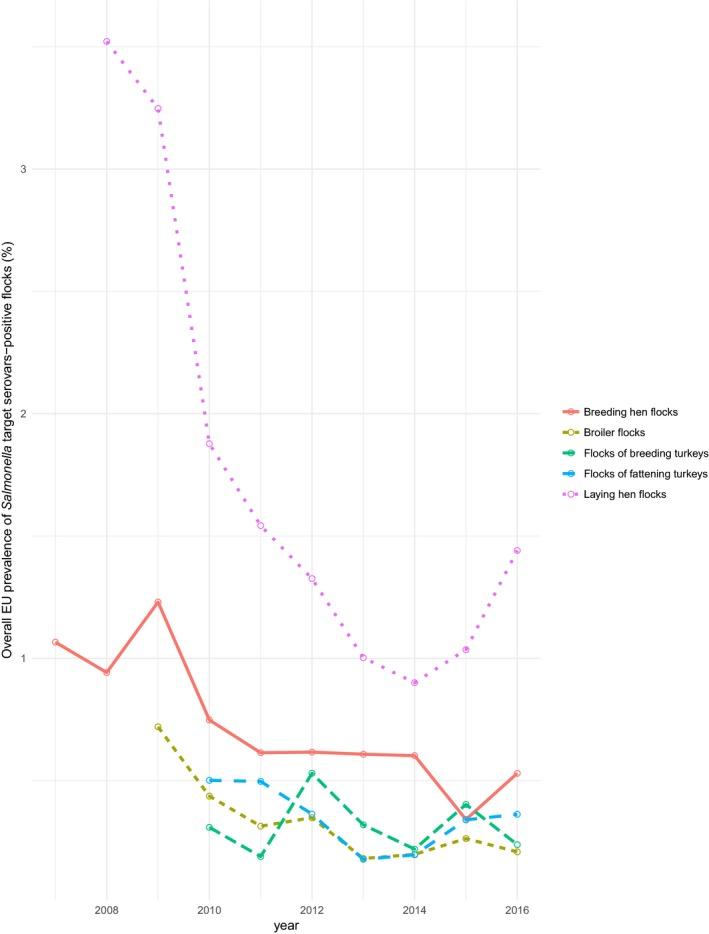
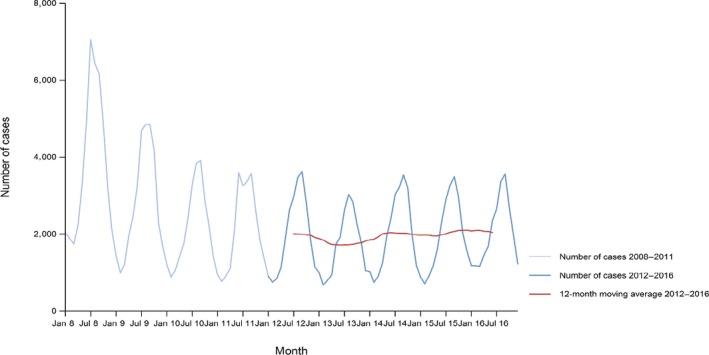
This report of the European Food Safety Authority and the European Centre for Disease Prevention and Control presents the results of the zoonoses monitoring activities carried out in 2016 in 37 European countries (28 Member States (MS) and nine non-MS). Campylobacteriosis was the most commonly reported zoonosis and the increasing European Union (EU) trend for confirmed human cases since 2008 stabilised during 2012-2016. In food, the occurrence of remained high in broiler meat. The decreasing EU trend for confirmed human salmonellosis cases since 2008 ended during 2012-2016, and the proportion of human Enteritidis cases increased. Most MS met their reduction targets for poultry, except five MS for laying hens. At primary production level, the EU-level flock prevalence of target serovars in breeding hens, broilers, breeding and fattening turkeys decreased or stabilised compared with previous years but the EU prevalence of . Enteritidis in laying hens significantly increased. In foodstuffs, the EU-level non-compliance for minced meat and meat preparations from poultry was low. The number of human listeriosis confirmed cases further increased in 2016, despite the fact that seldom exceeds the EU food safety limit in ready-to-eat foods. The decreasing EU trend for confirmed yersiniosis cases since 2008 stabilised during 2012-2016, and also the number of confirmed Shiga toxin-producing (STEC) infections in humans was stable. In total, 4,786 food-borne outbreaks, including waterborne outbreaks, were reported. was the most commonly detected causative agent - with one out of six outbreaks due to . Enteritidis - followed by other bacteria, bacterial toxins and viruses. in eggs continued to represent the highest risk agent/food combination. The report further summarises trends and sources for bovine tuberculosis, brucellosis, trichinellosis, echinococcosis, toxoplasmosis, rabies, Q fever, West Nile fever and tularaemia.
欧洲食品安全局和欧洲疾病预防控制中心的这份报告展示了2016年在37个欧洲国家(28个成员国和9个非成员国)开展的人畜共患病监测活动的结果。弯曲杆菌病是报告最频繁的人畜共患病,自2008年以来确诊人类病例的欧盟上升趋势在2012 - 2016年期间趋于稳定。在食品中,弯曲杆菌在鸡肉中的检出率仍然很高。自2008年以来确诊人类沙门氏菌病病例的欧盟下降趋势在2012 - 2016年期间结束,肠炎沙门氏菌病例的比例有所增加。除了五个成员国的蛋鸡外,大多数成员国实现了家禽的沙门氏菌减少目标。在初级生产层面,与前几年相比,种母鸡、肉鸡、种用和育肥火鸡中目标沙门氏菌血清型的欧盟层面禽群流行率有所下降或趋于稳定,但蛋鸡中肠炎沙门氏菌的欧盟流行率显著上升。在食品中,欧盟层面家禽碎肉和肉制品的不符合率较低。2016年确诊的人类李斯特菌病病例数量进一步增加,尽管李斯特菌在即食食品中很少超过欧盟食品安全限值。自2008年以来确诊耶尔森氏菌病病例的欧盟下降趋势在2012 - 2016年期间趋于稳定,人类中产志贺毒素大肠杆菌(STEC)感染确诊病例数量也保持稳定。总共报告了4786起食源性疾病暴发,包括水源性暴发。沙门氏菌是最常检测到的病原体——六分之一的暴发是由肠炎沙门氏菌引起的——其次是其他细菌、细菌毒素和病毒。蛋类中的沙门氏菌仍然是风险最高的病原体/食品组合。该报告进一步总结了牛结核病、布鲁氏菌病、旋毛虫病、棘球蚴病、弓形虫病、狂犬病、Q热、西尼罗河热和兔热病的趋势及来源。





















 Zotero 插件