
结构活性研究和高分辨率晶体结构揭示的针对C-P的脂肽类抗生素的作用机制见解。
Mechanistic insights into the C-P targeting lipopeptide antibiotics revealed by structure-activity studies and high-resolution crystal structures.
作者信息
Wood Thomas M, Zeronian Matthieu R, Buijs Ned, Bertheussen Kristine, Abedian Hanieh K, Johnson Aidan V, Pearce Nicholas M, Lutz Martin, Kemmink Johan, Seirsma Tjalling, Hamoen Leendert W, Janssen Bert J C, Martin Nathaniel I
机构信息
Biological Chemistry Group, Institute of Biology Leiden, Leiden University Sylviusweg 72 2333 BE Leiden The Netherlands
Department of Chemical Biology & Drug Discovery, Utrecht Institute for Pharmaceutical Sciences, Utrecht University Universiteitsweg 99 3584 CG Utrecht The Netherlands.
出版信息
Chem Sci. 2022 Feb 21;13(10):2985-2991. doi: 10.1039/d1sc07190d. eCollection 2022 Mar 9.
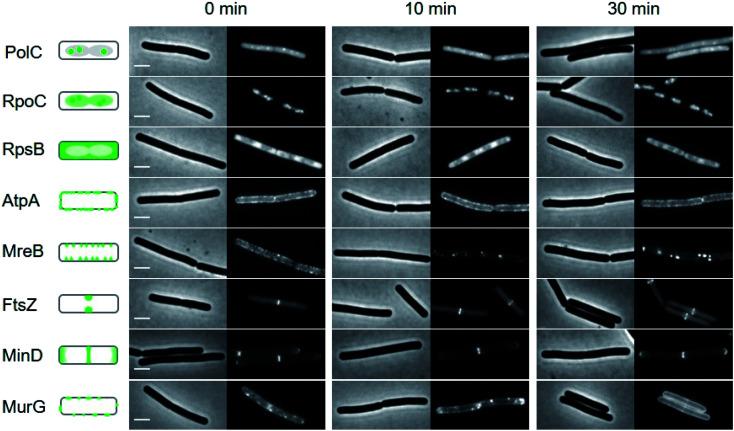
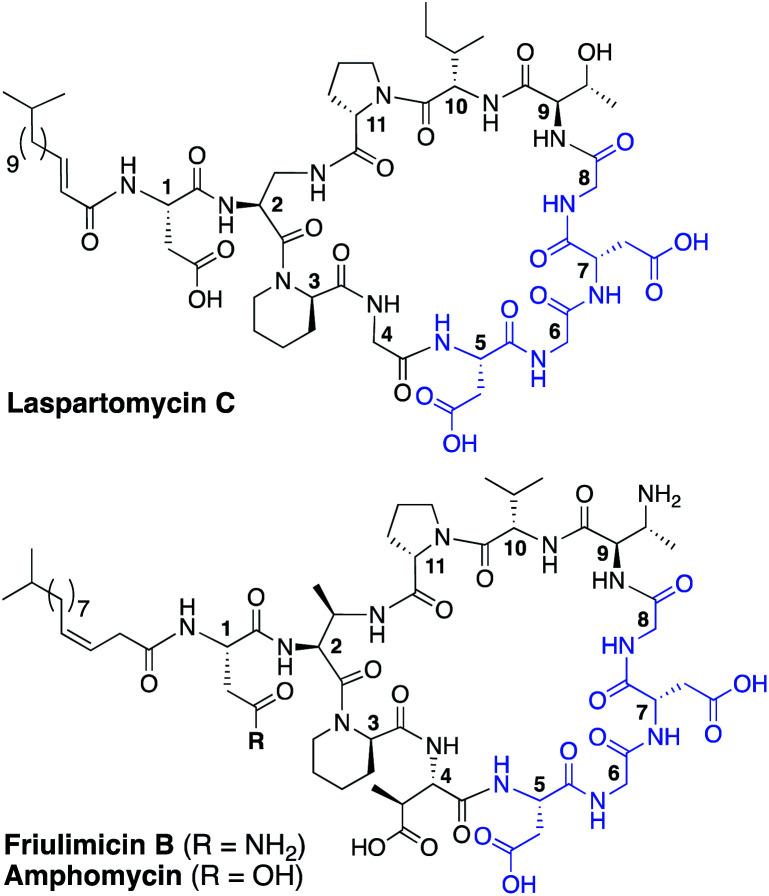
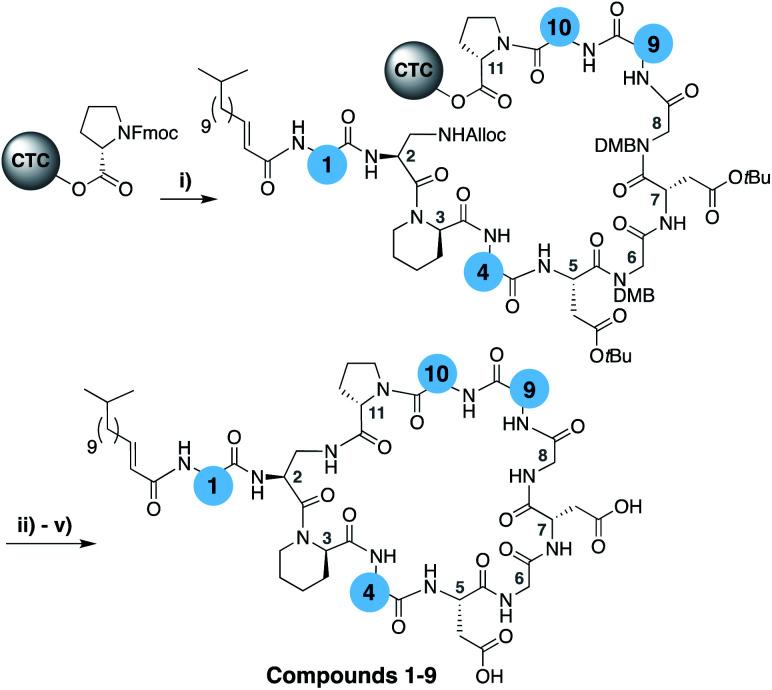
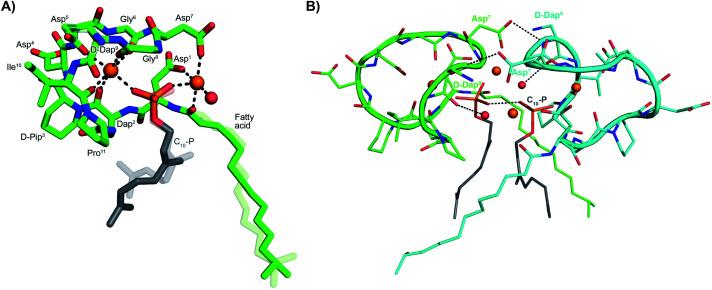
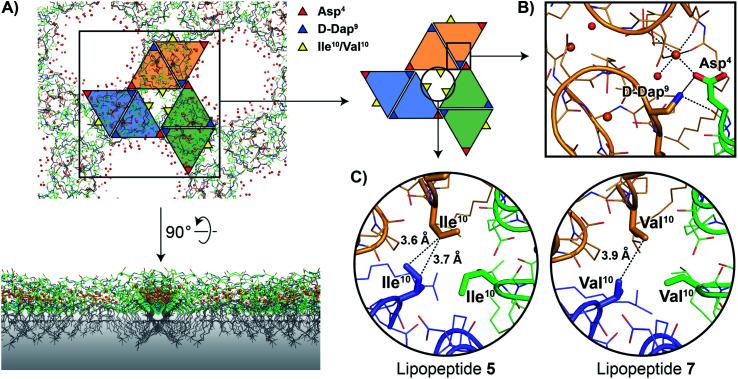
The continued rise of antibiotic resistance is a global concern that threatens to undermine many aspects of modern medical practice. Key to addressing this threat is the discovery and development of new antibiotics that operate by unexploited modes of action. The so-called calcium-dependent lipopeptide antibiotics (CDAs) are an important emerging class of natural products that provides a source of new antibiotic agents rich in structural and mechanistic diversity. Notable in this regard is the subset of CDAs comprising the laspartomycins and amphomycins/friulimicins that specifically target the bacterial cell wall precursor undecaprenyl phosphate (C-P). In this study we describe the design and synthesis of new C-P-targeting CDAs with structural features drawn from both the laspartomycin and amphomycin/friulimicin classes. Assessment of these lipopeptides revealed previously unknown and surprisingly subtle structural features that are required for antibacterial activity. High-resolution crystal structures further indicate that the amphomycin/friulimicin-like lipopeptides adopt a unique crystal packing that governs their interaction with C-P and provides an explanation for their antibacterial effect. In addition, live-cell microscopy studies provide further insights into the biological activity of the C-P targeting CDAs highlighting their unique mechanism of action relative to the clinically used CDA daptomycin.
抗生素耐药性的持续上升是一个全球关注的问题,有可能破坏现代医学实践的许多方面。应对这一威胁的关键在于发现和开发通过未被利用的作用方式发挥作用的新型抗生素。所谓的钙依赖性脂肽抗生素(CDAs)是一类重要的新兴天然产物,为富含结构和作用机制多样性的新型抗生素提供了来源。在这方面值得注意的是CDAs的一个子集,包括天冬霉素和两性霉素/弗留利霉素,它们专门靶向细菌细胞壁前体十一异戊烯磷酸(C-P)。在本研究中,我们描述了具有从天冬霉素和两性霉素/弗留利霉素类中提取的结构特征的新型靶向C-P的CDAs的设计与合成。对这些脂肽的评估揭示了抗菌活性所需的以前未知且令人惊讶的细微结构特征。高分辨率晶体结构进一步表明,两性霉素/弗留利霉素样脂肽采用独特的晶体堆积方式,这种堆积方式决定了它们与C-P的相互作用,并为它们的抗菌作用提供了解释。此外,活细胞显微镜研究进一步深入了解了靶向C-P的CDAs的生物活性,突出了它们相对于临床使用的CDA达托霉素的独特作用机制。
 Zotero 插件