
构建用于肺癌细胞转移研究的体外 3D 模型。
Construction of in vitro 3-D model for lung cancer-cell metastasis study.
机构信息
Department of Cardiothoracic Surgery, Huashan Hospital, Fudan University, Shanghai, P.R. China.
Qibao Community Health Service Center, Shanghai, P.R. China.
出版信息
BMC Cancer. 2022 Apr 21;22(1):438. doi: 10.1186/s12885-022-09546-9.
BACKGROUND
Cancer metastasis is the main cause of mortality in cancer patients. However, the drugs targeting metastasis processes are still lacking, which is partially due to the short of effective in vitro model for cell invasion studies. The traditional 2-D culture method cannot reveal the interaction between cells and the surrounding extracellular matrix during invasion process, while the animal models usually are too complex to explain mechanisms in detail. Therefore, a precise and efficient 3-D in vitro model is highly desirable for cell invasion studies and drug screening tests.
METHODS
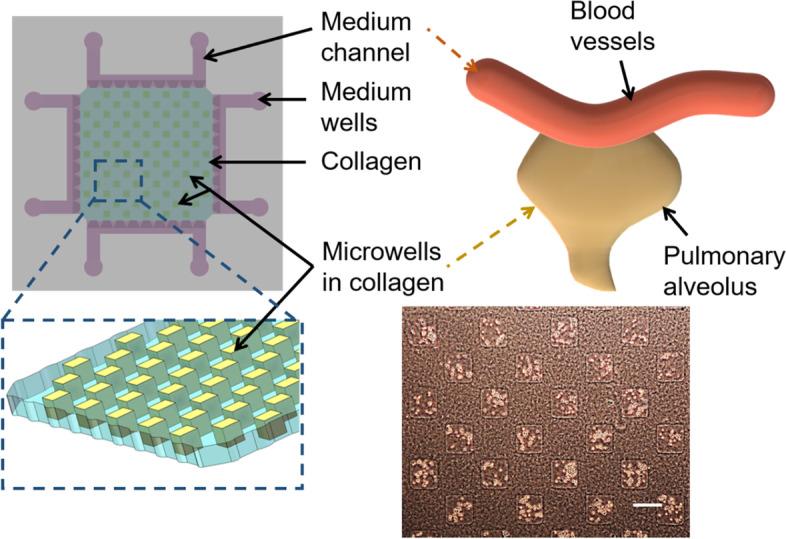
Precise micro-fabrication techniques are developed and integrated with soft hydrogels for constructing of 3-D lung-cancer micro-environment, mimicking the pulmonary gland or alveoli as in vivo.
RESULTS
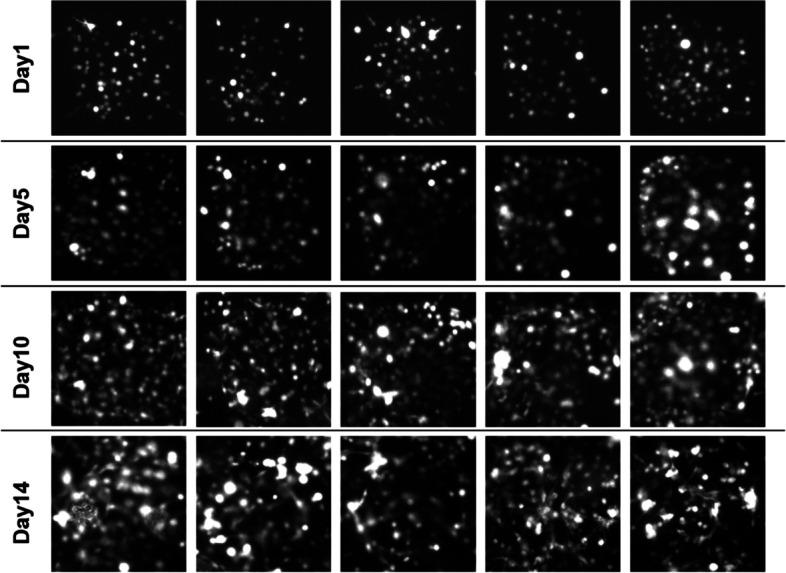
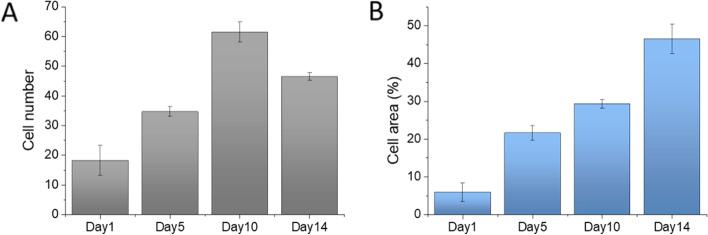
A 3-D in vitro model for cancer cell culture and metastasis studies is developed with advanced micro-fabrication technique, combining microfluidic system with soft hydrogel. The constructed microfluidic platform can provide nutrition and bio-chemical factors in a continuous transportation mode and has the potential to form stable chemical gradient for cancer invasion research. Hundreds of micro-chamber arrays are constructed within the collagen gel, ensuring that all surrounding substrates for tumor cells are composed of natural collagen hydrogel, like the in vivo micro-environment. The 3-D in vitro model can also provide a fully transparent platform for the visual observation of the cell morphology, proliferation, invasion, cell-assembly, and even the protein expression by immune-fluorescent tests if needed. The lung-cancer cells A549 and normal lung epithelial cells (HPAEpiCs) have been seeded into the 3-D system. It is found out that cells can normally proliferate in the microwells for a long period. Moreover, although the cancer cells A549 and alveolar epithelial cells HPAEpiCs have the similar morphology on 2-D solid substrate, in the 3-D system the cancer cells A549 distributed sparsely as single round cells on the extracellular matrix (ECM) when they attached to the substrate, while the normal lung epithelial cells can form cell aggregates, like the structure of normal tissue. Importantly, cancer cells cultured in the 3-D in vitro model can exhibit the interaction between cells and extracellular matrix. As shown in the confocal microscope images, the A549 cells present round and isolated morphology without much invasion into ECM, while starting from around Day 5, cells changed their shape to be spindle-like, as in mesenchymal morphology, and then started to destroy the surrounding ECM and invade out of the micro-chambers.
CONCLUSIONS
A 3-D in vitro model is constructed for cancer cell invasion studies, combining the microfluidic system and micro-chamber structures within hydrogel. To show the invasion process of lung cancer cells, the cell morphology, proliferation, and invasion process are all analyzed. The results confirmed that the micro-environment in the 3-D model is vital for revealing the lung cancer cell invasion as in vivo.
背景
癌症转移是癌症患者死亡的主要原因。然而,针对转移过程的药物仍然缺乏,部分原因是缺乏有效的体外细胞侵袭研究模型。传统的 2D 培养方法无法揭示细胞在侵袭过程中与周围细胞外基质的相互作用,而动物模型通常过于复杂,无法详细解释机制。因此,对于细胞侵袭研究和药物筛选测试,非常需要精确和高效的 3D 体外模型。
方法
开发了精确的微制造技术,并与软水凝胶集成,构建了 3D 肺癌微环境模型,模拟体内肺腺或肺泡。
结果
利用先进的微制造技术,结合微流控系统和软水凝胶,开发了用于癌症细胞培养和转移研究的 3D 体外模型。所构建的微流控平台可提供连续运输方式的营养和生化因子,并具有形成稳定化学梯度用于癌症侵袭研究的潜力。在胶原凝胶内构建了数百个微腔阵列,确保肿瘤细胞的所有周围基质均由天然胶原水凝胶组成,就像体内微环境一样。3D 体外模型还可以为细胞形态、增殖、侵袭、细胞组装的可视化观察提供一个完全透明的平台,如果需要,甚至可以通过免疫荧光测试进行蛋白质表达观察。已将肺癌细胞 A549 和正常肺上皮细胞(HPAEpiCs)接种到 3D 系统中。结果发现,细胞可以在微井中长期正常增殖。此外,尽管肺癌细胞 A549 和肺泡上皮细胞 HPAEpiCs 在 2D 固体基质上具有相似的形态,但在 3D 系统中,当附着到基质上时,A549 细胞呈单个圆形细胞稀疏分布在细胞外基质(ECM)上,而正常肺上皮细胞可以形成细胞聚集物,类似于正常组织的结构。重要的是,在 3D 体外模型中培养的癌细胞可以表现出细胞与细胞外基质之间的相互作用。如共聚焦显微镜图像所示,A549 细胞呈圆形且孤立形态,没有太多侵袭 ECM,而从第 5 天左右开始,细胞形状变为梭形,呈间充质形态,然后开始破坏周围的 ECM 并从微腔中侵袭出来。
结论
构建了一种用于癌症细胞侵袭研究的 3D 体外模型,该模型结合了微流控系统和水凝胶内的微腔结构。为了展示肺癌细胞的侵袭过程,分析了细胞形态、增殖和侵袭过程。结果证实,3D 模型中的微环境对于揭示体内肺癌细胞的侵袭至关重要。



 Zotero 插件