
唾液中与蛋白质结合的唾液酸直接有助于唾液的抗流感病毒活性。
Protein-bound sialic acid in saliva contributes directly to salivary anti-influenza virus activity.
作者信息
Kobayashi Kaori, Shono Chika, Mori Takuya, Kitazawa Hidefumi, Ota Noriyasu, Kurebayashi Yuki, Suzuki Takashi
机构信息
Biological Science Laboratories, Kao Corporation, 2606 Akabane, Ichikai, Haga, Tochigi, 321-3497, Japan.
Department of Biochemistry, School of Pharmaceutical Sciences, University of Shizuoka, 52-1 Yada, Suruga-ku, Shizuoka, 422-8526, Japan.
出版信息
Sci Rep. 2022 Apr 22;12(1):6636. doi: 10.1038/s41598-022-10559-4.
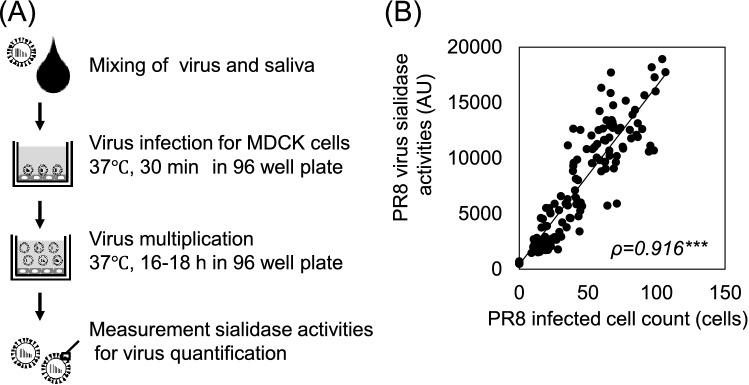
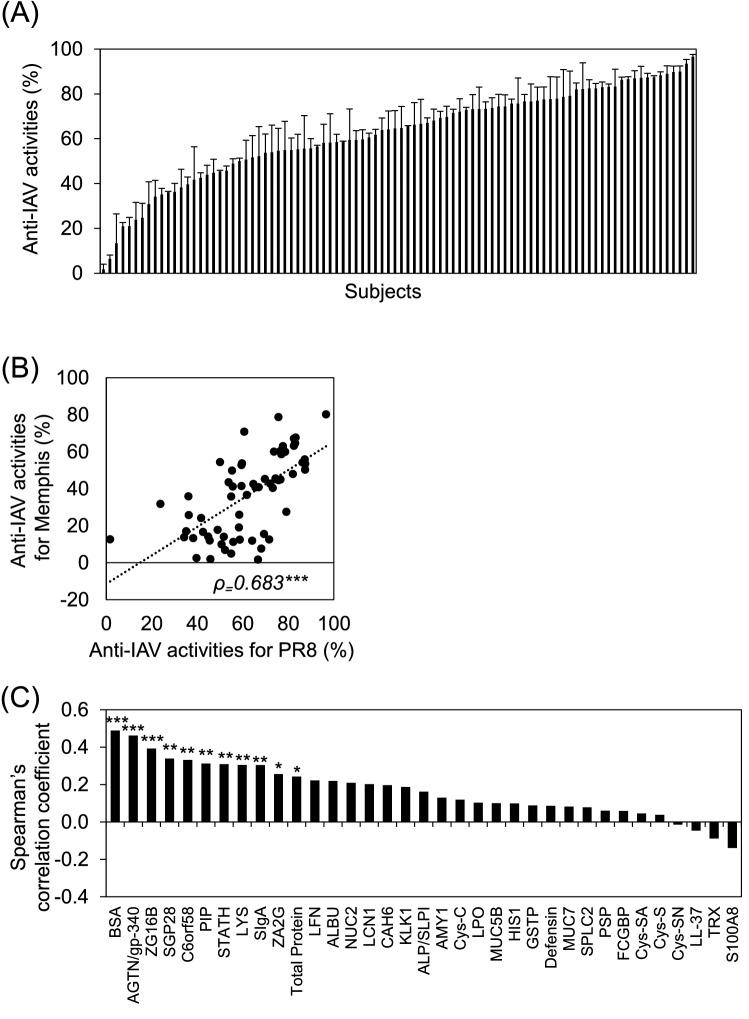
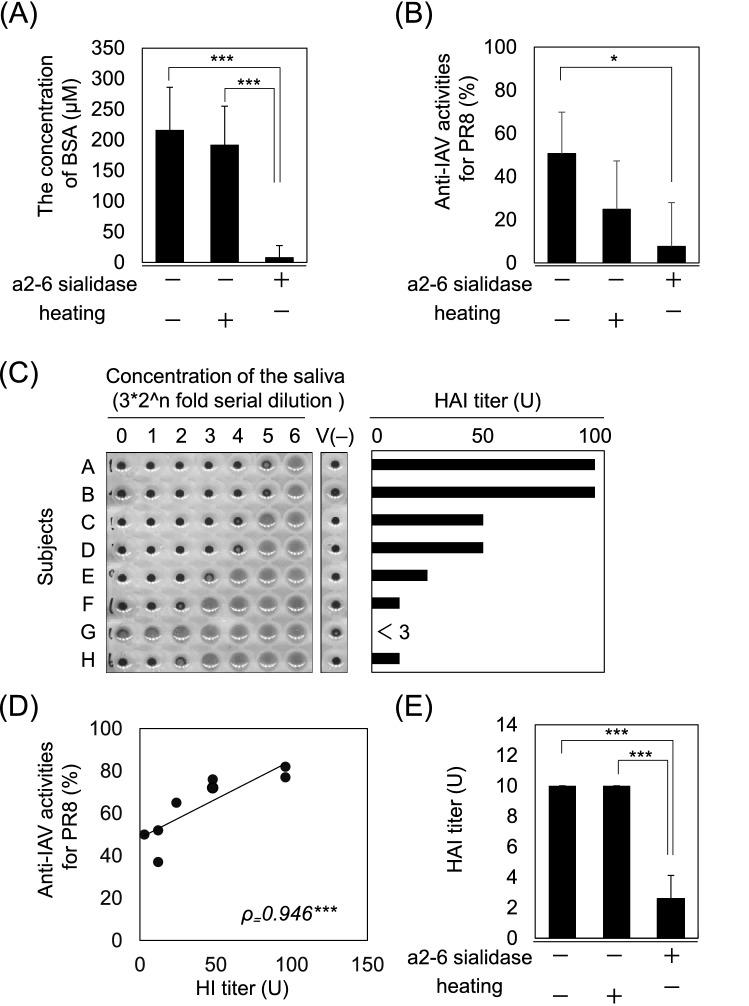
The oral cavity is an entrance for respiratory viruses, such as influenza. Recently, saliva has been shown to exert both antimicrobial and antiviral activities. Thus, saliva may be a biological factor that contributes to the prevention of influenza infection. However, the actual salivary anti-influenza A virus (IAV) activity in individuals and its determinant factors are unknown. By assessing individual variations in salivary anti-IAV activity in 92 people using an established new high-throughput system in this study, we found that the anti-IAV activity varied widely between individuals and showed a significant positive correlation with protein-bound sialic acid (BSA) level (ρ = 0.473; p < 0.001). Furthermore, the anti-IAV activity of saliva with enzymatically reduced BSA content was significantly lower. These results indicate that BSA is a direct regulator of salivary anti-IAV activity and is a determinant of individual differences. Additionally, after comparing the anti-IAV activity across the groups by age, anti-IAV activity in young people (aged 5-19 years) were lower than in adults aged 20-59 years and elderly people aged 60-79 years. Our study suggests that BSA levels in saliva may be important in preventing influenza infection.
口腔是流感等呼吸道病毒的入口。最近,唾液已被证明具有抗菌和抗病毒活性。因此,唾液可能是有助于预防流感感染的生物学因素。然而,个体唾液中实际的抗甲型流感病毒(IAV)活性及其决定因素尚不清楚。在本研究中,我们使用一种已建立的新的高通量系统评估了92人的唾液抗IAV活性的个体差异,发现抗IAV活性在个体之间差异很大,并且与蛋白质结合唾液酸(BSA)水平呈显著正相关(ρ = 0.473;p < 0.001)。此外,酶促降低BSA含量的唾液的抗IAV活性显著降低。这些结果表明,BSA是唾液抗IAV活性的直接调节剂,也是个体差异的决定因素。此外,按年龄比较各组的抗IAV活性后,年轻人(5 - 19岁)的抗IAV活性低于20 - 59岁的成年人和60 - 79岁的老年人。我们的研究表明,唾液中的BSA水平可能对预防流感感染很重要。

 Zotero 插件