
利用手机数据估算动态人口变化并增进对大流行病的理解:安道尔的案例研究
Using mobile phone data to estimate dynamic population changes and improve the understanding of a pandemic: A case study in Andorra.
作者信息
Berke Alex, Doorley Ronan, Alonso Luis, Arroyo Vanesa, Pons Marc, Larson Kent
机构信息
Media Lab, Massachusetts Institute of Technology, Cambridge, MA, United States of America.
Andorra Recerca + Innovació, Andorra.
出版信息
PLoS One. 2022 Apr 26;17(4):e0264860. doi: 10.1371/journal.pone.0264860. eCollection 2022.
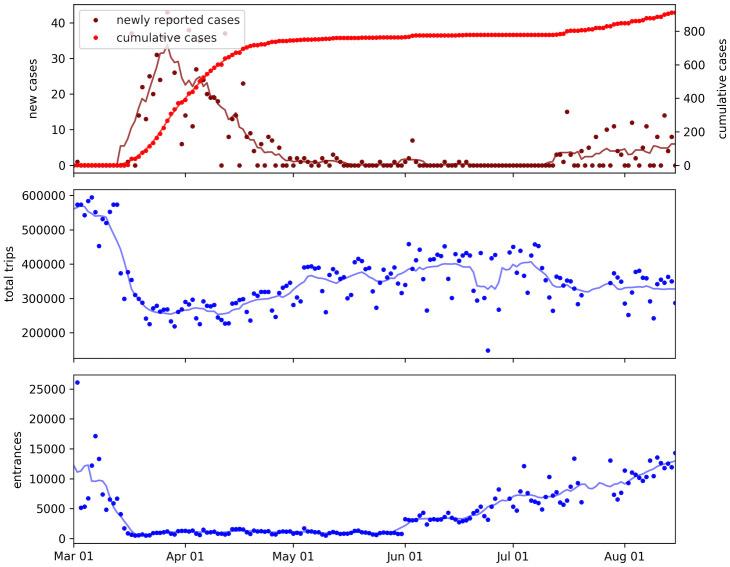
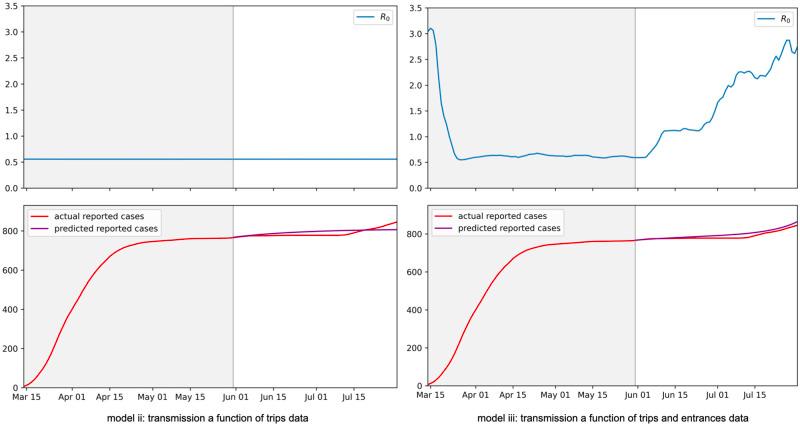
Compartmental models are often used to understand and predict the progression of an infectious disease such as COVID-19. The most basic of these models consider the total population of a region to be closed. Many incorporate human mobility into their transmission dynamics, usually based on static and aggregated data. However, mobility can change dramatically during a global pandemic as seen with COVID-19, making static data unsuitable. Recently, large mobility datasets derived from mobile devices have been used, along with COVID-19 infections data, to better understand the relationship between mobility and COVID-19. However, studies to date have relied on data that represent only a fraction of their target populations, and the data from mobile devices have been used for measuring mobility within the study region, without considering changes to the population as people enter and leave the region. This work presents a unique case study in Andorra, with comprehensive datasets that include telecoms data covering 100% of mobile subscribers in the country, and results from a serology testing program that more than 90% of the population voluntarily participated in. We use the telecoms data to both measure mobility within the country and to provide a real-time census of people entering, leaving and remaining in the country. We develop multiple SEIR (compartmental) models parameterized on these metrics and show how dynamic population metrics can improve the models. We find that total daily trips did not have predictive value in the SEIR models while country entrances did. As a secondary contribution of this work, we show how Andorra's serology testing program was likely impacted by people leaving the country. Overall, this case study suggests how using mobile phone data to measure dynamic population changes could improve studies that rely on more commonly used mobility metrics and the overall understanding of a pandemic.
compartments模型常用于理解和预测诸如COVID-19等传染病的传播进程。其中最基本的模型认为一个地区的总人口是封闭的。许多模型将人口流动纳入其传播动态,通常基于静态和汇总数据。然而,正如COVID-19所显示的那样,在全球大流行期间,人口流动可能会发生巨大变化,使得静态数据不再适用。最近,来自移动设备的大型人口流动数据集已与COVID-19感染数据一起被用于更好地理解人口流动与COVID-19之间的关系。然而,迄今为止的研究仅依赖于代表其目标人群一小部分的数据,并且来自移动设备的数据仅用于测量研究区域内的人口流动,而没有考虑到随着人们进出该区域人口的变化。这项工作展示了安道尔的一个独特案例研究,拥有全面的数据集,包括覆盖该国100%移动用户的电信数据,以及一个血清学检测项目的结果,该项目有超过90%的人口自愿参与。我们使用电信数据来测量国内的人口流动,并提供进入、离开和留在该国的人员的实时人口普查。我们基于这些指标开发了多个SEIR( compartments)模型,并展示了动态人口指标如何改进这些模型。我们发现,每日总出行次数在SEIR模型中没有预测价值,而进入该国的人数有预测价值。作为这项工作的第二个贡献,我们展示了安道尔的血清学检测项目可能如何受到人们离开该国的影响。总体而言,这个案例研究表明,使用手机数据来测量动态人口变化如何能够改进依赖于更常用人口流动指标的研究以及对大流行的整体理解。



 Zotero 插件