
BRAF和MEK抑制剂的心血管毒性:机制与临床概述——最新综述
Mechanistic and Clinical Overview Cardiovascular Toxicity of BRAF and MEK Inhibitors: State-of-the-Art Review.
作者信息
Glen Claire, Tan Yun Yi, Waterston Ashita, Evans Thomas R Jeffry, Jones Robert J, Petrie Mark C, Lang Ninian N
机构信息
Institute of Cardiovascular and Medical Sciences, University of Glasgow, Glasgow, United Kingdom.
Beatson West of Scotland Cancer Centre, NHS Greater Glasgow and Clyde, Glasgow, United Kingdom.
出版信息
JACC CardioOncol. 2022 Mar 15;4(1):1-18. doi: 10.1016/j.jaccao.2022.01.096. eCollection 2022 Mar.
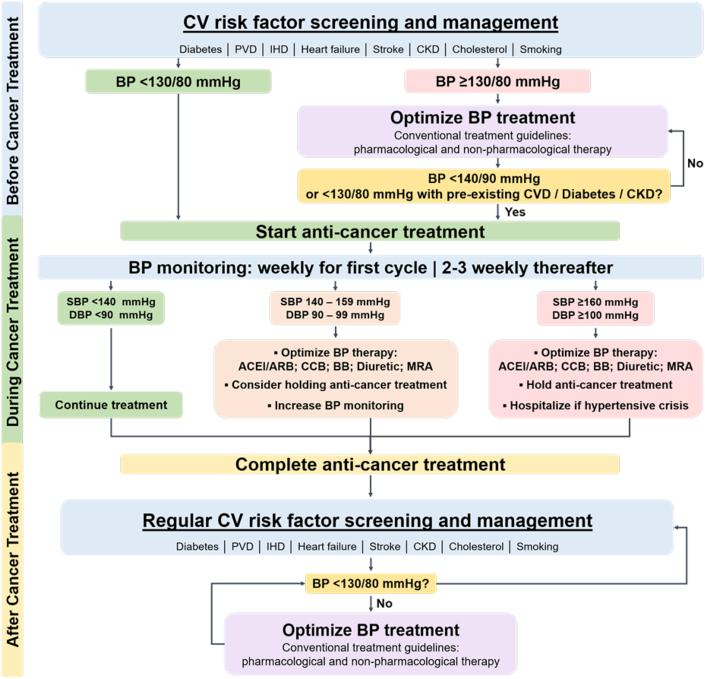
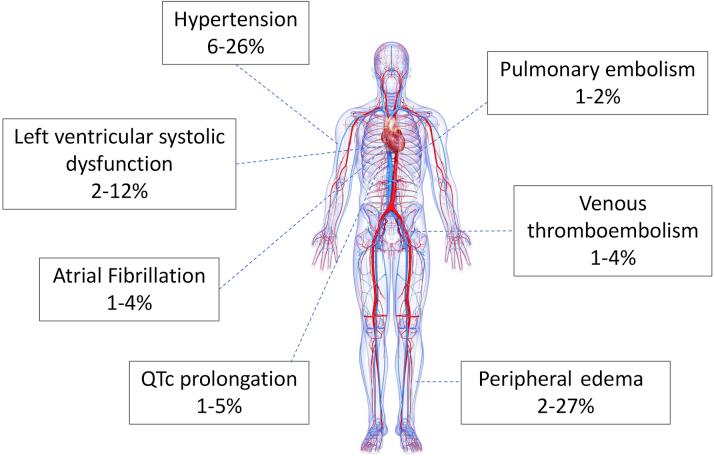
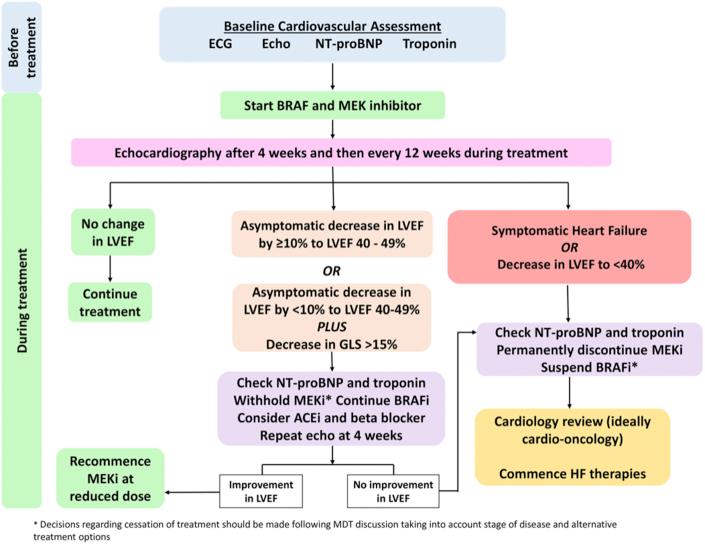
Rapidly accelerated fibrosarcoma B-type (BRAF) and mitogen-activated extracellular signal-regulated kinase (MEK) inhibitors have revolutionized melanoma treatment. Approximately half of patients with melanoma harbor a BRAF gene mutation with subsequent dysregulation of the RAF-MEK-ERK signaling pathway. Targeting this pathway with BRAF and MEK blockade results in control of cell proliferation and, in most cases, disease control. These pathways also have cardioprotective effects and are necessary for normal vascular and cardiac physiology. BRAF and MEK inhibitors are associated with adverse cardiovascular effects including hypertension, left ventricular dysfunction, venous thromboembolism, atrial arrhythmia, and electrocardiographic QT interval prolongation. These effects may be underestimated in clinical trials. Baseline cardiovascular assessment and follow-up, including serial imaging and blood pressure assessment, are essential to balance optimal anti-cancer therapy while minimizing cardiovascular side effects. In this review, an overview of BRAF/MEK inhibitor-induced cardiovascular toxicity, the mechanisms underlying these, and strategies for surveillance, prevention, and treatment of these effects are provided.
快速加速纤维肉瘤B型(BRAF)和丝裂原活化细胞外信号调节激酶(MEK)抑制剂彻底改变了黑色素瘤的治疗方法。大约一半的黑色素瘤患者存在BRAF基因突变,随后RAF-MEK-ERK信号通路失调。用BRAF和MEK阻断剂靶向该通路可控制细胞增殖,在大多数情况下还可控制疾病。这些通路也具有心脏保护作用,对正常的血管和心脏生理功能至关重要。BRAF和MEK抑制剂与不良心血管效应相关,包括高血压、左心室功能障碍、静脉血栓栓塞、房性心律失常和心电图QT间期延长。这些效应在临床试验中可能被低估。基线心血管评估和随访,包括系列影像学检查和血压评估,对于在尽量减少心血管副作用的同时平衡最佳抗癌治疗至关重要。在这篇综述中,概述了BRAF/MEK抑制剂引起的心血管毒性、其潜在机制以及监测、预防和治疗这些效应的策略。


 Zotero 插件