
用于类风湿性关节炎模型中次氯酸检测与监测的喹啉基荧光探针。
Quinoline-based fluorescent probe for the detection and monitoring of hypochlorous acid in a rheumatoid arthritis model.
作者信息
Yang Xinyi, Wang Yue, Shang Zhuye, Zhang Zexi, Chi Haijun, Zhang Zhiqiang, Zhang Run, Meng Qingtao
机构信息
School of Chemical Engineering, University of Science and Technology Liaoning Anshan Liaoning 114051 P. R. China
Australian Institute for Bioengineering and Nanotechnology, The University of Queensland Brisbane 4072 Australia.
出版信息
RSC Adv. 2021 Sep 24;11(50):31656-31662. doi: 10.1039/d1ra06224g. eCollection 2021 Sep 21.
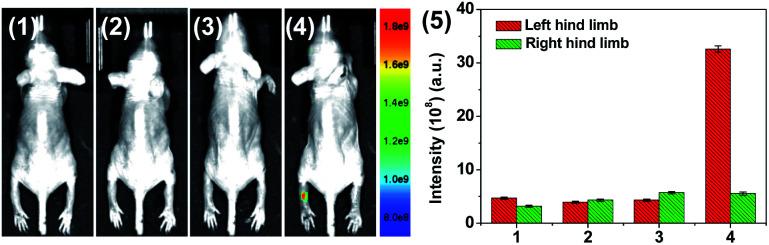
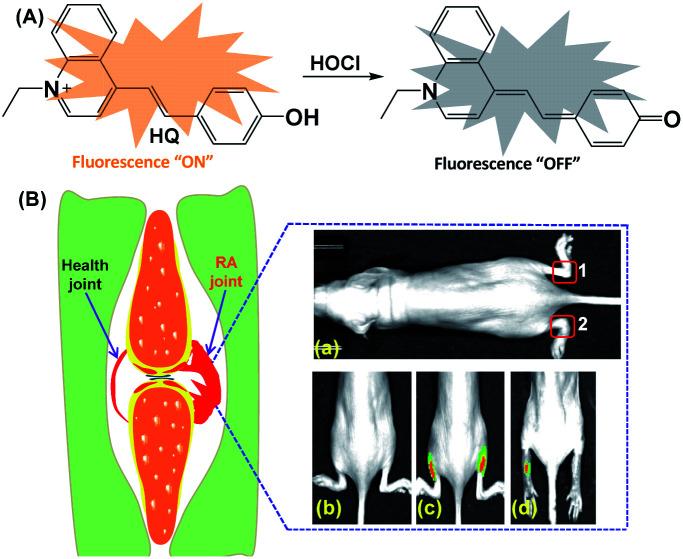
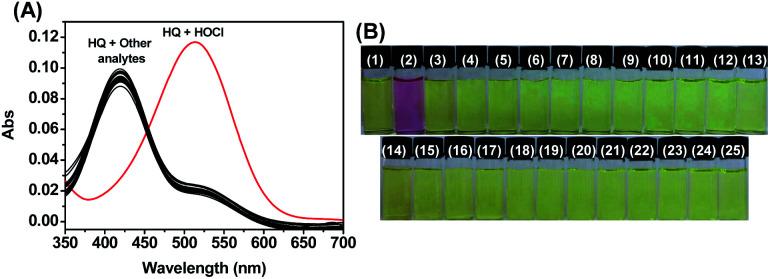
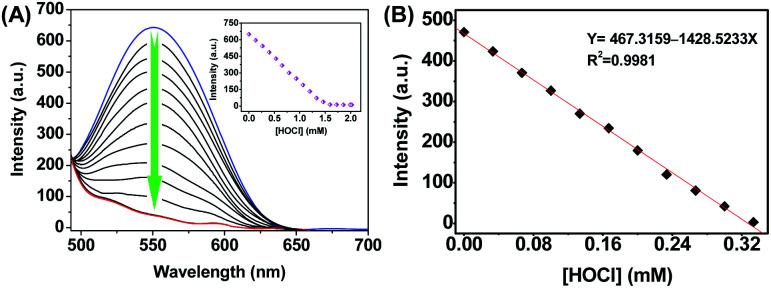
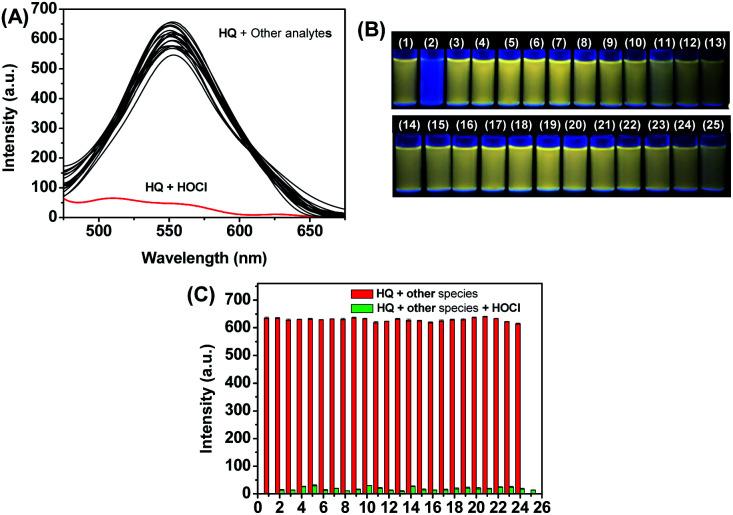
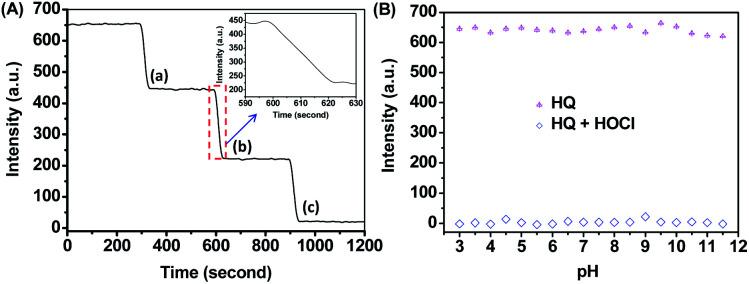
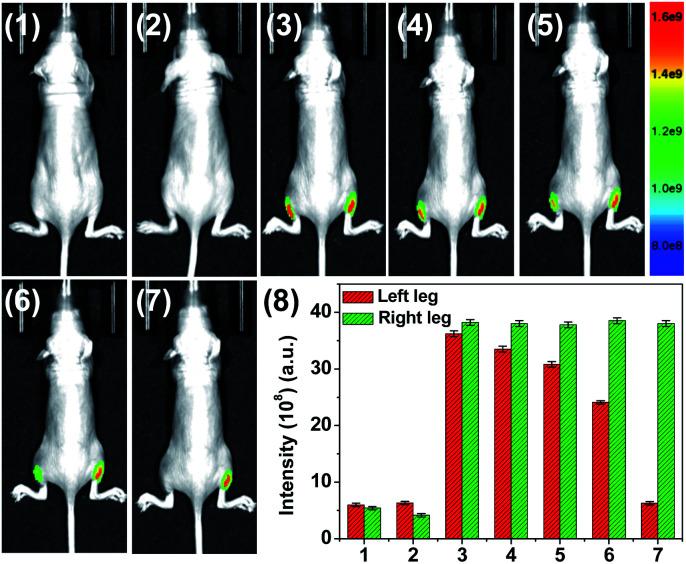
The development of effective bioanalytical methods for the visualization of hypochlorous acid (HOCl) in rheumatoid arthritis (RA) directly contributes to better understanding the roles of HOCl in this disease. In this work, a new quinoline-based fluorescence probe (HQ) has been developed for the detection and visualization of a HOCl-mediated inflammatory response in a RA model. HQ possesses a donor-π-acceptor (D-π-A) structure that was designed by conjugating -hydroxybenzaldehyde (electron donor) and 1-ethyl-4-methylquinolinium iodide (electron acceptor) through a C[double bond, length as m-dash]C double bond. In the presence of HOCl, oxidation of phenol to benzoquinone led to the red-shift (93 nm) of the adsorption and intense quenching of the fluorescence emission. The proposed response reaction mechanism was verified by high performance liquid chromatography (HPLC) and high-resolution mass spectroscopy (HRMS) titration analysis. The remarkable color changes of the HQ solution from pale yellow to pink enabled the application of HQ-stained chromatography plates for the "naked-eye" detection of HOCl in real-world water samples. HQ featured high selectivity and sensitivity (6.5 nM), fast response time (<25 s) to HOCl, reliability at different pH (3.0 to 11.5) and low cytotoxicity. HQ's application in biological systems was then demonstrated by the monitoring of HOCl-mediated treatment response to RA. This work thus provided a new tool for the detection and imaging of HOCl in inflammatory disorders.
开发有效的生物分析方法以可视化类风湿关节炎(RA)中的次氯酸(HOCl),直接有助于更好地理解HOCl在该疾病中的作用。在这项工作中,开发了一种基于喹啉的新型荧光探针(HQ),用于检测和可视化RA模型中HOCl介导的炎症反应。HQ具有供体-π-受体(D-π-A)结构,该结构是通过将对羟基苯甲醛(电子供体)和1-乙基-4-甲基喹啉碘化物(电子受体)通过C=C双键共轭而设计的。在HOCl存在下,苯酚氧化为苯醌导致吸附红移(93nm)和荧光发射强烈猝灭。通过高效液相色谱(HPLC)和高分辨率质谱(HRMS)滴定分析验证了所提出的反应机理。HQ溶液从浅黄色到粉红色的显著颜色变化使得HQ染色的色谱板可用于实际水样中HOCl的“肉眼”检测。HQ具有高选择性和灵敏度(6.5 nM),对HOCl的响应时间快(<25 s),在不同pH(3.0至11.5)下具有可靠性且细胞毒性低。然后通过监测HOCl介导的对RA的治疗反应来证明HQ在生物系统中的应用。因此,这项工作为炎症性疾病中HOCl的检测和成像提供了一种新工具。


 Zotero 插件