
肠道微生物群与炎症性肠病和 COVID-19 严重程度的关联:免疫反应改变的可能结果。
Association of Gut Microbiota with Inflammatory Bowel Disease and COVID-19 Severity: A Possible Outcome of the Altered Immune Response.
机构信息
, Auckland, New Zealand.
Independent University, Bangladesh (IUB), Dhaka, Bangladesh.
出版信息
Curr Microbiol. 2022 May 5;79(6):184. doi: 10.1007/s00284-022-02877-7.
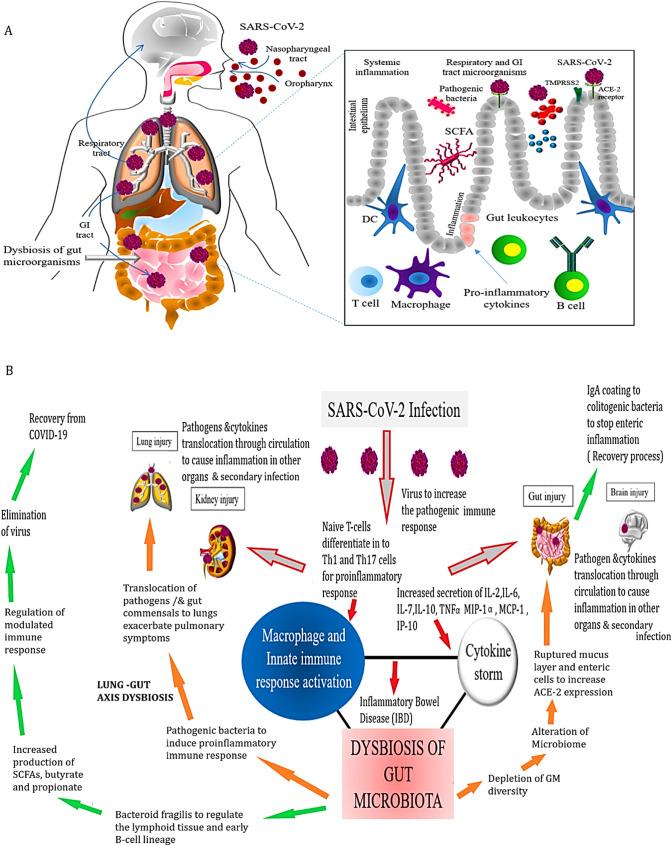
Inflammatory bowel disease could be induced by SARS-CoV-2, involved in alteration of gut microbiota during the respiratory viral infection. Presence of viral RNA in fecal samples for longer period, even after the clearance of the virus from respiratory tract, is suggestive of dysbiosis leading to the poor prognosis of COVID-19 in hospitalized patients. Gut microbiome (GM) plays a significant role to stimulate the modulated antiviral immune response against invading pathogens regulating the physiological homeostasis. GM profile of COVID-19 patients has revealed the drastic depletion of dominant families of commensals in the gut such as, Bacteroidaceae, Lachnospiraceae and Ruminococcaceae to be replaced with Enterococcus, Staphylococcus, Streptococcus, Serratia etc. Immune dysfunction of Th1-Th17 cells along gut-lung axis impairs the mucosal lining translocating the microorganisms including commensals and metabolites to other body organs like lungs, brain, kidney through circulation. These events may cause hyper inflammations associated with excessive secretion of cytokines and chemokines to form the cytokine storm causing ARDS. Gut virome could interact with microbiome and immune cells, help establishing the antiviral immune signaling, important for health maintenance/ or in disease progression. Essentially, these immunological strategies are needed to use in future prospective therapeutics to control the severity events.
SARS-CoV-2 可能引发炎症性肠病,在呼吸道病毒感染过程中改变肠道微生物群。粪便样本中存在更长时间的病毒 RNA,甚至在病毒从呼吸道清除后,提示肠道菌群失调导致住院 COVID-19 患者预后不良。肠道微生物组(GM)在刺激针对入侵病原体的调节性抗病毒免疫反应方面发挥重要作用,调节生理稳态。COVID-19 患者的 GM 谱显示,肠道中优势共生菌群(如拟杆菌科、lachnospiraceae 和 ruminococcaceae)明显减少,而肠球菌、葡萄球菌、链球菌、沙雷氏菌等取代了它们。Th1-Th17 细胞的免疫功能障碍沿肠道-肺轴损害黏膜衬里,使微生物(包括共生菌和代谢物)通过循环转移到肺部、大脑、肾脏等其他器官。这些事件可能导致与细胞因子和趋化因子过度分泌相关的过度炎症,形成细胞因子风暴,导致 ARDS。肠道病毒组可以与微生物群和免疫细胞相互作用,有助于建立抗病毒免疫信号,这对维持健康或疾病进展很重要。从本质上讲,这些免疫策略需要在未来的治疗中使用,以控制严重事件。


 Zotero 插件