
分子对接揭示了黄酮类化合物抑制新冠病毒主要蛋白酶的潜力。
Molecular docking reveals the potential of flavonoids to inhibit COVID-19 virus main protease.
作者信息
Owis Asmaa I, El-Hawary Marwa S, El Amir Dalia, Aly Omar M, Abdelmohsen Usama Ramadan, Kamel Mohamed S
机构信息
Pharmacognosy Department, Faculty of Pharmacy, Beni-Suef University Beni-Suef 62111 Egypt
Pharmacognosy Department, Faculty of Pharmacy, Deraya University Minia 61111 Egypt.
出版信息
RSC Adv. 2020 May 21;10(33):19570-19575. doi: 10.1039/d0ra03582c. eCollection 2020 May 20.
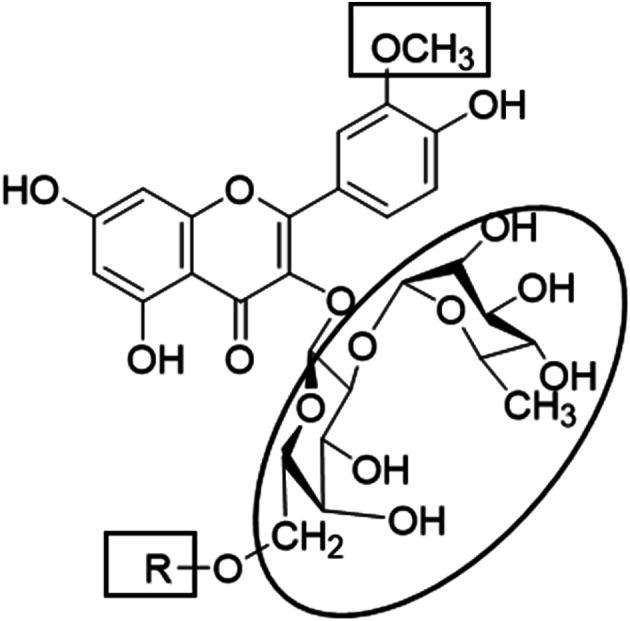
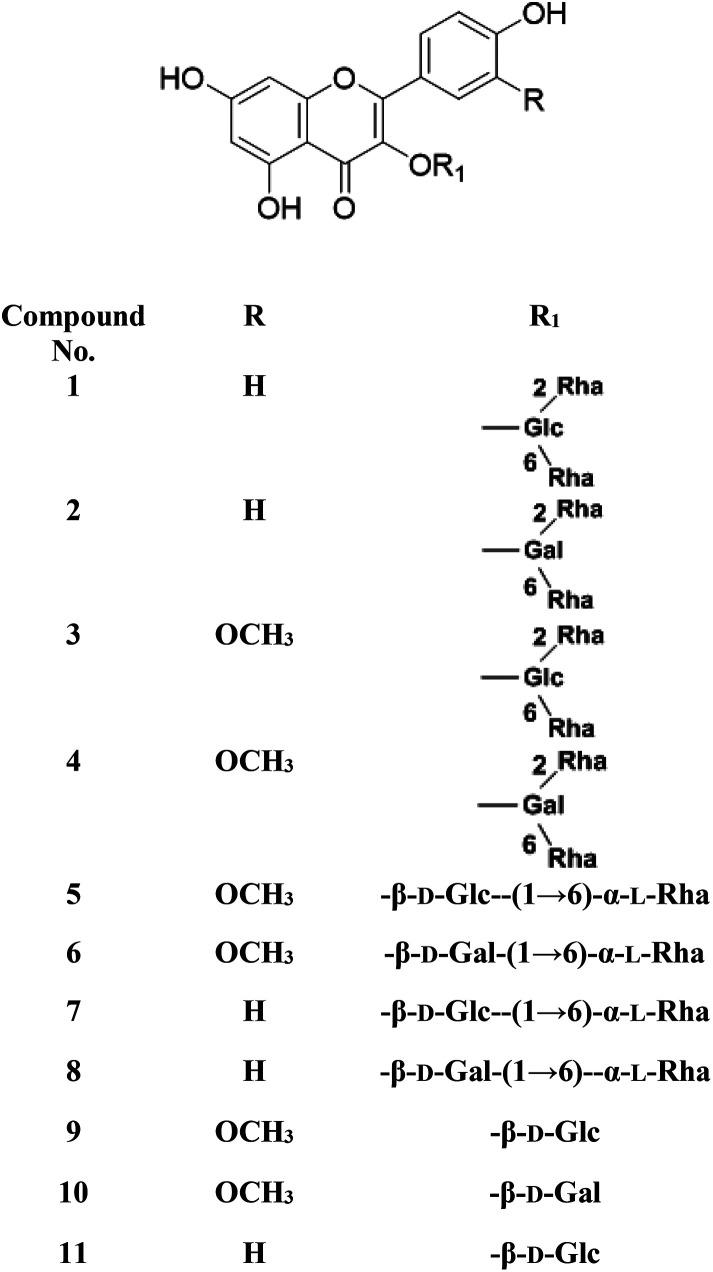
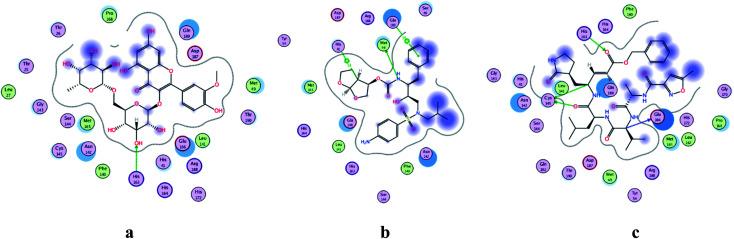
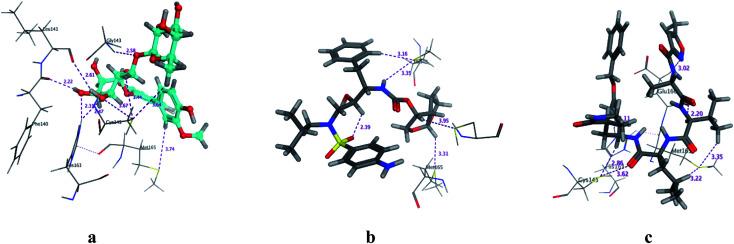
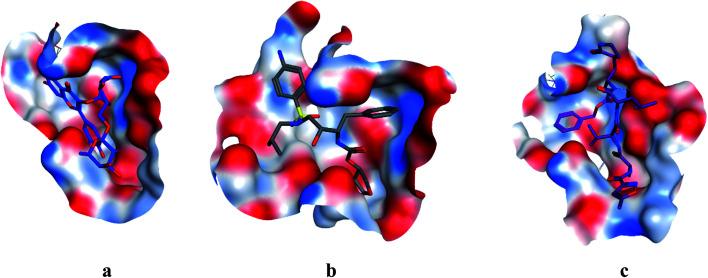
In December 2019, an outbreak of coronavirus disease 2019 (COVID-19) commenced in Wuhan, China and affected around 210 countries and territories in a matter of weeks. It has a phylogenetic similarity to SARS-CoV and it was named coronavirus 2 (SARS-CoV-2) and caused severe acute respiratory syndrome that could lead to death. One of the promising therapeutic strategies for virus infection is the search for enzyme inhibitors among natural compounds using molecular docking in order to obtain products with minimal side effects. COVID-19 virus main protease plays a vital role in mediating viral transcription and replication, introducing it as an attractive antiviral agent target. Metabolic profiling of the aqueous extract of L. (Salvadoraceae) aerial parts dereplicated eleven known flavonol glycosides using LC-HRESIMS. All the annotated flavonoids exhibited significant binding stability at the N3 binding site to different degrees, except isorhamnetin-3--β-d-glucopyranoside, when compared with the currently used COVID-19 main protease inhibitor, darunavir. Structural similarity between the identified flavonoids enabled the study of the relationship between their structure and interactions with the receptor in the N3 binding site of the COVID-19 main protease. The results indicate that the basic flavonol nucleus possesses activity itself. Moreover, the presence of a rutinose moiety at the 3 position of ring C and absence of an -methyl group in ring B of the flavonol structure could increase the binding stability. This study provides a scientific basis for the health benefits of the regular use of as it leaches bioactive flavonoids in the aqueous saliva.
2019年12月,新型冠状病毒肺炎(COVID-19)疫情在中国武汉爆发,并在数周内影响了约210个国家和地区。它与严重急性呼吸综合征冠状病毒(SARS-CoV)具有系统发育相似性,被命名为冠状病毒2(SARS-CoV-2),可引发严重急性呼吸综合征并导致死亡。病毒感染的一种有前景的治疗策略是利用分子对接在天然化合物中寻找酶抑制剂,以获得副作用最小的产品。COVID-19病毒主要蛋白酶在介导病毒转录和复制中起关键作用,使其成为有吸引力的抗病毒药物靶点。使用液相色谱-高分辨电喷雾电离质谱(LC-HRESIMS)对L.(刺茉莉科)地上部分水提取物进行代谢谱分析,鉴定出11种已知的黄酮醇苷。与目前使用的COVID-19主要蛋白酶抑制剂达芦那韦相比,除异鼠李素-3--β-d-吡喃葡萄糖苷外,所有注释的黄酮类化合物在N3结合位点均表现出不同程度的显著结合稳定性。所鉴定黄酮类化合物之间的结构相似性使得能够研究它们的结构与在COVID-19主要蛋白酶N3结合位点与受体相互作用之间的关系。结果表明,黄酮醇基本核本身具有活性。此外,可以增加结合稳定性的是,黄酮醇结构中C环3位存在芦丁糖部分且B环不存在甲基。本研究为经常食用L.提供了健康益处的科学依据,因为它在唾液中浸出生物活性黄酮类化合物。
 Zotero 插件