
人源 UFSP1 从上游近同源起始密码子翻译后作为一种有效的 UFM1 特异性蛋白酶发挥作用。
Human UFSP1 translated from an upstream near-cognate initiation codon functions as an active UFM1-specific protease.
机构信息
Key Laboratory of Aging and Cancer Biology of Zhejiang Province, School of Basic Medical Sciences, Hangzhou Normal University, Hangzhou, China.
Key Laboratory of Aging and Cancer Biology of Zhejiang Province, School of Basic Medical Sciences, Hangzhou Normal University, Hangzhou, China.
出版信息
J Biol Chem. 2022 Jun;298(6):102016. doi: 10.1016/j.jbc.2022.102016. Epub 2022 May 5.
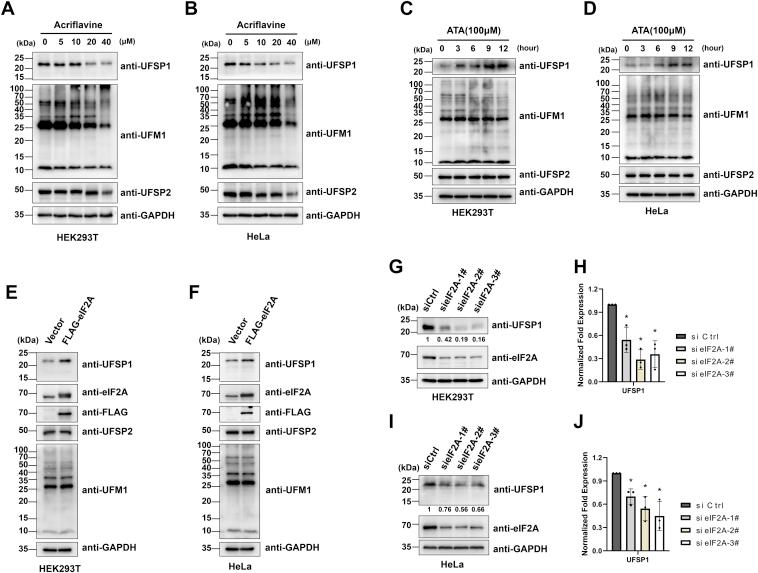
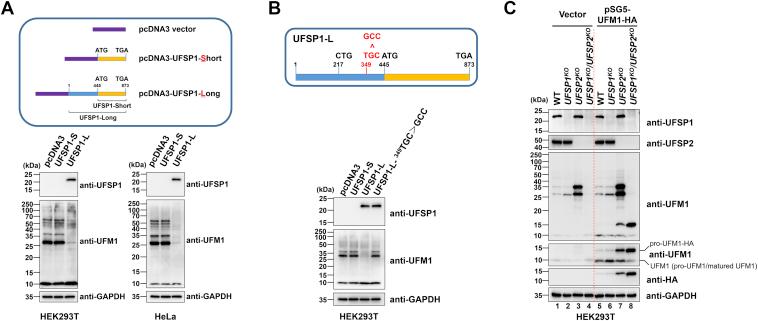
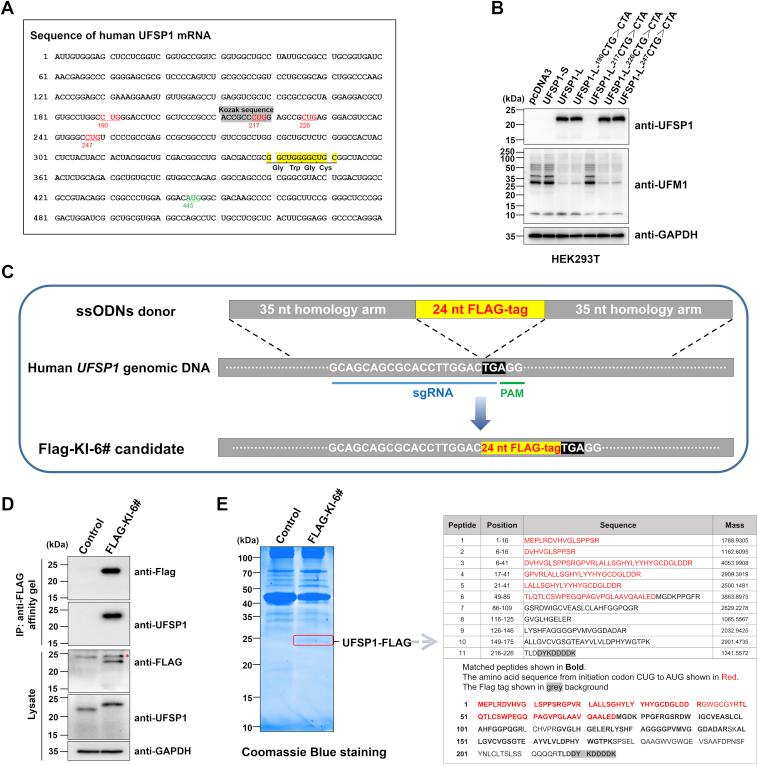
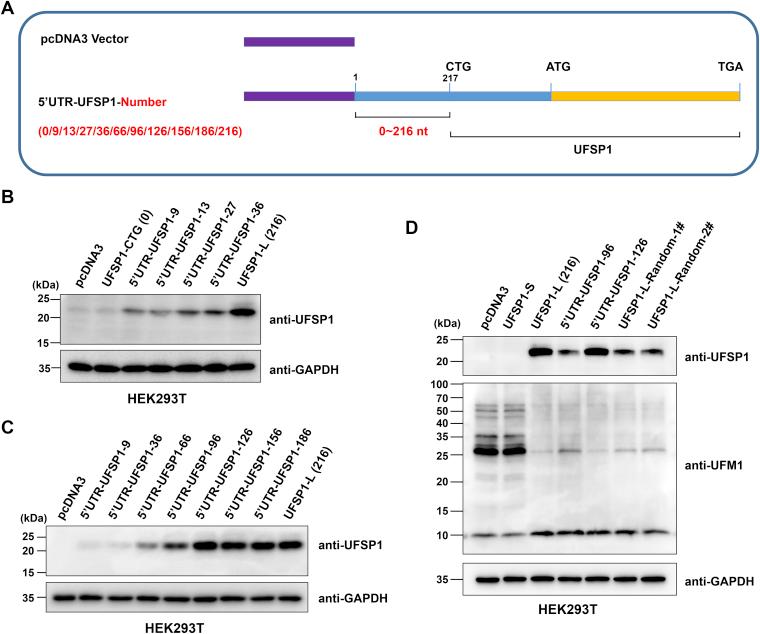
Ubiquitin-fold modifier 1 (UFM1) is a recently identified ubiquitin-like posttranslational modification with important biological functions. However, the regulatory mechanisms governing UFM1 modification of target proteins (UFMylation) and the cellular processes controlled by UFMylation remain largely unknown. It has been previously shown that a UFM1-specific protease (UFSP2) mediates the maturation of the UFM1 precursor and drives the de-UFMylation reaction. Furthermore, it has long been thought that UFSP1, an ortholog of UFSP2, is inactive in many organisms, including human, because it lacks an apparent protease domain when translated from the canonical start codon (AUG). Here, we demonstrate using the combination of site-directed mutagenesis, CRISPR/Cas9-mediated genome editing, and mass spectrometry approaches that translation of human UFSP1 initiates from an upstream near-cognate codon, CUG, via eukaryotic translation initiation factor eIF2A-mediated translational initiation rather than from the annotated AUG, revealing the presence of a catalytic protease domain containing a Cys active site. Moreover, we show that both UFSP1 and UFSP2 mediate maturation of UFM1 and de-UFMylation of target proteins. This study demonstrates that human UFSP1 functions as an active UFM1-specific protease, thus contributing to our understanding of the UFMylation/de-UFMylation process.
泛素样修饰物 1(UFM1)是一种新发现的具有重要生物学功能的泛素样翻译后修饰物。然而,调控 UFM1 对靶蛋白的修饰(UFMylation)以及 UFMylation 所调控的细胞进程的机制在很大程度上仍不清楚。先前的研究表明,UFM1 特异性蛋白酶(UFSP2)介导 UFM1 前体的成熟,并驱动去 UFMylation 反应。此外,长期以来人们认为,UFSP1,即 UFSP2 的同源物,在包括人类在内的许多生物体中是无活性的,因为当从规范的起始密码子(AUG)翻译时,它缺乏明显的蛋白酶结构域。在这里,我们通过定点突变、CRISPR/Cas9 介导的基因组编辑和质谱方法的组合证明,人类 UFSP1 的翻译起始于上游近同型密码子 CUG,通过真核翻译起始因子 eIF2A 介导的翻译起始,而不是从注释的 AUG,揭示了存在一个包含 Cys 活性位点的催化蛋白酶结构域。此外,我们还表明 UFSP1 和 UFSP2 都介导 UFM1 的成熟和靶蛋白的去 UFMylation。这项研究表明,人类 UFSP1 作为一种活性的 UFM1 特异性蛋白酶发挥作用,从而有助于我们理解 UFMylation/de-UFMylation 过程。
 Zotero 插件