
一种利用脑内皮特异性 AAV-BR1 病毒将尼曼-匹克 C2 蛋白递送到血脑屏障的新策略。
A novel strategy for delivering Niemann-Pick type C2 proteins across the blood-brain barrier using the brain endothelial-specific AAV-BR1 virus.
机构信息
Neurobiology Research and Drug Delivery, Department of Health Science and Technology, Aalborg University, Aalborg, Denmark.
Department of Oncology, Hematology and Bone Marrow Transplantation, University Medical Center, Hamburg, Germany.
出版信息
J Neurochem. 2023 Jan;164(1):6-28. doi: 10.1111/jnc.15621. Epub 2022 May 25.
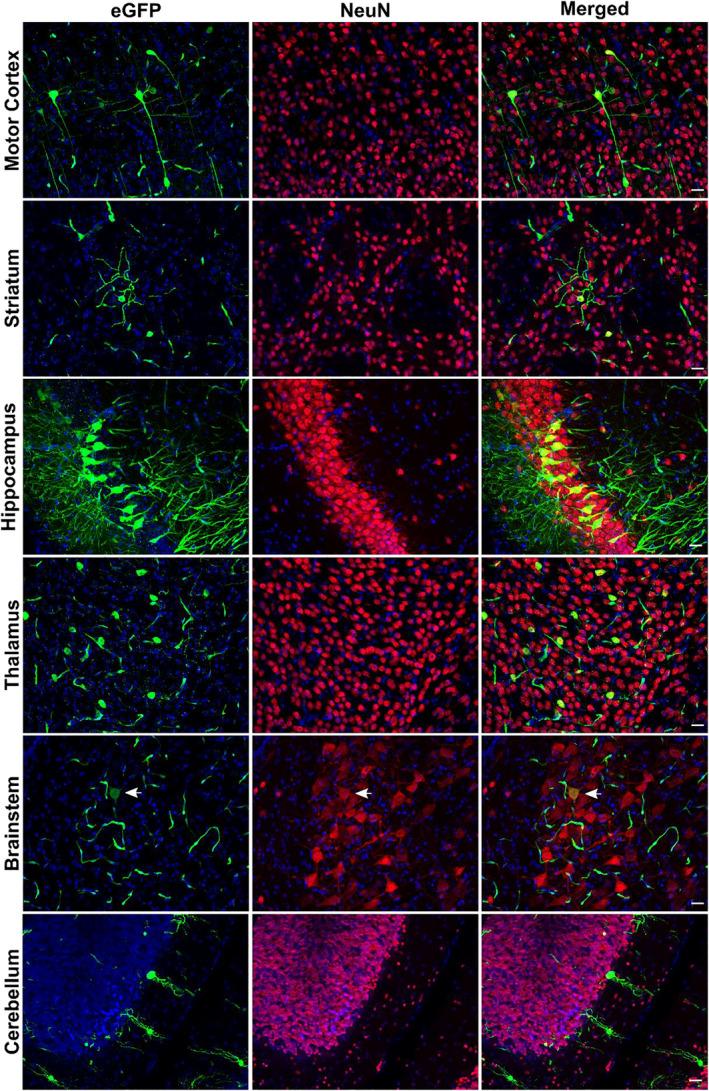
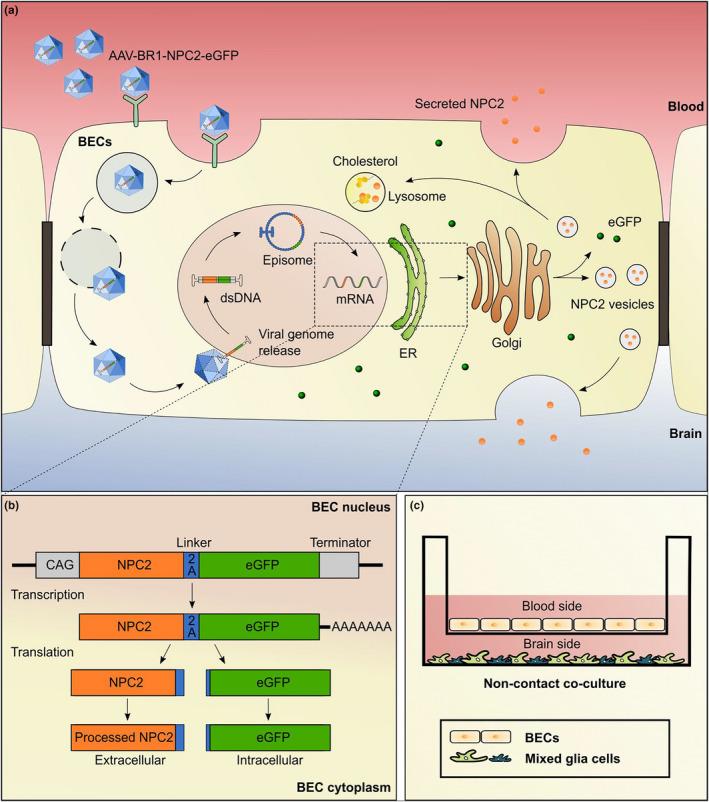
Treating central nervous system (CNS) diseases is complicated by the incapability of numerous therapeutics to cross the blood-brain barrier (BBB), mainly composed of brain endothelial cells (BECs). Genetically modifying BECs into protein factories that supply the CNS with recombinant proteins is a promising approach to overcome this hindrance, especially in genetic diseases, like Niemann Pick disease type C2 (NPC2), where both CNS and peripheral cells are affected. Here, we investigated the potential of the BEC-specific adeno-associated viral vector (AAV-BR1) encoding NPC2 for expression and secretion from primary BECs cultured in an in vitro BBB model with mixed glial cells, and in healthy BALB/c mice. Transduced primary BECs had significantly increased NPC2 gene expression and secreted NPC2 after viral transduction, which significantly reversed cholesterol deposition in NPC2 deficient fibroblasts. Mice receiving an intravenous injection with AAV-BR1-NCP2-eGFP were sacrificed 8 weeks later and examined for its biodistribution and transgene expression of eGFP and NPC2. AAV-BR1-NPC2-eGFP was distributed mainly to the brain and lightly to the heart and lung, but did not label other organs including the liver. eGFP expression was primarily found in BECs throughout the brain but occasionally also in neurons suggesting transport of the vector across the BBB, a phenomenon also confirmed in vitro. NPC2 gene expression was up-regulated in the brain, and recombinant NPC2 protein expression was observed in both transduced brain capillaries and neurons. Our findings show that AAV-BR1 transduction of BECs is possible and that it may denote a promising strategy for future treatment of NPC2.
治疗中枢神经系统 (CNS) 疾病很复杂,因为许多治疗方法都无法穿过血脑屏障 (BBB),BBB 主要由脑内皮细胞 (BEC) 组成。将 BEC 基因改造为能够向 CNS 提供重组蛋白的“蛋白质工厂”,是克服这一障碍的一种很有前途的方法,特别是在遗传疾病中,如 NPC2 型尼曼匹克病,中枢神经系统和周围细胞都受到影响。在这里,我们研究了特异性针对 BEC 的腺相关病毒载体 (AAV-BR1) 编码 NPC2 的潜力,该载体可在体外 BBB 模型中培养混合神经胶质细胞,以及在健康 BALB/c 小鼠中进行表达和分泌。转导的原代 BEC 中 NPC2 基因表达显著增加,病毒转导后 NPC2 分泌增加,这显著逆转了 NPC2 缺陷成纤维细胞中的胆固醇沉积。接受 AAV-BR1-NCP2-eGFP 静脉注射的小鼠在 8 周后被处死,并检查其生物分布和 eGFP 和 NPC2 的转基因表达。AAV-BR1-NCP2-eGFP 主要分布于大脑,少量分布于心肺,但不标记其他器官,包括肝脏。eGFP 表达主要在大脑中的 BEC 中发现,但偶尔也在神经元中发现,这表明载体穿过 BBB 的转运,这一现象在体外也得到了证实。NPC2 基因表达在大脑中上调,转导的脑毛细血管和神经元中均观察到重组 NPC2 蛋白表达。我们的研究结果表明,AAV-BR1 转导 BEC 是可能的,这可能为 NPC2 的未来治疗提供一种很有前途的策略。


 Zotero 插件