
靶向感觉神经元钙通道的泛素化可减少神经性疼痛的发生。
Targeted ubiquitination of sensory neuron calcium channels reduces the development of neuropathic pain.
机构信息
Department of Anesthesiology, Columbia University Medical Center, New York, NY 10032.
Department of Physiology and Cellular Biophysics, Columbia University Medical Center, New York, NY 10032.
出版信息
Proc Natl Acad Sci U S A. 2022 May 17;119(20):e2118129119. doi: 10.1073/pnas.2118129119. Epub 2022 May 13.
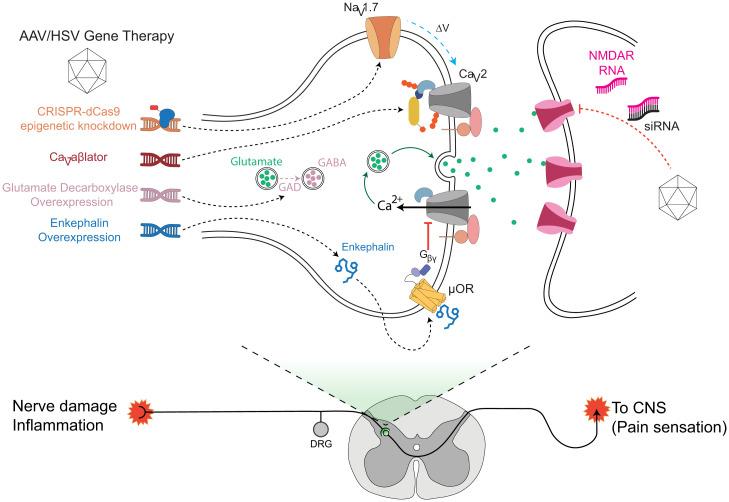
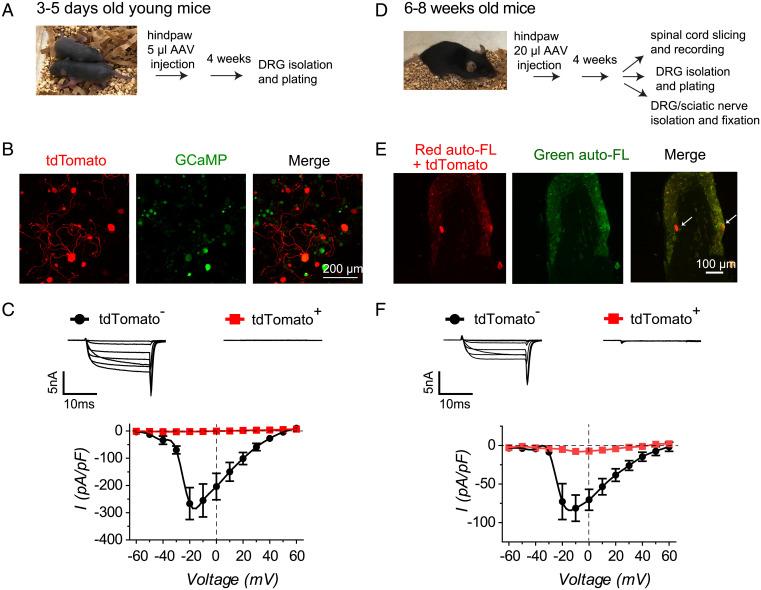
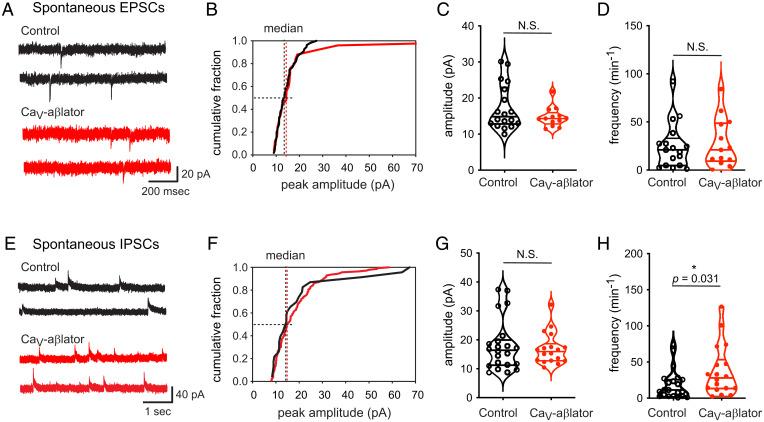
Neuropathic pain caused by lesions to somatosensory neurons due to injury or disease is a widespread public health problem that is inadequately managed by small-molecule therapeutics due to incomplete pain relief and devastating side effects. Genetically encoded molecules capable of interrupting nociception have the potential to confer long-lasting analgesia with minimal off-target effects. Here, we utilize a targeted ubiquitination approach to achieve a unique posttranslational functional knockdown of high-voltage-activated calcium channels (HVACCs) that are obligatory for neurotransmission in dorsal root ganglion (DRG) neurons. CaV-aβlator comprises a nanobody targeted to CaV channel cytosolic auxiliary β subunits fused to the catalytic HECT domain of the Nedd4-2 E3 ubiquitin ligase. Subcutaneous injection of adeno-associated virus serotype 9 encoding CaV-aβlator in the hind paw of mice resulted in the expression of the protein in a subset of DRG neurons that displayed a concomitant ablation of CaV currents and also led to an increase in the frequency of spontaneous inhibitory postsynaptic currents in the dorsal horn of the spinal cord. Mice subjected to spare nerve injury displayed a characteristic long-lasting mechanical, thermal, and cold hyperalgesia underlain by a dramatic increase in coordinated phasic firing of DRG neurons as reported by in vivo Ca2+ spike recordings. CaV-aβlator significantly dampened the integrated Ca2+ spike activity and the hyperalgesia in response to nerve injury. The results advance the principle of targeting HVACCs as a gene therapy for neuropathic pain and demonstrate the therapeutic potential of posttranslational functional knockdown of ion channels achieved by exploiting the ubiquitin-proteasome system.
由于损伤或疾病导致的感觉神经元病变引起的神经性疼痛是一个广泛存在的公共健康问题,小分子治疗药物对此问题的治疗效果并不理想,因为这些药物无法完全缓解疼痛,而且还会产生破坏性的副作用。能够中断伤害感受的基因编码分子有可能通过最小的脱靶效应实现持久的镇痛。在这里,我们利用靶向泛素化方法实现了对高电压激活钙通道(HVACCs)的独特翻译后功能敲低,HVACCs 对于背根神经节(DRG)神经元中的神经传递是必需的。CaV-aβlator 由靶向 CaV 通道胞质辅助β亚基的纳米抗体与 Nedd4-2 E3 泛素连接酶的催化 HECT 结构域融合而成。在小鼠后爪皮下单次注射编码 CaV-aβlator 的腺相关病毒血清型 9 会导致该蛋白在 DRG 神经元的一个亚群中表达,同时导致 CaV 电流的消融,并且还会导致脊髓背角中抑制性突触后电流的自发性增加。在接受神经损伤的小鼠中,通过体内 Ca2+ 峰记录报告,DRG 神经元的协调相放电急剧增加,表现出特征性的持久机械性、热和冷痛觉过敏。CaV-aβlator 显著抑制了整合的 Ca2+ 峰活性和对神经损伤的痛觉过敏。这些结果推进了将 HVACCs 作为治疗神经性疼痛的基因治疗靶点的原理,并证明了利用泛素-蛋白酶体系统实现离子通道翻译后功能敲低的治疗潜力。


 Zotero 插件