
鉴定玉米两个重组自交系群体锌效率相关位点(s)和锌缺乏耐性的候选基因。
Identification of Zinc Efficiency-Associated Loci (s) and Candidate Genes for Zn Deficiency Tolerance of Two Recombination Inbred Line Populations in Maize.
机构信息
Key Laboratory of Plant-Soil Interaction (MOE), Centre for Resources, Environment and Food Security, College of Resources and Environmental Sciences, China Agricultural University, Beijing 100193, China.
State Key Laboratory for Agrobiotechnology, Key Laboratory of Crop Heterosis and Utilization (MOE), Key Laboratory of Crop Genetic Improvement, China Agricultural University, Beijing 100193, China.
出版信息
Int J Mol Sci. 2022 Apr 27;23(9):4852. doi: 10.3390/ijms23094852.
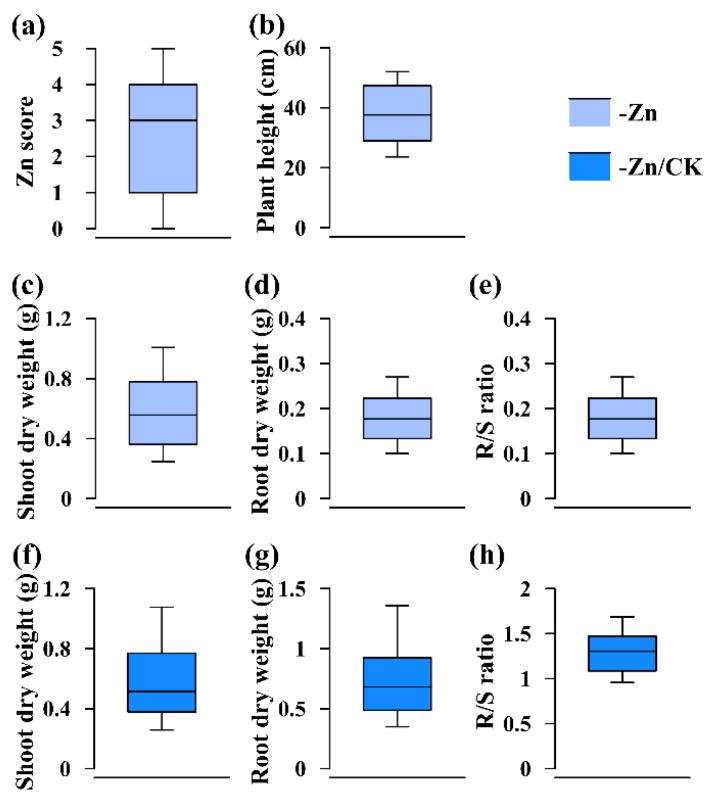
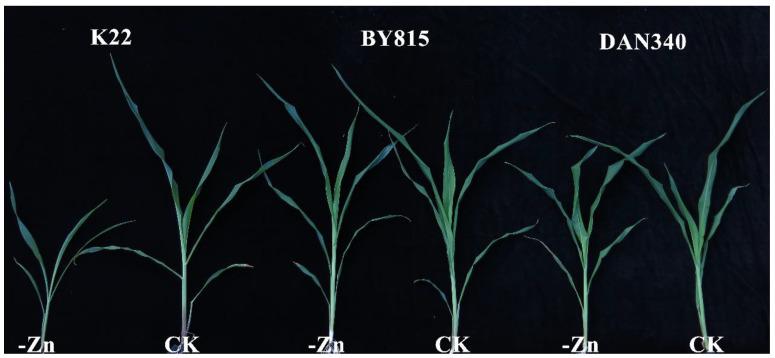
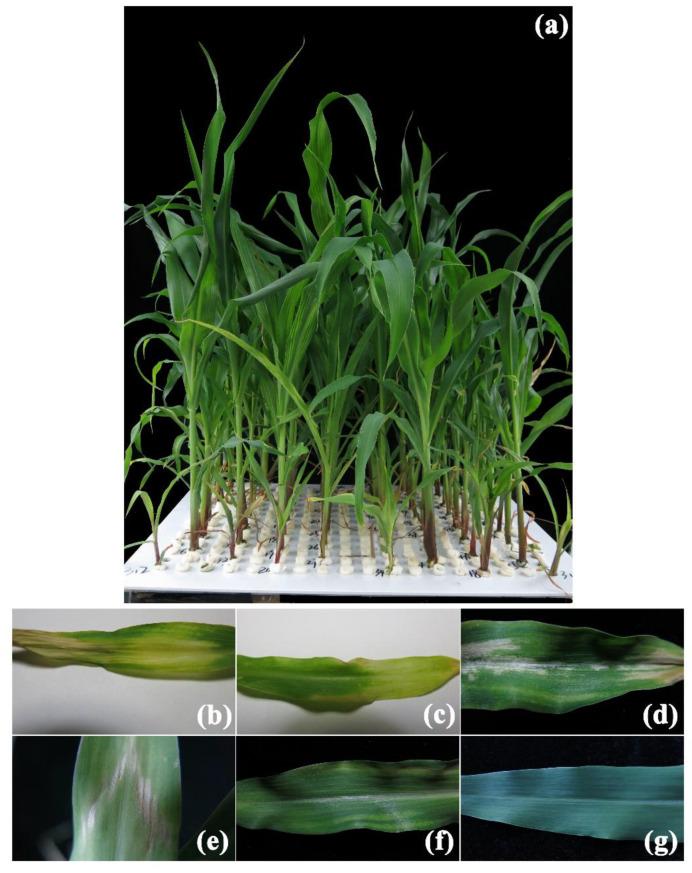
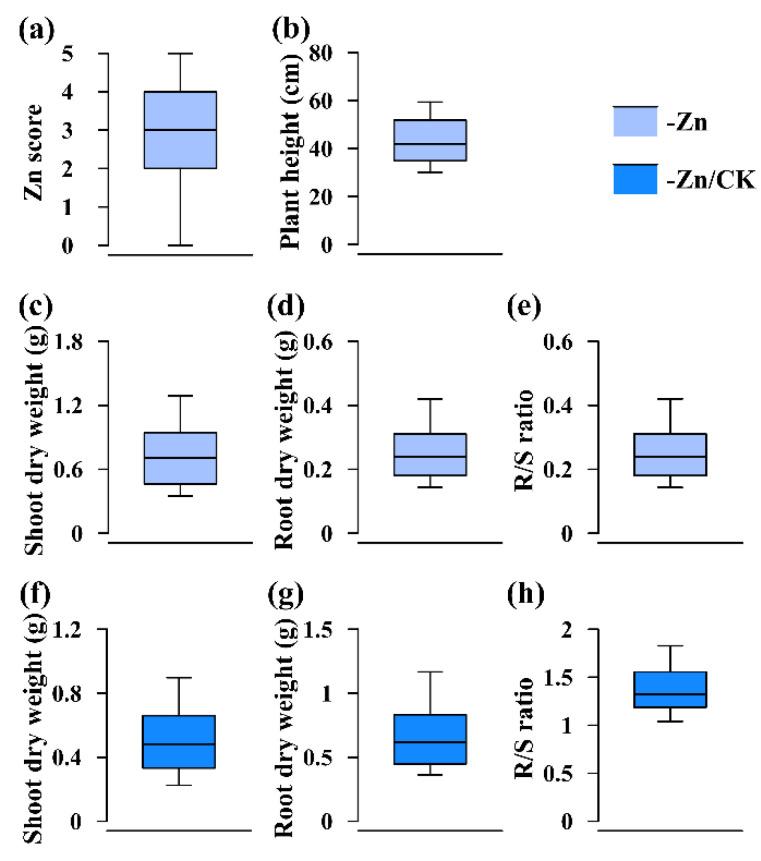
Zinc (Zn) deficiency is one of the most common micronutrient disorders in cereal plants, greatly impairing crop productivity and nutritional quality. Identifying the genes associated with Zn deficiency tolerance is the basis for understanding the genetic mechanism conferring tolerance. In this study, the K22×BY815 and DAN340×K22 recombination inbred line (RIL) populations, which were derived from Zn-inefficient and Zn-efficient inbred lines, were utilized to detect the quantitative trait loci (QTLs) associated with Zn deficiency tolerance and to further identify candidate genes within these loci. The BLUP (Best Linear Unbiased Prediction) values under Zn-deficient condition (-Zn) and the ratios of the BLUP values under Zn deficient condition to the BLUP values under Zn-sufficient condition (-Zn/CK) were used to perform linkage mapping. In QTL analysis, 21 QTLs and 33 QTLs controlling the Zn score, plant height, shoot and root dry weight, and root-to-shoot ratio were detected in the K22×BY815 population and the DAN340×K22 population, explaining 5.5-16.6% and 4.2-23.3% of phenotypic variation, respectively. In addition, seventeen candidate genes associated with the mechanisms underlying Zn deficiency tolerance were identified in QTL colocalizations or the single loci, including the genes involved in the uptake, transport, and redistribution of Zn (, s, , , , , ), and the genes participating in the auxin and ethylene signal pathways (, , , , , , ). Our findings will broaden the understanding of the genetic structure of the tolerance to Zn deficiency in maize.
锌(Zn)缺乏是谷类作物中最常见的微量营养素缺乏症之一,严重降低了作物的生产力和营养价值。鉴定与 Zn 缺乏耐受性相关的基因是理解赋予耐受性的遗传机制的基础。在这项研究中,利用 K22×BY815 和 DAN340×K22 重组自交系(RIL)群体,该群体源自 Zn 低效和 Zn 高效自交系,来检测与 Zn 缺乏耐受性相关的数量性状位点(QTL),并进一步鉴定这些位点内的候选基因。在 Zn 缺乏条件下(-Zn)的 BLUP(最佳线性无偏预测)值和 Zn 缺乏条件下的 BLUP 值与 Zn 充足条件下的 BLUP 值的比值(-Zn/CK)用于进行连锁作图。在 QTL 分析中,在 K22×BY815 群体和 DAN340×K22 群体中检测到 21 个和 33 个控制 Zn 评分、株高、地上部和根干重以及根冠比的 QTL,分别解释了 5.5-16.6%和 4.2-23.3%的表型变异。此外,在 QTL 共定位或单个位点中鉴定出 17 个与 Zn 缺乏耐受性机制相关的候选基因,包括参与 Zn 吸收、运输和再分配的基因(、、、、、、)以及参与生长素和乙烯信号通路的基因(、、、、、、)。我们的研究结果将拓宽对玉米 Zn 缺乏耐受性遗传结构的理解。

 Zotero 插件