
睑板腺密度:基于深度学习和迁移学习的睑板腺功能障碍有效评估指标
Meibomian Gland Density: An Effective Evaluation Index of Meibomian Gland Dysfunction Based on Deep Learning and Transfer Learning.
作者信息
Zhang Zuhui, Lin Xiaolei, Yu Xinxin, Fu Yana, Chen Xiaoyu, Yang Weihua, Dai Qi
机构信息
School of Ophthalmology and Optometry, The Eye Hospital of Wenzhou Medical University, 270 Xueyuanxi Road, Wenzhou 325027, China.
Department of Ophthalmology and Visual Science, Eye, Ear, Nose, and Throat Hospital, Shanghai Medical College, Fudan University, Shanghai 200126, China.
出版信息
J Clin Med. 2022 Apr 25;11(9):2396. doi: 10.3390/jcm11092396.
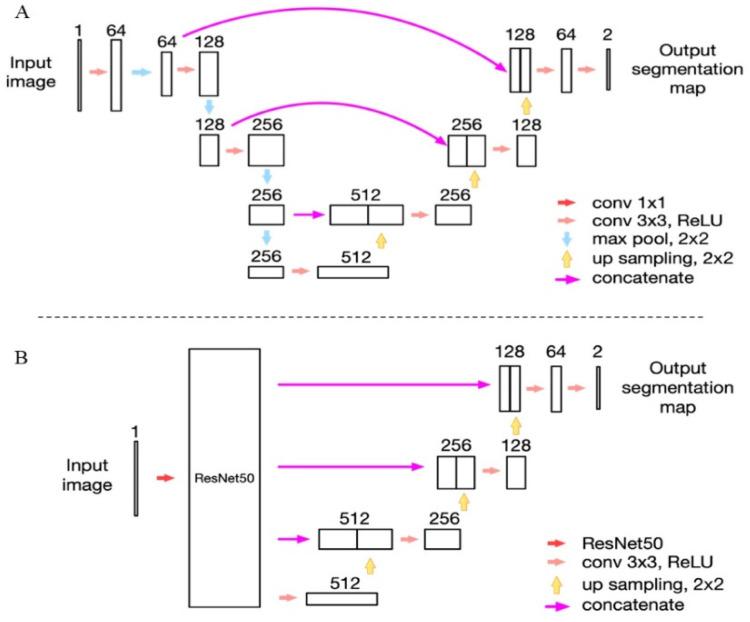
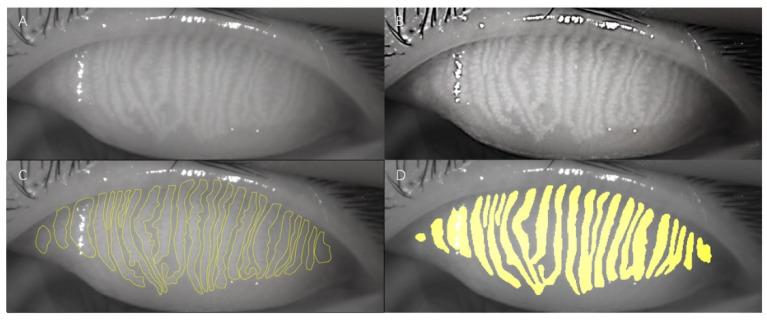
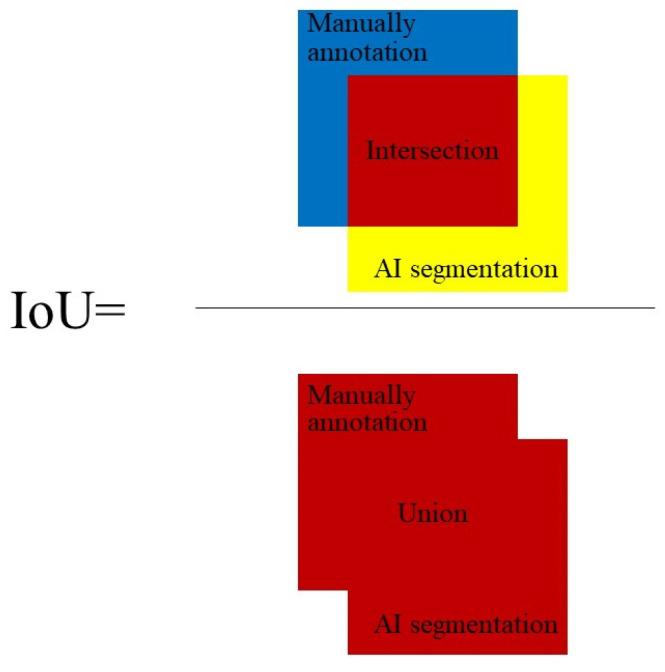
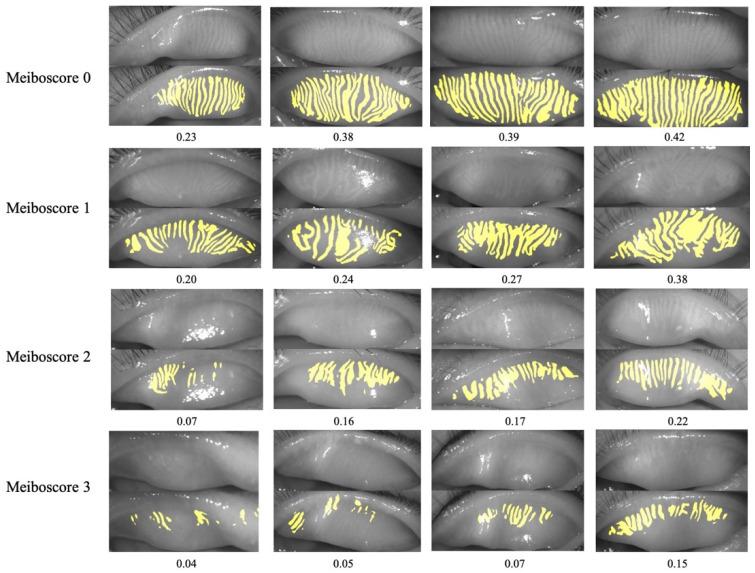
We aimed to establish an artificial intelligence (AI) system based on deep learning and transfer learning for meibomian gland (MG) segmentation and evaluate the efficacy of MG density in the diagnosis of MG dysfunction (MGD). First, 85 eyes of 85 subjects were enrolled for AI system-based evaluation effectiveness testing. Then, from 2420 randomly selected subjects, 4006 meibography images (1620 upper eyelids and 2386 lower eyelids) graded by three experts according to the meiboscore were analyzed for MG density using the AI system. The updated AI system achieved 92% accuracy (intersection over union, IoU) and 100% repeatability in MG segmentation after 4 h of training. The processing time for each meibography was 100 ms. We discovered a significant and linear correlation between MG density and ocular surface disease index questionnaire (OSDI), tear break-up time (TBUT), lid margin score, meiboscore, and meibum expressibility score (all p < 0.05). The area under the curve (AUC) was 0.900 for MG density in the total eyelids. The sensitivity and specificity were 88% and 81%, respectively, at a cutoff value of 0.275. MG density is an effective index for MGD, particularly supported by the AI system, which could replace the meiboscore, significantly improve the accuracy of meibography analysis, reduce the analysis time and doctors’ workload, and improve the diagnostic efficiency.
我们旨在建立一个基于深度学习和迁移学习的人工智能(AI)系统,用于睑板腺(MG)分割,并评估MG密度在睑板腺功能障碍(MGD)诊断中的有效性。首先,招募了85名受试者的85只眼睛进行基于AI系统的评估有效性测试。然后,从2420名随机选择的受试者中,分析了由三位专家根据睑板腺评分分级的4006张睑板腺图像(1620只上睑和2386只下睑),使用AI系统计算MG密度。经过4小时的训练,更新后的AI系统在MG分割中达到了92%的准确率(交并比,IoU)和100%的重复性。每张睑板腺图像的处理时间为100毫秒。我们发现MG密度与眼表疾病指数问卷(OSDI)、泪膜破裂时间(TBUT)、睑缘评分、睑板腺评分和睑脂排出能力评分之间存在显著的线性相关性(所有p<0.05)。全眼睑MG密度的曲线下面积(AUC)为0.900。在临界值为0.275时,灵敏度和特异性分别为88%和81%。MG密度是MGD的一个有效指标,特别是在AI系统的支持下,它可以取代睑板腺评分,显著提高睑板腺图像分析的准确性,减少分析时间和医生的工作量,并提高诊断效率。




 Zotero 插件