
探索金属纳米颗粒作为新冠病毒感染潜在治疗辅助手段的可能性。
Exploring the Potential of Metal Nanoparticles as a Possible Therapeutic Adjunct for Covid-19 Infection.
作者信息
Kar Biswakanth, Pradhan Deepak, Mishra Poonamrani, Bhuyan Sanat Kumar, Ghosh Goutam, Rath Goutam
机构信息
School of Pharmaceutical Sciences, Siksha 'O' Anusandhan (Deemed to Be University), Bhubaneswar, Odisha India.
Institute of Dental Sciences, Siksha 'O' Anusandhan (Deemed to Be University), Bhubaneswar, Odisha India.
出版信息
Proc Natl Acad Sci India Sect B Biol Sci. 2022;92(3):511-521. doi: 10.1007/s40011-022-01371-1. Epub 2022 May 17.
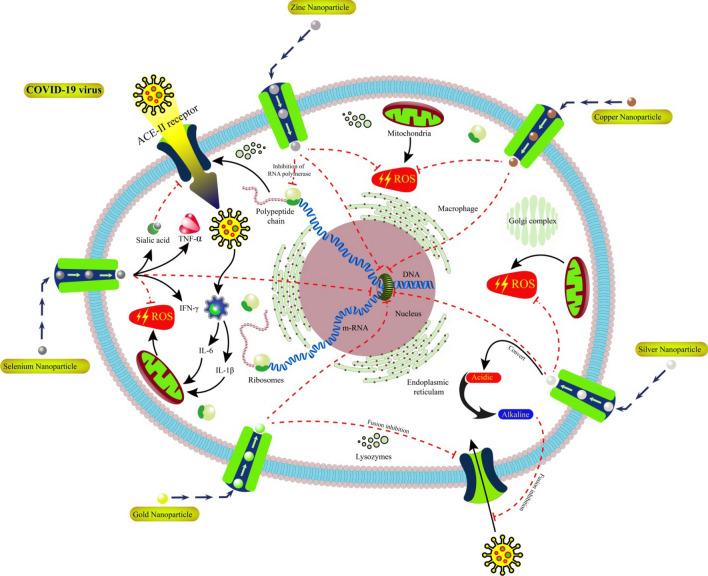
The WHO has declared the Covid-19 outbreak as a global health emergency with a mortality rate of approximately 3%, across 200 countries. There has been a considerable risk involved with drug repurposing in Covid-19 treatment, particularly in patients with underlying chronic disorders. Intervention of appropriate adjunct to primary drug therapy at subclinical or clinical doses may help to reduce unintended consequences involved in Covid-19 therapy. Metal nanoparticles due to their intrinsic structural and functional properties, not only contribute to anti-viral properties but also help to reduce the risk for associated complications. Although, silver nanoparticles hold great promise as an effective biocidal agent, while other metal nanoparticles also fueled interest against virus infection. The present review discusses the important properties of selected metal nanoparticles, their antiviral principle with possible toxic consequences, provides invaluable information for scientists and clinicians about an appropriate metal nanoparticle as an adjunct for Covid-19 treatment.
世界卫生组织已宣布新冠疫情为全球卫生紧急事件,在200个国家的死亡率约为3%。在新冠治疗中采用药物重新利用存在相当大的风险,尤其是对于患有潜在慢性疾病的患者。在亚临床或临床剂量下对主要药物治疗进行适当辅助干预,可能有助于减少新冠治疗中涉及的意外后果。金属纳米颗粒因其固有的结构和功能特性,不仅具有抗病毒特性,还有助于降低相关并发症的风险。尽管银纳米颗粒作为一种有效的杀菌剂前景广阔,但其他金属纳米颗粒也引发了对抗病毒感染的兴趣。本综述讨论了所选金属纳米颗粒的重要特性、它们的抗病毒原理以及可能的毒性后果,为科学家和临床医生提供了关于合适的金属纳米颗粒作为新冠治疗辅助药物的宝贵信息。
 Zotero 插件