
影响胶质母细胞瘤对放化疗耐药性的分子特征改变:优势何在?
Alterations in Molecular Profiles Affecting Glioblastoma Resistance to Radiochemotherapy: Where Does the Good Go?
作者信息
Vilar Juliana B, Christmann Markus, Tomicic Maja T
机构信息
Department of Toxicology, University Medical Center, Obere Zahlbacher Str. 67, D-55131 Mainz, Germany.
出版信息
Cancers (Basel). 2022 May 13;14(10):2416. doi: 10.3390/cancers14102416.
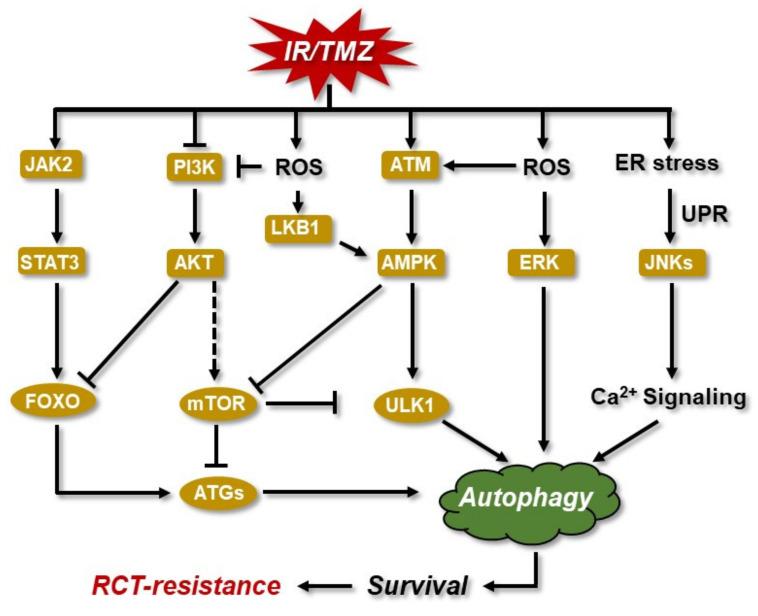
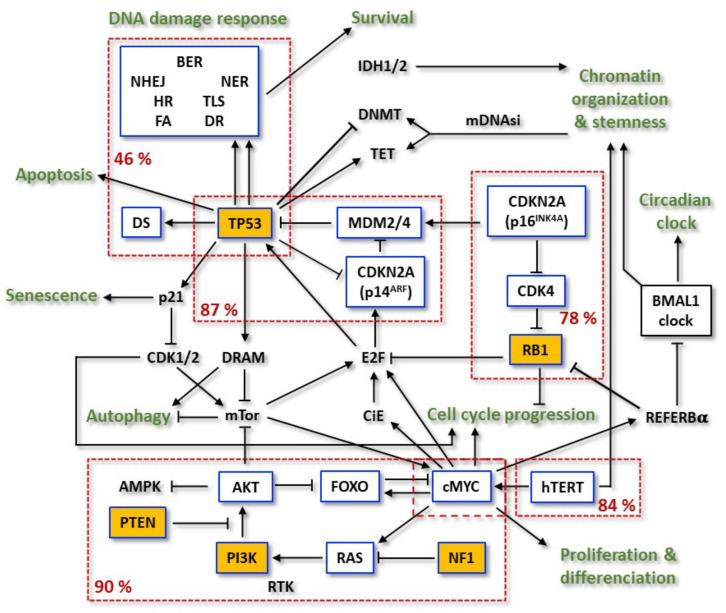
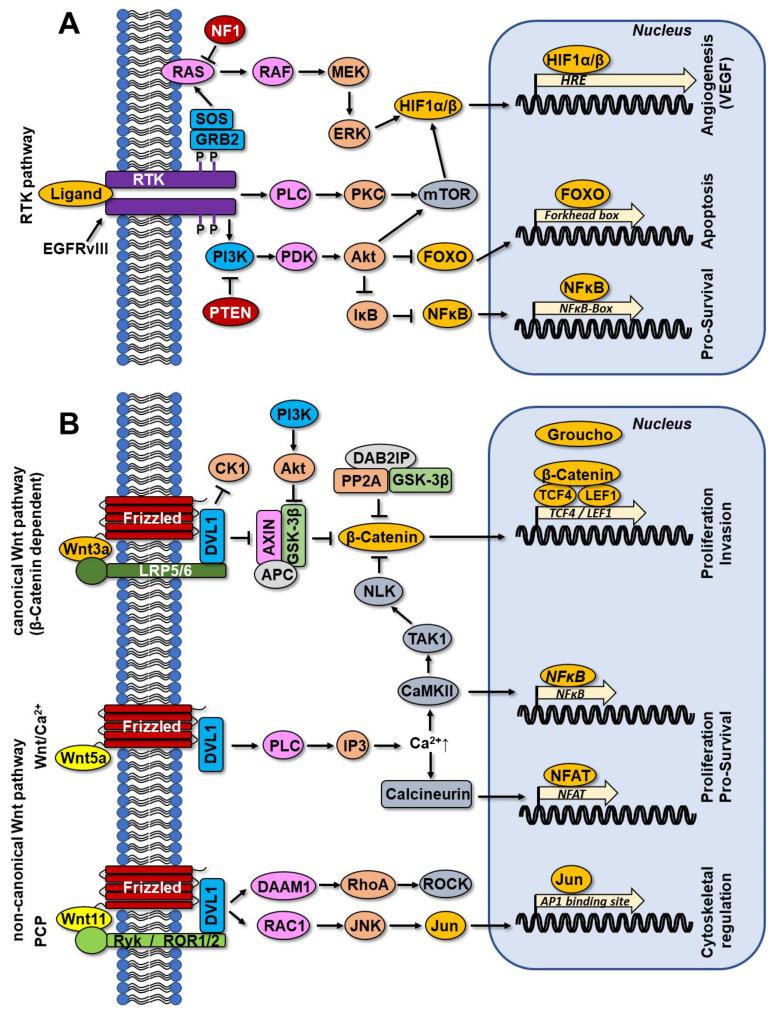
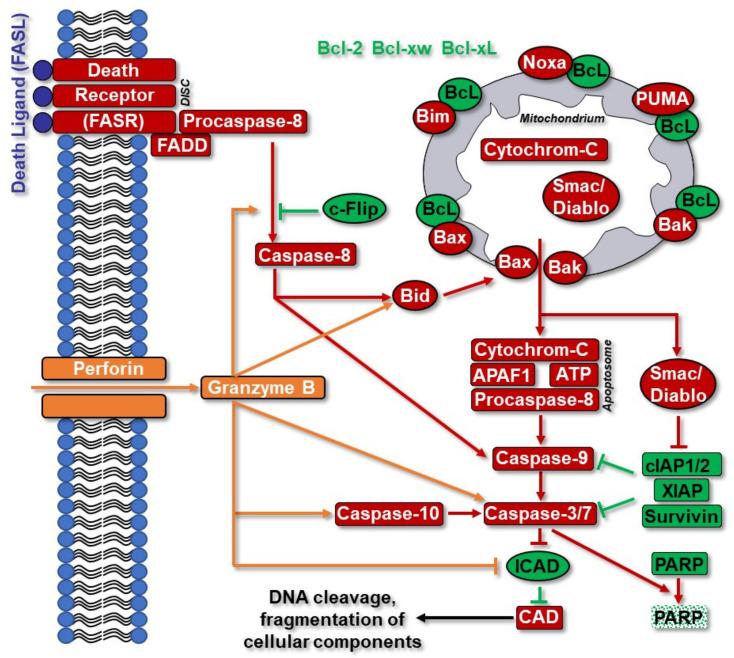
(GBM) is a brain tumor characterized by high heterogeneity, diffuse infiltration, aggressiveness, and formation of recurrences. Patients with this kind of tumor suffer from cognitive, emotional, and behavioral problems, beyond exhibiting dismal survival rates. Current treatment comprises surgery, radiotherapy, and chemotherapy with the methylating agent, temozolomide (TMZ). GBMs harbor intrinsic mutations involving major pathways that elicit the cells to evade cell death, adapt to the genotoxic stress, and regrow. Ionizing radiation and TMZ induce, for the most part, DNA damage repair, autophagy, stemness, and senescence, whereas only a small fraction of GBM cells undergoes treatment-induced apoptosis. Particularly upon TMZ exposure, most of the GBM cells undergo cellular senescence. Increased DNA repair attenuates the agent-induced cytotoxicity; autophagy functions as a pro-survival mechanism, protecting the cells from damage and facilitating the cells to have energy to grow. Stemness grants the cells capacity to repopulate the tumor, and senescence triggers an inflammatory microenvironment favorable to transformation. Here, we highlight this mutational background and its interference with the response to the standard radiochemotherapy. We discuss the most relevant and recent evidence obtained from the studies revealing the molecular mechanisms that lead these cells to be resistant and indicate some future perspectives on combating this incurable tumor.
胶质母细胞瘤(GBM)是一种脑肿瘤,具有高度异质性、弥漫性浸润、侵袭性和复发性。患有这种肿瘤的患者不仅生存率低,还会出现认知、情感和行为问题。目前的治疗方法包括手术、放疗以及使用甲基化剂替莫唑胺(TMZ)进行化疗。GBM存在涉及主要信号通路的内在突变,这些突变使细胞能够逃避细胞死亡、适应基因毒性应激并重新生长。电离辐射和TMZ在很大程度上诱导DNA损伤修复、自噬、干性和衰老,而只有一小部分GBM细胞会发生治疗诱导的凋亡。特别是在接触TMZ后,大多数GBM细胞会发生细胞衰老。DNA修复增加会减弱药物诱导的细胞毒性;自噬作为一种促生存机制,保护细胞免受损伤并为细胞生长提供能量。干性赋予细胞重新填充肿瘤的能力,而衰老会引发有利于肿瘤转化的炎症微环境。在此,我们强调这种突变背景及其对标准放化疗反应的干扰。我们讨论了从研究中获得的最相关和最新证据,这些研究揭示了导致这些细胞产生耐药性的分子机制,并指出了对抗这种无法治愈肿瘤的一些未来前景。


 Zotero 插件