
在一个真实世界的泛癌队列中验证同源重组缺陷的基因组和转录组模型。
Validation of genomic and transcriptomic models of homologous recombination deficiency in a real-world pan-cancer cohort.
机构信息
Tempus Labs, 600 W Chicago Ave Ste #510, Chicago, IL, 60654, United States.
出版信息
BMC Cancer. 2022 May 28;22(1):587. doi: 10.1186/s12885-022-09669-z.
BACKGROUND
With the introduction of DNA-damaging therapies into standard of care cancer treatment, there is a growing need for predictive diagnostics assessing homologous recombination deficiency (HRD) status across tumor types. Following the strong clinical evidence for the utility of DNA-sequencing-based HRD testing in ovarian cancer, and growing evidence in breast cancer, we present analytical validation of the Tempus HRD-DNA test. We further developed, validated, and explored the Tempus HRD-RNA model, which uses gene expression data from 16,750 RNA-seq samples to predict HRD status from formalin-fixed paraffin-embedded tumor samples across numerous cancer types.
METHODS
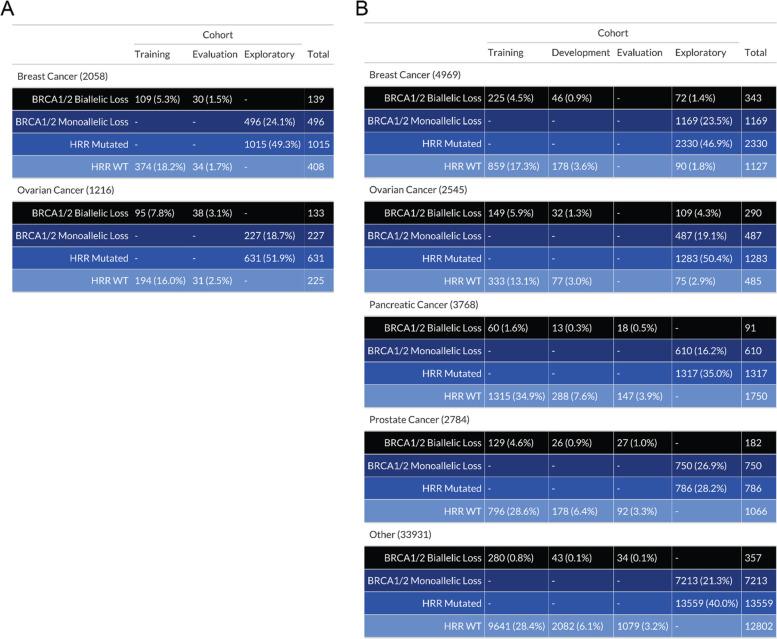
Genomic and transcriptomic profiling was performed using next-generation sequencing from Tempus xT, Tempus xO, Tempus xE, Tempus RS, and Tempus RS.v2 assays on 48,843 samples. Samples were labeled based on their BRCA1, BRCA2 and selected Homologous Recombination Repair pathway gene (CDK12, PALB2, RAD51B, RAD51C, RAD51D) mutational status to train and validate HRD-DNA, a genome-wide loss-of-heterozygosity biomarker, and HRD-RNA, a logistic regression model trained on gene expression.
RESULTS
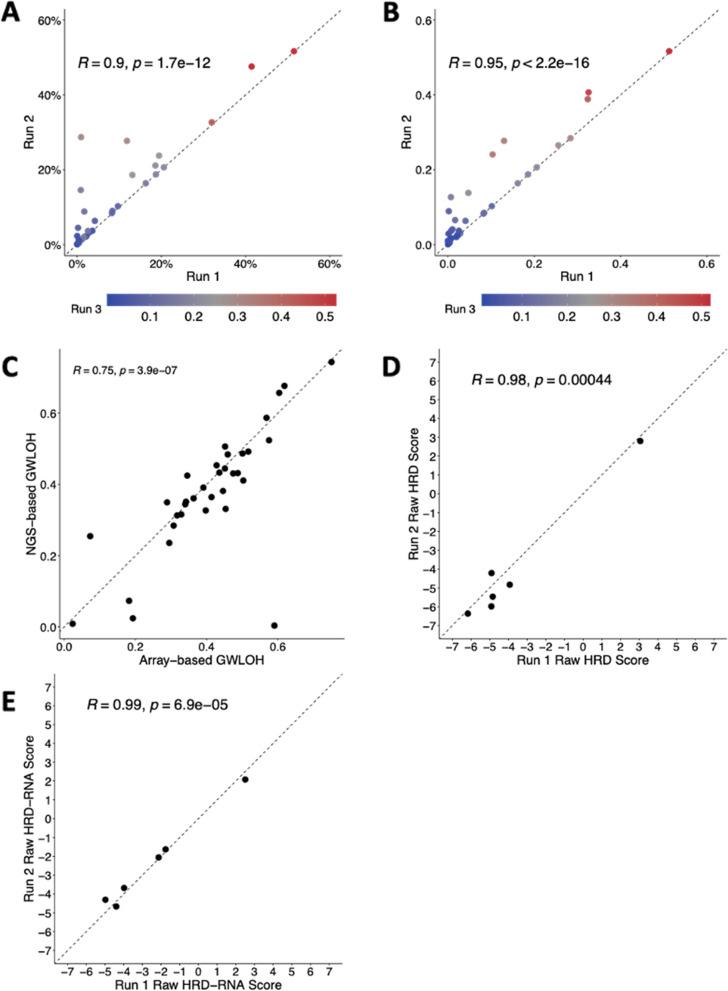
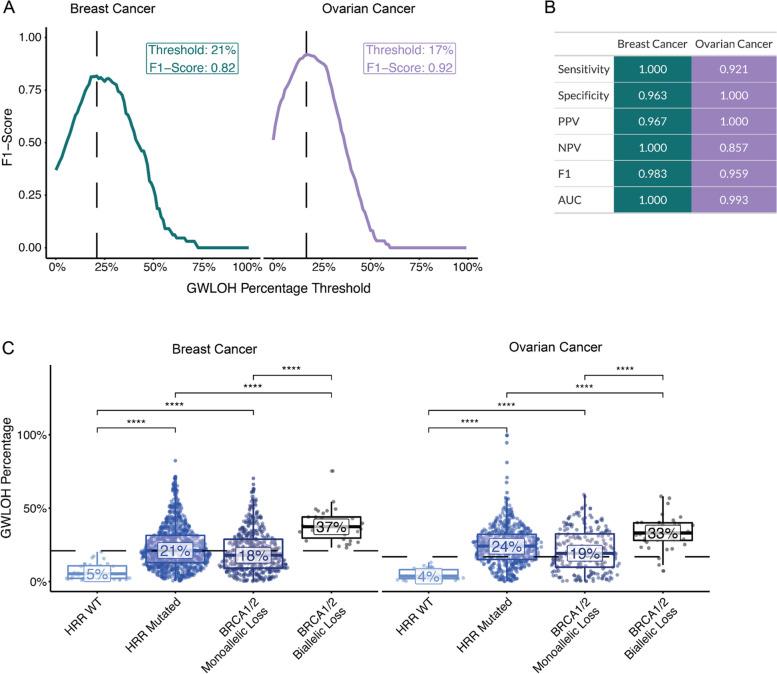
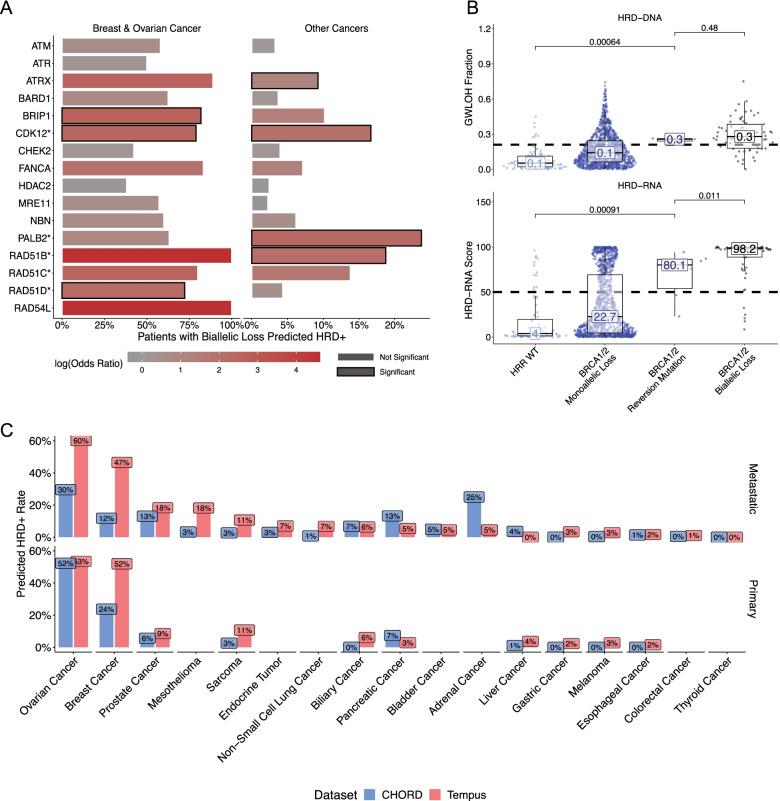
In a sample of 2058 breast and 1216 ovarian tumors, BRCA status was predicted by HRD-DNA with F1-scores of 0.98 and 0.96, respectively. Across an independent set of 1363 samples across solid tumor types, the HRD-RNA model was predictive of BRCA status in prostate, pancreatic, and non-small cell lung cancer, with F1-scores of 0.88, 0.69, and 0.62, respectively.
CONCLUSIONS
We predict HRD-positive patients across many cancer types and believe both HRD models may generalize to other mechanisms of HRD outside of BRCA loss. HRD-RNA complements DNA-based HRD detection methods, especially for indications with low prevalence of BRCA alterations.
背景
随着 DNA 损伤疗法被引入癌症治疗的标准方案,对评估同源重组缺陷 (HRD) 状态的预测性诊断的需求日益增长。鉴于 DNA 测序 HRD 检测在卵巢癌中的应用具有坚实的临床证据,以及在乳腺癌中不断增加的证据,我们提出了 Tempus HRD-DNA 检测的分析验证。我们进一步开发、验证并探索了 Tempus HRD-RNA 模型,该模型使用来自 16750 个 RNA-seq 样本的基因表达数据,从福尔马林固定石蜡包埋肿瘤样本中预测多种癌症类型的 HRD 状态。
方法
使用来自 Tempus xT、Tempus xO、Tempus xE、Tempus RS 和 Tempus RS.v2 检测的下一代测序对 48843 个样本进行基因组和转录组分析。根据 BRCA1、BRCA2 和选定的同源重组修复途径基因 (CDK12、PALB2、RAD51B、RAD51C、RAD51D) 的突变状态对样本进行标记,以训练和验证 HRD-DNA(一种全基因组杂合性丢失生物标志物)和 HRD-RNA(一种基于基因表达的逻辑回归模型)。
结果
在 2058 例乳腺癌和 1216 例卵巢癌样本中,HRD-DNA 对 BRCA 状态的预测 F1 分数分别为 0.98 和 0.96。在一组独立的 1363 例实体瘤样本中,HRD-RNA 模型可预测前列腺癌、胰腺癌和非小细胞肺癌中的 BRCA 状态,F1 分数分别为 0.88、0.69 和 0.62。
结论
我们预测了许多癌症类型中的 HRD 阳性患者,并且相信这两种 HRD 模型都可以推广到 BRCA 缺失以外的其他 HRD 机制。HRD-RNA 补充了基于 DNA 的 HRD 检测方法,特别是在 BRCA 改变发生率较低的情况下。

 Zotero 插件