
人源化酵母模型用于研究人类生物学、疾病和进化。
Humanized yeast to model human biology, disease and evolution.
机构信息
Centre for Applied Synthetic Biology, Department of Biology, 7141 Sherbrooke St. W, Concordia University, Montreal, QC H4B 1R6, Canada.
出版信息
Dis Model Mech. 2022 Jun 1;15(6). doi: 10.1242/dmm.049309. Epub 2022 Jun 6.
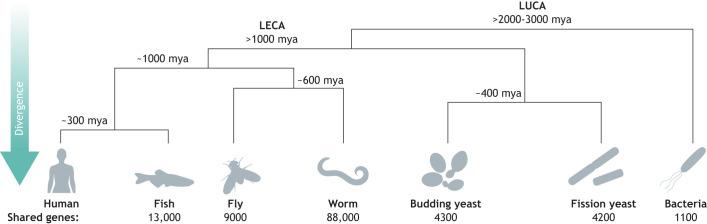
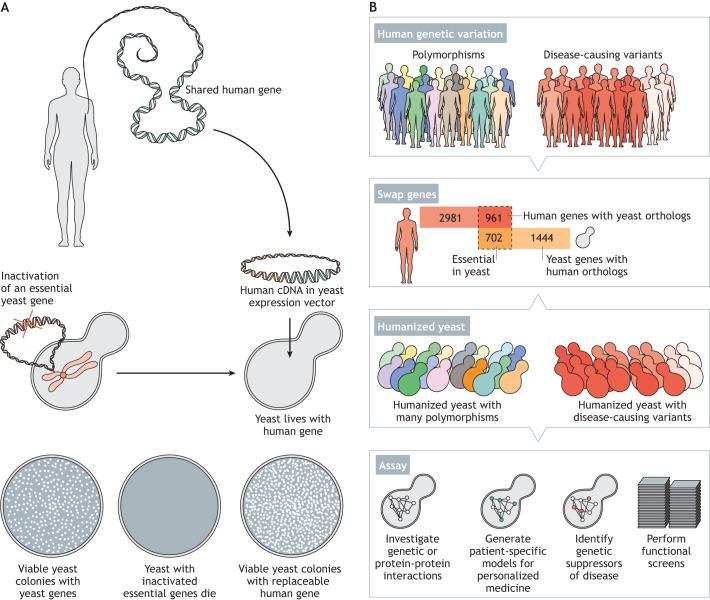
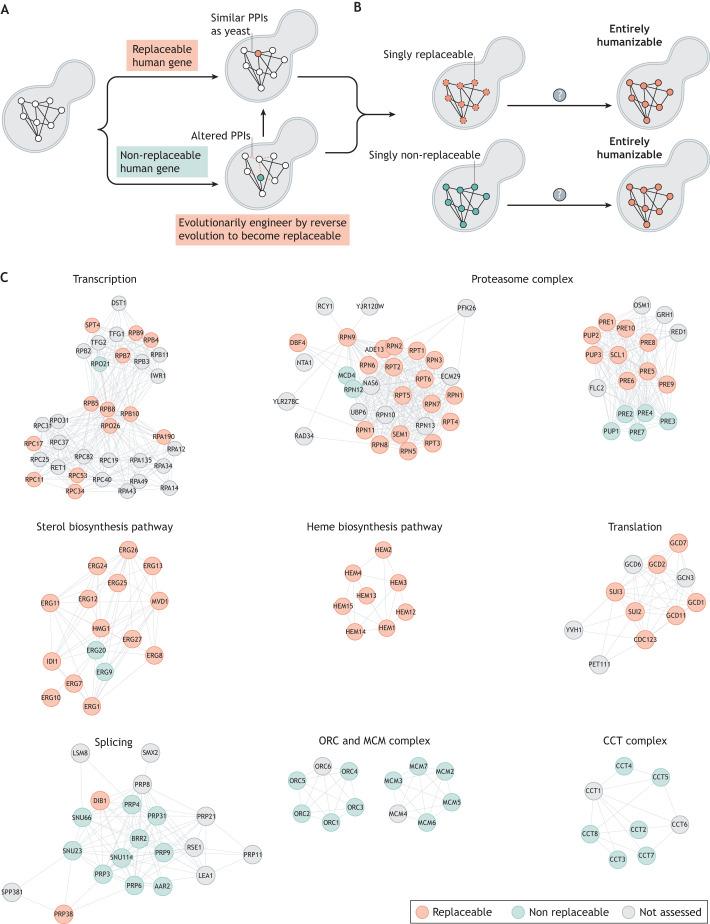
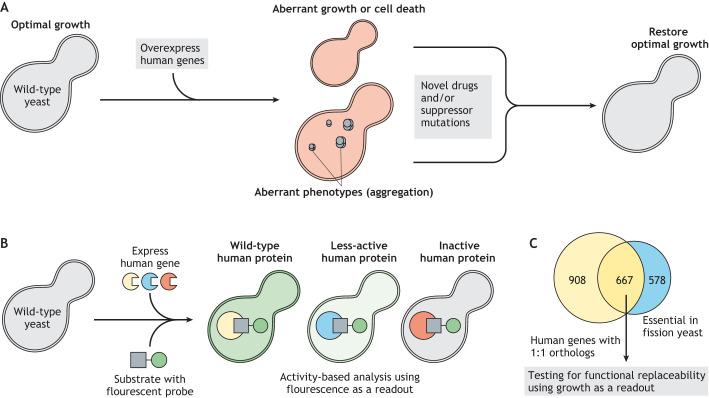
For decades, budding yeast, a single-cellular eukaryote, has provided remarkable insights into human biology. Yeast and humans share several thousand genes despite morphological and cellular differences and over a billion years of separate evolution. These genes encode critical cellular processes, the failure of which in humans results in disease. Although recent developments in genome engineering of mammalian cells permit genetic assays in human cell lines, there is still a need to develop biological reagents to study human disease variants in a high-throughput manner. Many protein-coding human genes can successfully substitute for their yeast equivalents and sustain yeast growth, thus opening up doors for developing direct assays of human gene function in a tractable system referred to as 'humanized yeast'. Humanized yeast permits the discovery of new human biology by measuring human protein activity in a simplified organismal context. This Review summarizes recent developments showing how humanized yeast can directly assay human gene function and explore variant effects at scale. Thus, by extending the 'awesome power of yeast genetics' to study human biology, humanizing yeast reinforces the high relevance of evolutionarily distant model organisms to explore human gene evolution, function and disease.
几十年来,单细胞真核生物 budding yeast 为人类生物学提供了显著的见解。尽管 yeast 和人类在形态和细胞上存在差异,且已经经历了超过十亿年的独立进化,但它们仍共享数千个基因。这些基因编码着关键的细胞过程,如果在人类中发生故障,就会导致疾病。尽管近年来哺乳动物细胞的基因组工程取得了进展,使得能够在人类细胞系中进行遗传检测,但仍需要开发生物试剂,以便以高通量的方式研究人类疾病变体。许多编码蛋白质的人类基因可以成功替代其 yeast 等效基因并维持 yeast 的生长,从而为在一个称为“人类化 yeast”的可处理系统中开发人类基因功能的直接检测方法开辟了道路。人类化 yeast 允许通过在简化的生物体背景下测量人类蛋白质的活性来发现新的人类生物学。这篇综述总结了最近的发展情况,展示了人类化 yeast 如何直接检测人类基因功能,并大规模探索变体效应。因此,通过将“酵母遗传学的强大威力”扩展到人类生物学研究中,人类化 yeast 增强了进化上遥远的模式生物在探索人类基因进化、功能和疾病方面的高度相关性。

 Zotero 插件