
人工智能在成人胸部 X 线片解读方面的诊断性能。
Diagnostic performance of artificial intelligence approved for adults for the interpretation of pediatric chest radiographs.
机构信息
Department of Radiology, Research Institute of Radiological Science and Center for Clinical Imaging Data Science, Yongin Severance Hospital, Yonsei University College of Medicine, 363, Dongbaekjukjeon-daero, Giheung-gu, Yongin-si, Gyeonggi-do, 16995, Republic of Korea.
Department of Statistics, Keimyung University, 1095, Dalgubeol-daero, Dalseo-gu, Daegu , 42601, Republic of Korea.
出版信息
Sci Rep. 2022 Jun 17;12(1):10215. doi: 10.1038/s41598-022-14519-w.
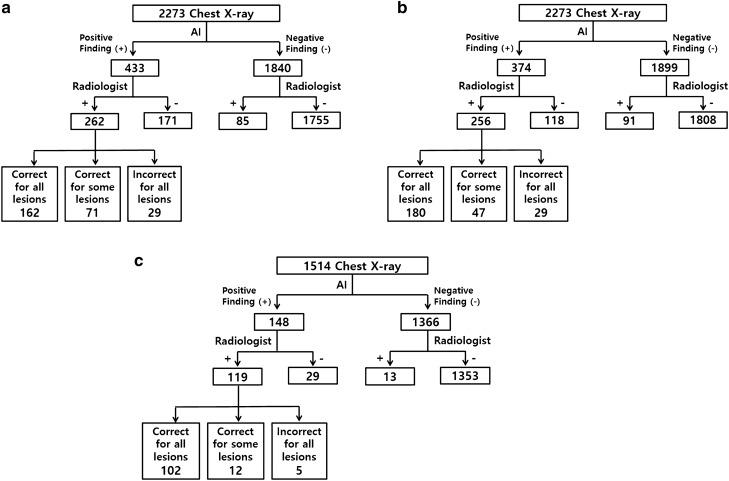
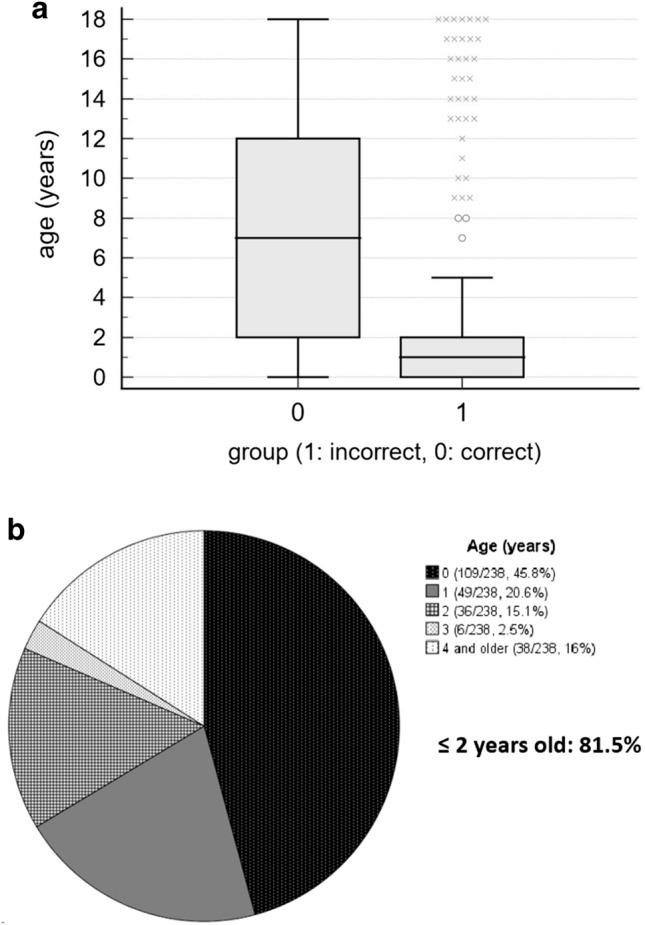
Artificial intelligence (AI) applied to pediatric chest radiographs are yet scarce. This study evaluated whether AI-based software developed for adult chest radiographs can be used for pediatric chest radiographs. Pediatric patients (≤ 18 years old) who underwent chest radiographs from March to May 2021 were included retrospectively. An AI-based lesion detection software assessed the presence of nodules, consolidation, fibrosis, atelectasis, cardiomegaly, pleural effusion, pneumothorax, and pneumoperitoneum. Using the pediatric radiologist's results as standard reference, we assessed the diagnostic performance of the software. For the total 2273 chest radiographs, the AI-based software showed a sensitivity, specificity, positive predictive value (PPV), negative predictive value (NPV), and accuracy of 67.2%, 91.1%, 57.7%, 93.9%, and 87.5%, respectively. Age was a significant factor for incorrect results (odds radio 0.821, 95% confidence interval 0.791-0.851). When we excluded cardiomegaly and children 2 years old or younger, sensitivity, specificity, PPV, NPV and accuracy significantly increased (86.4%, 97.9%, 79.7%, 98.7% and 96.9%, respectively, all p < 0.001). In conclusion, AI-based software developed with adult chest radiographs showed diagnostic accuracies up to 96.9% for pediatric chest radiographs when we excluded cardiomegaly and children 2 years old or younger. AI-based lesion detection software needs to be validated in younger children.
人工智能(AI)在儿科胸部 X 光片的应用还很少见。本研究评估了为成人胸部 X 光片开发的基于 AI 的软件是否可用于儿科胸部 X 光片。回顾性纳入 2021 年 3 月至 5 月间接受胸部 X 光检查的儿科患者(≤18 岁)。基于 AI 的病灶检测软件评估了结节、实变、纤维化、肺不张、心脏增大、胸腔积液、气胸和气腹的存在。使用儿科放射科医生的结果作为标准参考,我们评估了该软件的诊断性能。对于总共 2273 张胸部 X 光片,基于 AI 的软件的敏感性、特异性、阳性预测值(PPV)、阴性预测值(NPV)和准确性分别为 67.2%、91.1%、57.7%、93.9%和 87.5%。年龄是导致结果错误的显著因素(比值比 0.821,95%置信区间 0.791-0.851)。当我们排除心脏增大和 2 岁或以下的儿童时,敏感性、特异性、PPV、NPV 和准确性显著提高(分别为 86.4%、97.9%、79.7%、98.7%和 96.9%,均 p<0.001)。总之,当排除心脏增大和 2 岁或以下的儿童时,基于 AI 的软件在儿科胸部 X 光片上的诊断准确性高达 96.9%。基于 AI 的病灶检测软件需要在年龄较小的儿童中进行验证。

 Zotero 插件