
基于水热合成法制备的Pd掺杂rGO/ZnO-SnO的氢气传感器具有超低检测限和超快响应/恢复速度。
Ultralow detection limit and ultrafast response/recovery of the H gas sensor based on Pd-doped rGO/ZnO-SnO from hydrothermal synthesis.
作者信息
Zhang Xinxiao, Sun Jianhai, Tang Kangsong, Wang Hairong, Chen Tingting, Jiang Kaisheng, Zhou Tianye, Quan Hao, Guo Ruihua
机构信息
State Key Laboratory of Transducer Technology, Aerospace Information Research Institute, Chinese Academy of Sciences, 100194 Beijing, China.
School of Electronic, Electrical and Communication Engineering, University of Chinese Academy of Sciences, 100049 Beijing, China.
出版信息
Microsyst Nanoeng. 2022 Jun 16;8:67. doi: 10.1038/s41378-022-00398-8. eCollection 2022.
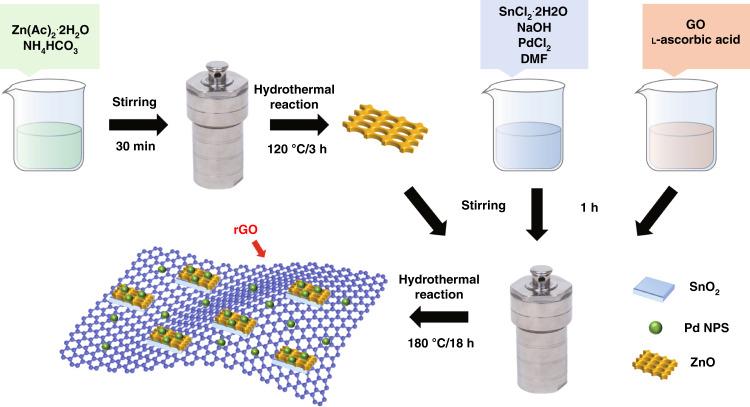
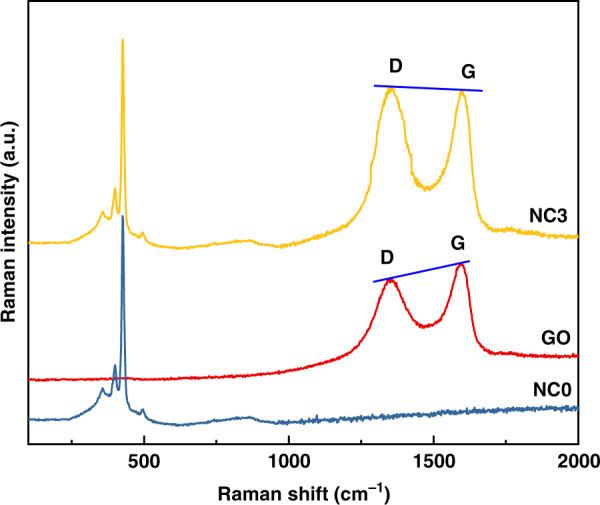
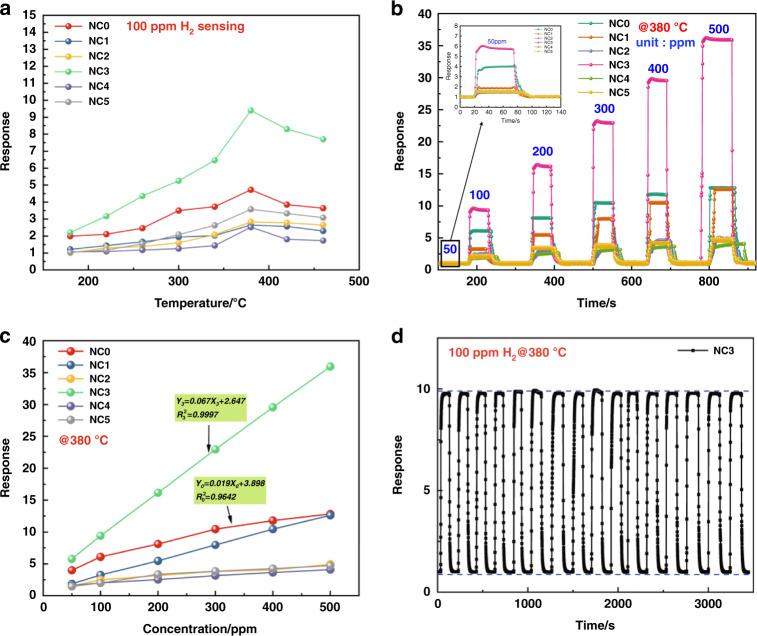
Hydrogen (H) sensors are of great significance in hydrogen energy development and hydrogen safety monitoring. However, achieving fast and effective detection of low concentrations of hydrogen is a key problem to be solved in hydrogen sensing. In this work, we combined the excellent gas sensing properties of tin(IV) oxide (SnO) and zinc oxide (ZnO) with the outstanding electrical properties of reduced graphene oxide (rGO) and prepared palladium (Pd)-doped rGO/ZnO-SnO nanocomposites by a hydrothermal method. The crystal structure, structural morphology, and elemental composition of the material were characterized by FE-SEM, TEM, XRD, XPS, Raman spectroscopy, and N adsorption-desorption. The results showed that the Pd-doped ZnO-SnO composites were successfully synthesized and uniformly coated on the surface of the rGO. The hydrogen gas sensing performance of the sensor prepared in this work was investigated, and the results showed that, compared with the pure Pd-doped ZnO-SnO sensor, the Pd-doped rGO/ZnO-SnO sensor modified with 3 wt% rGO had better hydrogen (H)-sensing response of 9.4-100 ppm H at 380 °C. In addition, this sensor had extremely low time parameters (the response time and recovery time for 100 ppm H at 380 °C were 4 s and 8 s, respectively) and an extremely low detection limit (50 ppb). Moreover, the sensor exhibited outstanding repeatability and restoration. According to the analysis of the sensing mechanism of this nanocomposite, the enhanced sensing performance of the Pd-doped rGO/ZnO-SnO sensor is mainly due to the heterostructure of rGO, ZnO, and SnO, the excellent electrical and physical properties of rGO and the synergy between rGO and Pd.
氢(H)传感器在氢能开发和氢安全监测中具有重要意义。然而,实现对低浓度氢的快速有效检测是氢传感领域亟待解决的关键问题。在本工作中,我们将二氧化锡(SnO)和氧化锌(ZnO)优异的气敏性能与还原氧化石墨烯(rGO)出色的电学性能相结合,通过水热法制备了钯(Pd)掺杂的rGO/ZnO-SnO纳米复合材料。采用场发射扫描电子显微镜(FE-SEM)、透射电子显微镜(TEM)、X射线衍射仪(XRD)、X射线光电子能谱仪(XPS)、拉曼光谱仪和N2吸附-脱附等手段对材料的晶体结构、结构形态和元素组成进行了表征。结果表明,成功合成了Pd掺杂的ZnO-SnO复合材料,并均匀包覆在rGO表面。对本工作制备的传感器的氢气传感性能进行了研究,结果表明,与纯Pd掺杂的ZnO-SnO传感器相比,添加3 wt% rGO改性的Pd掺杂rGO/ZnO-SnO传感器在380 °C下对9.4 - 100 ppm H2具有更好的氢传感响应。此外,该传感器具有极低的时间参数(380 °C下对100 ppm H2的响应时间和恢复时间分别为4 s和8 s)以及极低的检测限(50 ppb)。而且,该传感器具有出色的重复性和恢复性。通过对这种纳米复合材料传感机理的分析,Pd掺杂的rGO/ZnO-SnO传感器传感性能增强主要归因于rGO、ZnO和SnO的异质结构、rGO优异的电学和物理性能以及rGO与Pd之间的协同作用。






 Zotero 插件