
ZSM-22 沸石前驱体对用于盐分截留的超滤-聚醚砜选择性基底层的影响。
Influence of the Zeolite ZSM-22 Precursor on a UF-PES Selective Substrate Layer for Salts Rejection.
作者信息
Chauke Nyiko M, Moutloali Richard M, Ramontja James
机构信息
Department of Chemical Sciences, Faculty of Science, University of Johannesburg, Doornfontein, Johannesburg 2028, South Africa.
DSI/MINTEK Nanotechnology Innovation Centre-Water Research Node, University of Johannesburg, Doornfontein, Johannesburg 2028, South Africa.
出版信息
Membranes (Basel). 2022 May 26;12(6):553. doi: 10.3390/membranes12060553.
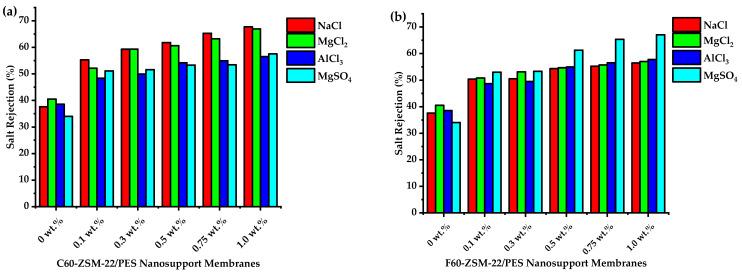
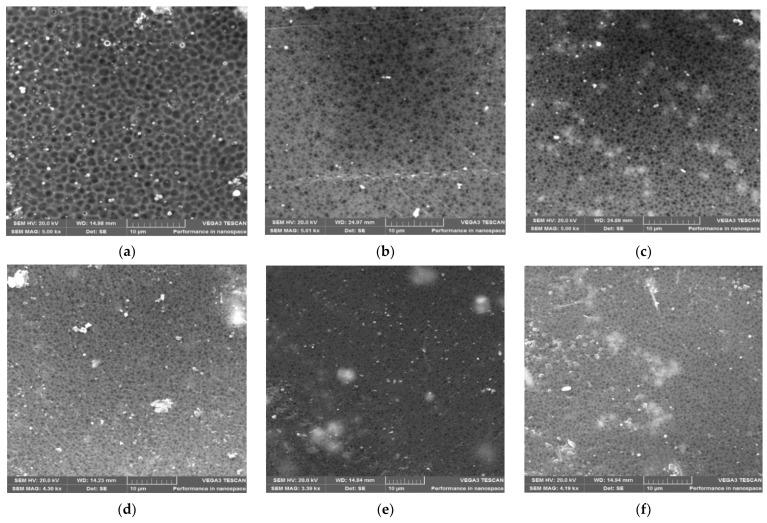
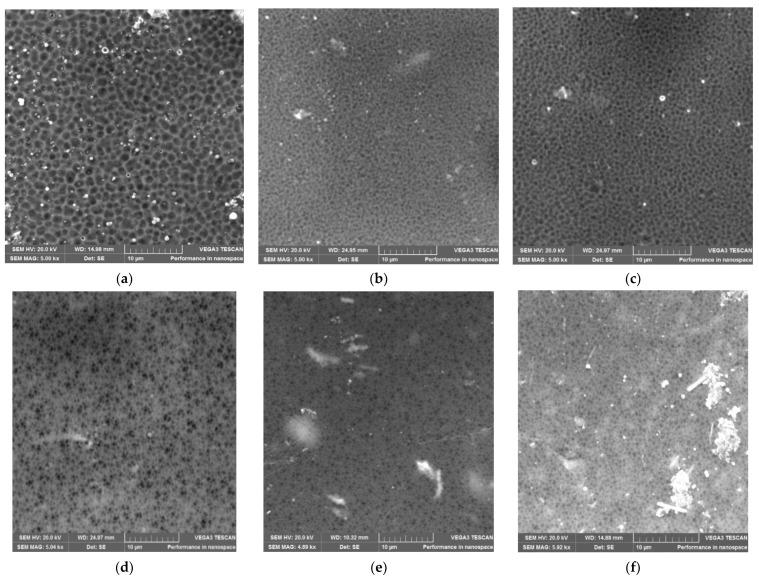
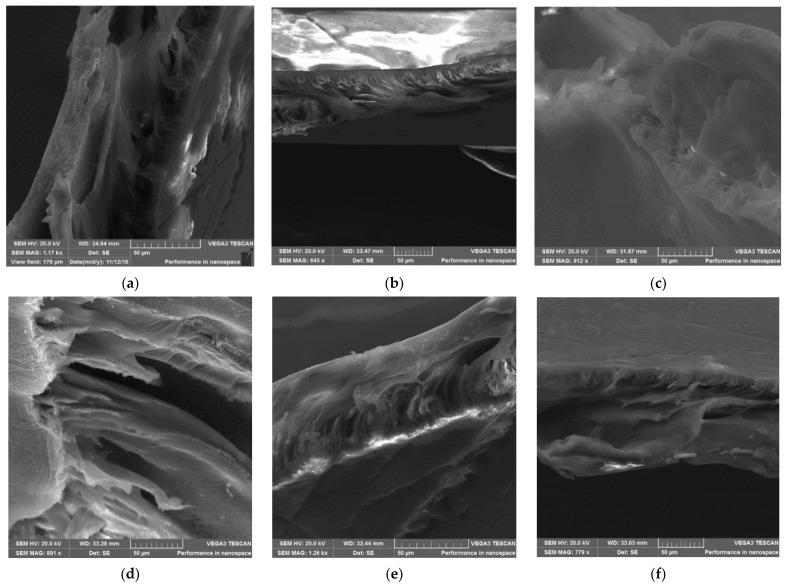
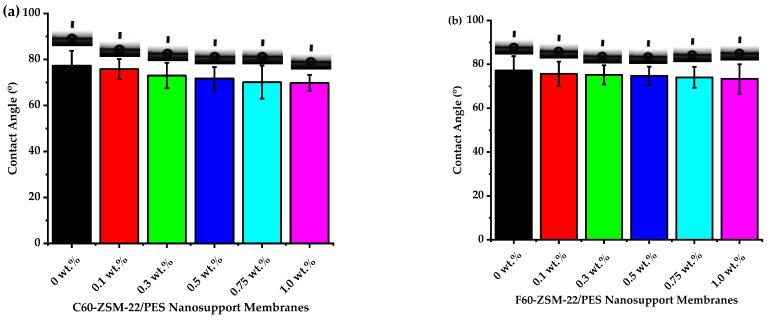
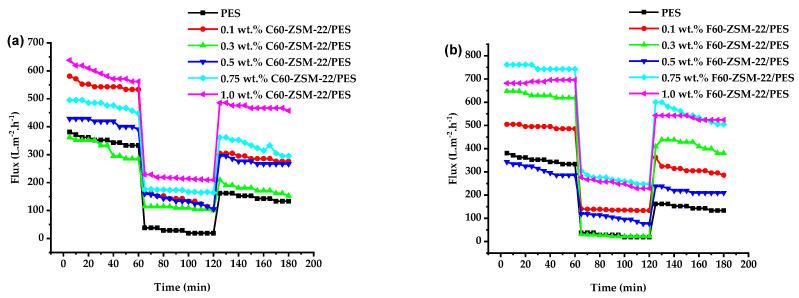
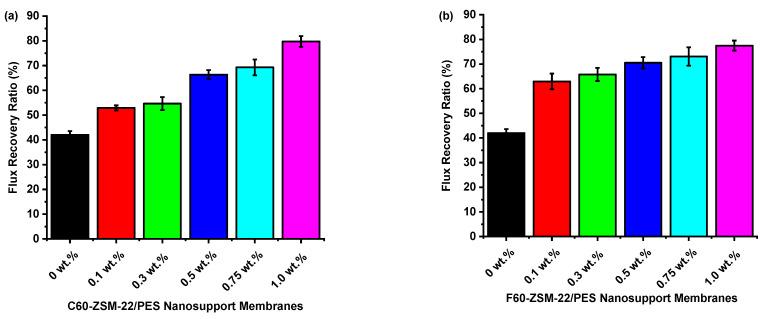
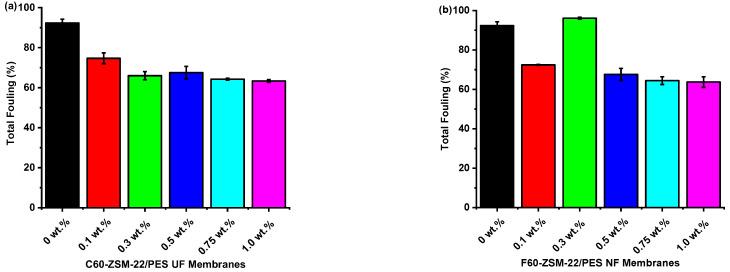
Fabrication of the ZSM-22/Polyethersulfone (ZSM-22/PES) membranes as selective salt filters represent a growing membrane technological area in separation with the potential of high economic reward based on its low energy requirements. The incorporation of ZSM-22 zeolite material as additives into the PES polymer matrix has the prospective advantage of combining both the zeolite and polymer features while overcoming the limitations associated with both materials. This work investigated the influence of the nature of the silica precursor on ZSM-22 zeolite hydrothermally synthesised using colloidal (C60) and fumed (C60) silica to Si/Al of 60. The successful synthesis of the highly crystalline zeolitic materials was confirmed through XRD, FTIR, and SEM with EDX. The ZSM-22 additives were directly dispersed into a PES polymeric matrix to form a casting solution for the preparation of the ZSM-22/PES selective substrate layers via a phase inversion method for salts rejection. The polymeric PES was selected as an organic network in which the content of the ZSM-22 zeolite (ranging between 0 and 1.0 wt.%), was obtained and characterised by XRD, FTIR, and SEM analysis, as well as water contact angle (WCA) measurement and dead-end filtration cell. The phase inversion preparation method has induced the resulting ZSM-22/PES NF substrates anisotropy, as attributed to a high water flux to the above 700 L·m·h; high selectivity and rejection of salts to above 80% is revealed by the obtained results. The materials also exhibited improved antifouling behavior to above 70% flux recovery ratios. As such, the nature of the silica precursor influences ZSM-22 zeolite synthesis as a potential additive in the PES polymer matrix and led to the enhanced performance of the pure PES ultrafiltration membrane.
制备作为选择性盐过滤器的ZSM - 22/聚醚砜(ZSM - 22/PES)膜代表了分离领域中一个不断发展的膜技术领域,基于其低能量需求,具有获得高经济回报的潜力。将ZSM - 22沸石材料作为添加剂掺入PES聚合物基体中,具有结合沸石和聚合物特性的潜在优势,同时克服了与这两种材料相关的局限性。这项工作研究了二氧化硅前驱体的性质对使用胶体(C60)和气相(C60)二氧化硅水热合成ZSM - 22沸石至Si/Al比为60的影响。通过XRD、FTIR和带有能谱仪的SEM证实了高结晶度沸石材料的成功合成。将ZSM - 22添加剂直接分散到PES聚合物基体中,形成铸膜液,通过相转化法制备用于盐截留的ZSM - 22/PES选择性基底层。选择聚合物PES作为有机网络,其中ZSM - 22沸石的含量(范围为0至1.0 wt.%)通过XRD、FTIR和SEM分析以及水接触角(WCA)测量和死端过滤池获得并进行表征。相转化制备方法导致所得的ZSM - 22/PES纳滤基底层具有各向异性,这归因于高于700 L·m⁻²·h⁻¹的高水通量;所得结果表明对盐的高选择性和截留率高于80%。这些材料还表现出改善的抗污染性能,通量恢复率高于70%。因此,二氧化硅前驱体的性质影响ZSM - 22沸石作为PES聚合物基体中潜在添加剂的合成,并导致纯PES超滤膜性能的增强。





 Zotero 插件