
肉豆蔻酸补充加剧高脂肪饮食诱导的小鼠脂肪炎症和全身胰岛素抵抗。
Myristic Acid Supplementation Aggravates High Fat Diet-Induced Adipose Inflammation and Systemic Insulin Resistance in Mice.
机构信息
Division of Diabetes, Endocrinology, and Metabolism, Department of Internal Medicine, University of Nebraska Medical Center, Omaha, NE 68198, USA.
Research Service, VA Nebraska-Western Iowa Health Care System, Omaha, NE 68105, USA.
出版信息
Biomolecules. 2022 May 24;12(6):739. doi: 10.3390/biom12060739.
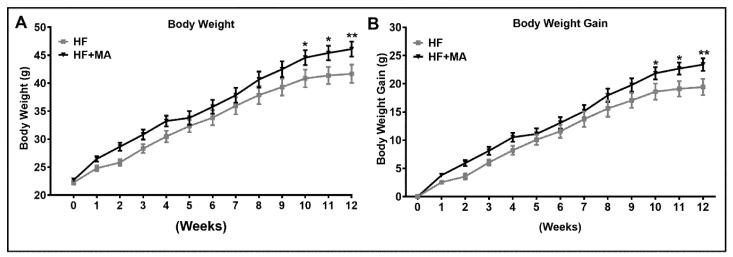
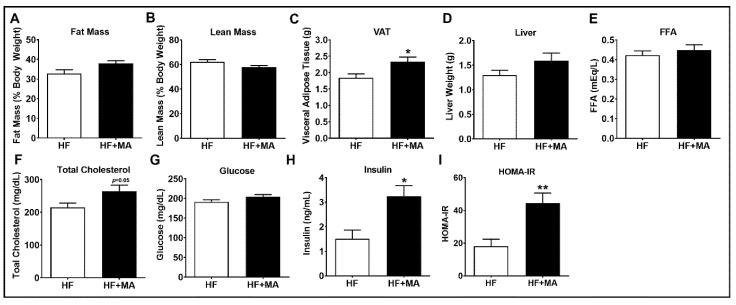
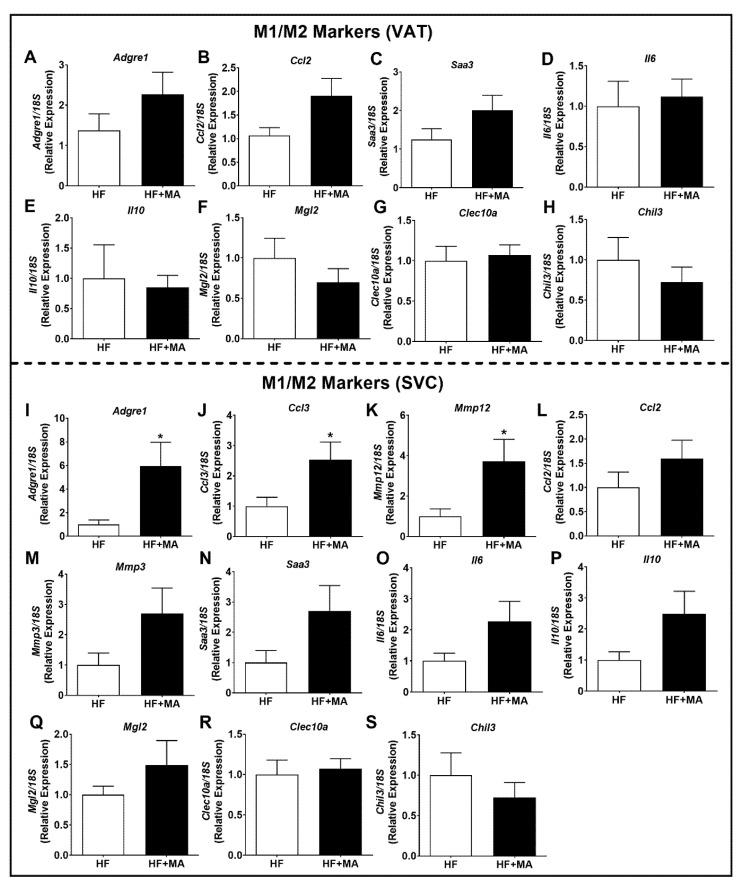
Saturated fatty acids (SFAs) are considered to be detrimental to human health. One of the SFAs, myristic acid (MA), is known to exert a hypercholesterolemic effect in mice as well as humans. However, its effects on altering adipose tissue (AT) inflammation and systemic insulin resistance (IR) in obesity are still unclear. Here, we sought to determine the effects of a high fat (HF) diet supplemented with MA on obesity-associated metabolic disorders in mice. Wild-type C57BL/6 mice were fed a HF diet in the presence or absence of 3% MA for 12 weeks. Plasma lipids, plasma adipokines, AT inflammation, systemic IR, glucose homeostasis, and hepatic steatosis were assessed. The body weight and visceral adipose tissue (VAT) mass were significantly higher in mice receiving the HF+MA diet compared to HF diet-fed controls. Plasma total cholesterol levels were marginally increased in HF+MA-fed mice compared to controls. Fasting blood glucose was comparable between HF and HF+MA-fed mice. Interestingly, the plasma insulin and HOMA-IR index, a measure of insulin resistance, were significantly higher in HF+MA-fed mice compared to HF controls. Macrophage and inflammatory markers were significantly elevated in the AT and AT-derived stromal vascular cells upon MA feeding. Moreover, the level of circulating resistin, an adipokine promoting insulin resistance, was significantly higher in HF+MA-fed mice compared with HF controls. The insulin tolerance test revealed that the IR was higher in mice receiving the MA supplementation compared to HF controls. Moreover, the glucose tolerance test showed impairment in systemic glucose homeostasis in MA-fed mice. Analyses of liver samples showed a trend towards an increase in liver TG upon MA feeding. However, markers of oxidative stress and inflammation were reduced in the liver of mice fed an MA diet compared to controls. Taken together, our data suggest that chronic administration of MA in diet exacerbates obesity-associated insulin resistance and this effect is mediated in part, via increased AT inflammation and increased secretion of resistin.
饱和脂肪酸(SFAs)被认为对人类健康有害。其中一种饱和脂肪酸,肉豆蔻酸(MA),已知在小鼠和人类中具有升高胆固醇的作用。然而,它对肥胖相关脂肪组织(AT)炎症和全身胰岛素抵抗(IR)的影响尚不清楚。在这里,我们试图确定高脂肪(HF)饮食中添加 MA 对肥胖相关代谢紊乱的影响。将野生型 C57BL/6 小鼠用 HF 饮食喂养,同时存在或不存在 3% MA 12 周。评估血浆脂质、血浆脂肪因子、AT 炎症、全身 IR、葡萄糖稳态和肝脂肪变性。与 HF 饮食喂养的对照组相比,接受 HF+MA 饮食的小鼠体重和内脏脂肪组织(VAT)质量显著增加。与对照组相比,HF+MA 喂养的小鼠血浆总胆固醇水平略有升高。HF 和 HF+MA 喂养的小鼠空腹血糖相当。有趣的是,与 HF 对照组相比,HF+MA 喂养的小鼠血浆胰岛素和 HOMA-IR 指数(衡量胰岛素抵抗的指标)显著升高。在 MA 喂养后,脂肪组织和脂肪组织衍生的基质血管细胞中的巨噬细胞和炎症标志物显著升高。此外,循环抵抗素水平(一种促进胰岛素抵抗的脂肪因子)在 HF+MA 喂养的小鼠中明显高于 HF 对照组。胰岛素耐量试验表明,与 HF 对照组相比,接受 MA 补充的小鼠 IR 更高。此外,葡萄糖耐量试验显示 MA 喂养的小鼠全身葡萄糖稳态受损。对肝样本的分析表明,MA 喂养后肝 TG 呈上升趋势。然而,与对照组相比,MA 饮食喂养的小鼠肝脏中的氧化应激和炎症标志物减少。综上所述,我们的数据表明,饮食中慢性给予 MA 会加剧肥胖相关的胰岛素抵抗,这种作用部分是通过增加 AT 炎症和增加抵抗素的分泌来介导的。




 Zotero 插件