
探索(碱蓬)对盐度和干旱条件的适应性:迈向气候变化下可持续景观美化的一步。
Exploring Suitability of (Fetid Saltwort) for Salinity and Drought Conditions: A Step Toward Sustainable Landscaping Under Changing Climate.
作者信息
Alam Hasnain, Zamin Muhammad, Adnan Muhammad, Shah Adnan Noor, Alharby Hesham F, Bamagoos Atif A, Alabdallah Nadiyah M, Alzahrani Saleha S, Alharbi Basmah M, Saud Shah, Hassan Shah, Fahad Shah
机构信息
Department of Biological Sciences, International Islamic University, Islamabad, Pakistan.
Department of Biology, College of Sciences, United Arab Emirates University, Al Ain, United Arab Emirates.
出版信息
Front Plant Sci. 2022 Jun 8;13:900210. doi: 10.3389/fpls.2022.900210. eCollection 2022.
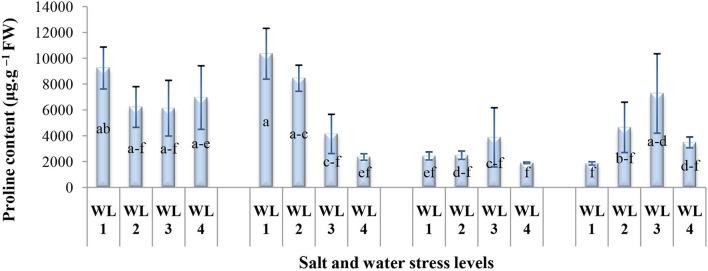
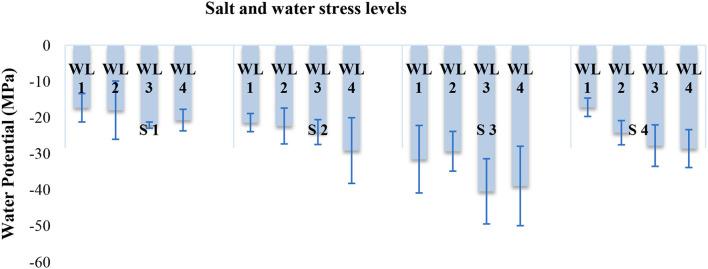
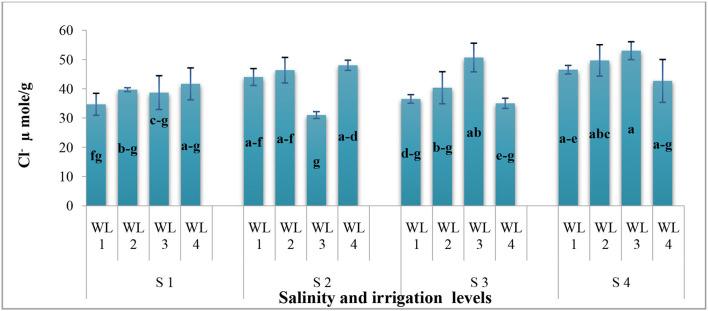
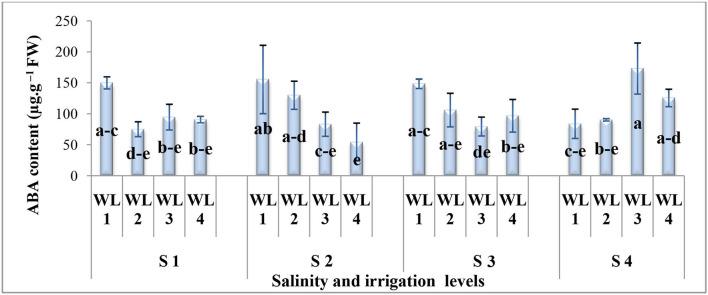
In context of the climate change, major abiotic stresses faced by plants include salt stress and drought stress. Though, plants have similar physiological mechanisms to cope with these salt and drought stresses. The physiological and biochemical response of native plants to the combined application of salinity and drought stresses are still not well-understood. Thus, to investigate the combined effect of salinity and drought stresses, an experiment was conducted on with four levels of salinity and four drought intensities under the arid climatic conditions. The experiment was conducted in a randomized complete block design with a split-plot arrangement replicated three times. had been found resistant to different levels of individual and combined salt and drought stresses. survived till the end of the experiment. Salt and water stress did not show any significant effects on shoot weight, shoot length, and root length. The drought stress affected the photosynthetic rate, ion uptake and leaf water potential. However, salt stress helped to counter this effect of drought stress. Thus, drought stress did not affect plant growth, photosynthesis rate, and ion uptake when combined with salt stress. Increased Na and Cl uptake under the salt stress helped in osmotic adjustment. Therefore, the leaf water potential (LWP) decreased with increasing the salt stress from 5 dSm until 15 dSm and increased again at 20 dSm. At lower salt stress, ABA and proline content declined with increasing the drought stress. However, at higher salt stress, ABA content increased with increasing the drought stress. In conclusion, the salt stress had been found to have a protective role to drought stress for . utilized inorganic ion for osmotic adjustment at lower salinity stress but also accumulate the organic solutes to balance the osmotic pressure of the ions in the vacuole under combined stress conditions. Due to the physical lush green appearance and less maintenance requirements, can be recommended as a native substitute in landscaping under the salt and drought stresses conditions.
在气候变化的背景下,植物面临的主要非生物胁迫包括盐胁迫和干旱胁迫。然而,植物具有相似的生理机制来应对这些盐胁迫和干旱胁迫。本地植物对盐胁迫和干旱胁迫联合作用的生理生化响应仍未得到充分了解。因此,为了研究盐胁迫和干旱胁迫的联合效应,在干旱气候条件下进行了一项实验,设置了四个盐度水平和四种干旱强度。该实验采用随机完全区组设计,裂区排列,重复三次。已发现[植物名称未给出]对不同水平的单一及复合盐胁迫和干旱胁迫具有抗性。[植物名称未给出]存活至实验结束。盐胁迫和水分胁迫对地上部重量、地上部长和根长均未表现出显著影响。干旱胁迫影响光合速率、离子吸收和叶片水势。然而,盐胁迫有助于抵消干旱胁迫的这种影响。因此,干旱胁迫与盐胁迫共同作用时,不会影响植物生长、光合速率和离子吸收。盐胁迫下钠和氯吸收的增加有助于渗透调节。因此,叶片水势(LWP)随着盐胁迫从5 dSm增加到15 dSm而降低,在20 dSm时又再次升高。在较低盐胁迫下,脱落酸(ABA)和脯氨酸含量随着干旱胁迫的增加而下降。然而,在较高盐胁迫下,ABA含量随着干旱胁迫的增加而增加。总之,已发现盐胁迫对[植物名称未给出]的干旱胁迫具有保护作用。[植物名称未给出]在较低盐度胁迫下利用无机离子进行渗透调节,但在复合胁迫条件下也会积累有机溶质以平衡液泡中离子的渗透压。由于其外观郁郁葱葱且养护要求较低,[植物名称未给出]可被推荐作为盐胁迫和干旱胁迫条件下园林景观中的本地替代植物。


 Zotero 插件