
嗜神经AAV9和工程化AAVPHP.eB与细胞受体识别的结构基础。
Structural basis for the neurotropic AAV9 and the engineered AAVPHP.eB recognition with cellular receptors.
作者信息
Xu Guangxue, Zhang Ran, Li Huapeng, Yin Kaixin, Ma Xinyi, Lou Zhiyong
机构信息
MOE Key Laboratory of Protein Science & Collaborative Innovation Center of Biotherapy, School of Medicine, Tsinghua University, Beijing, China.
School of Life Sciences, Tsinghua University, Beijing, China.
出版信息
Mol Ther Methods Clin Dev. 2022 May 29;26:52-60. doi: 10.1016/j.omtm.2022.05.009. eCollection 2022 Sep 8.
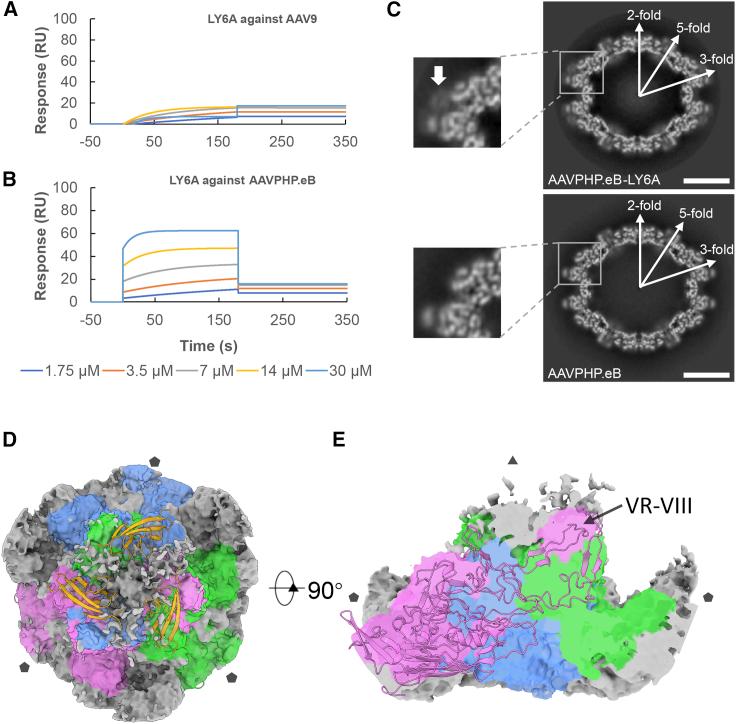
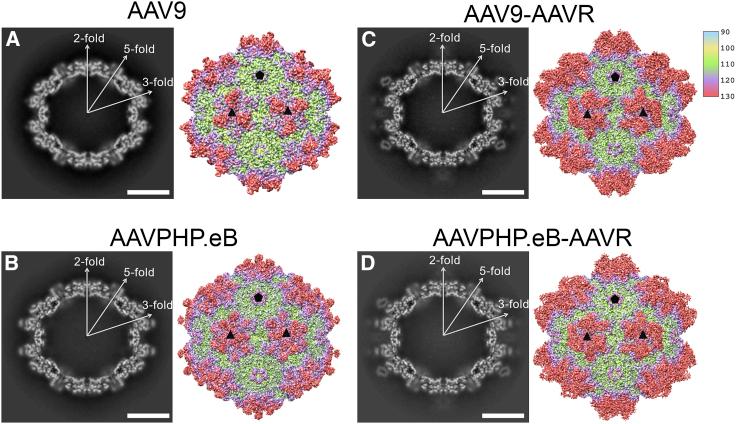
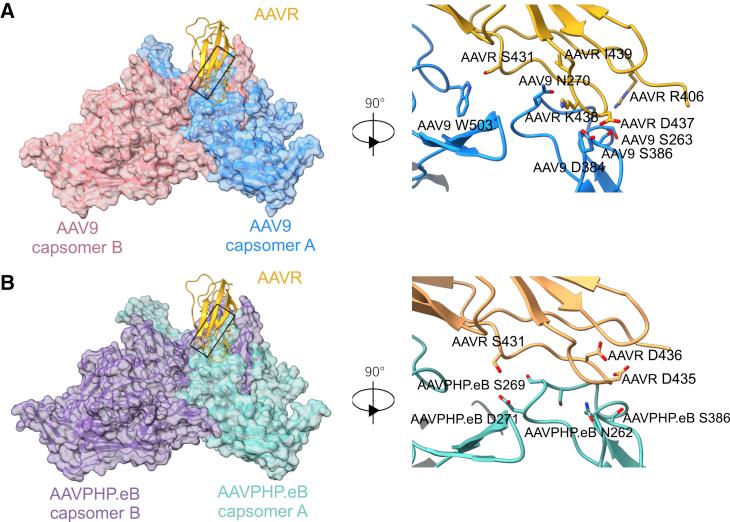
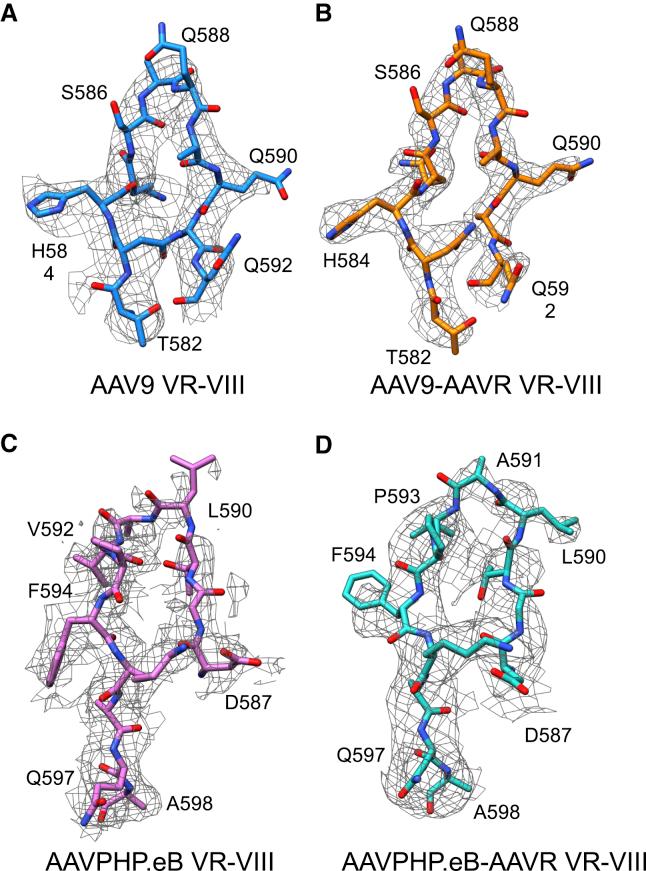
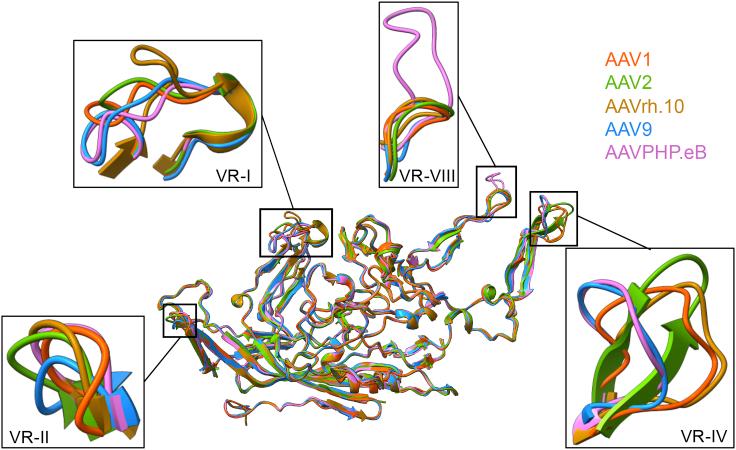
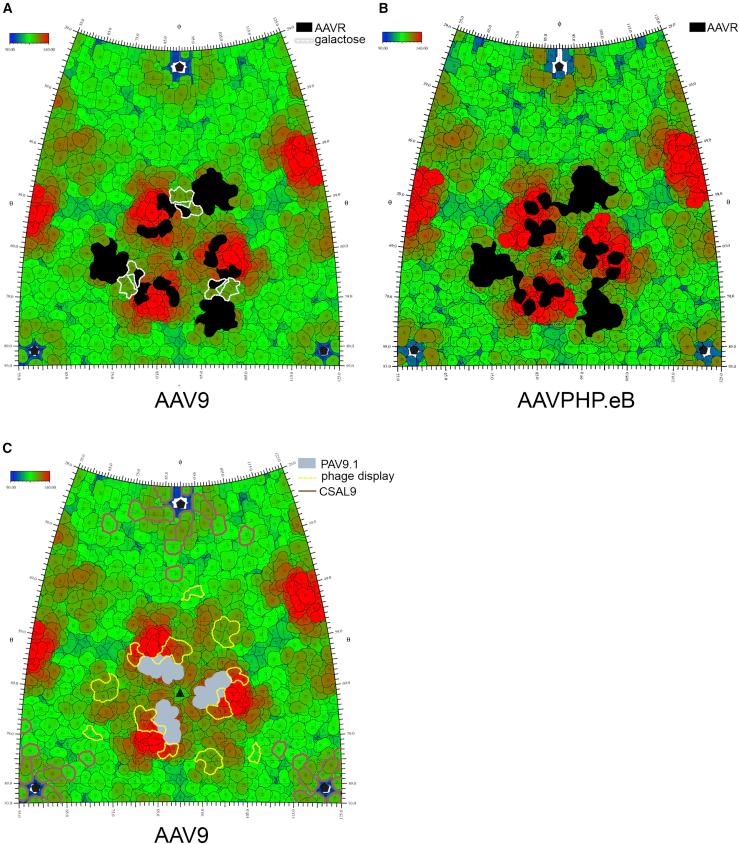
Clade F adeno-associated virus (AAV) 9 has been utilized as therapeutic gene delivery vector, and it is capable of crossing blood brain barrier (BBB). Recently, an AAV9-based engineering serotype AAVPHP.eB with enhanced BBB crossing ability further expanded clade F AAVs' usages in the murine central nervous system (CNS) gene delivery. In this study, we determined the cryo-electron microscopy (cryo-EM) structures of the AAVPHP.eB and its parental serotype AAV9 in native form or in complex with their essential receptor AAV receptor (AAVR). These structures reveal the molecular details of their AAVR recognition, where the polycystic kidney disease repeat domain 2 (PKD2) of AAVR interacts with AAV9 and AAVPHP.eB virions at the 3-fold protrusions and the raised capsid regions between the 2- and 5-fold axes, termed the 2/5-fold wall. The interacting patterns of AAVR to AAV9 and AAVPHP.eB are similar to what was observed in AAV1/AAV2-AAVR complexes. Moreover, we found that the AAVPHP.eB variable region VIII (VR-VIII) may independently facilitate the new receptor recognition responsible for enhanced CNS transduction. Our study provides insights into the recognition principles of multiple receptors for engineered AAVPHP.eB and parental serotype AAV9, and further reveal the potential molecular basis underlying their different tropisms.
F 分支腺相关病毒(AAV)9 已被用作治疗性基因递送载体,并且它能够穿越血脑屏障(BBB)。最近,一种具有增强血脑屏障穿越能力的基于 AAV9 的工程血清型 AAVPHP.eB 进一步扩大了 F 分支 AAV 在小鼠中枢神经系统(CNS)基因递送中的应用。在本研究中,我们确定了天然形式或与其必需受体 AAV 受体(AAVR)结合的 AAVPHP.eB 及其亲本血清型 AAV9 的冷冻电子显微镜(cryo-EM)结构。这些结构揭示了它们识别 AAVR 的分子细节,其中 AAVR 的多囊肾病重复结构域 2(PKD2)在 3 倍突起处以及 2 倍和 5 倍轴之间的衣壳凸起区域(称为 2/5 倍壁)与 AAV9 和 AAVPHP.eB 病毒粒子相互作用。AAVR 与 AAV9 和 AAVPHP.eB 的相互作用模式与在 AAV1/AAV2-AAVR 复合物中观察到的相似。此外,我们发现 AAVPHP.eB 的可变区 VIII(VR-VIII)可能独立促进负责增强 CNS 转导的新受体识别。我们的研究深入了解了工程化 AAVPHP.eB 和亲本血清型 AAV9 对多种受体的识别原理,并进一步揭示了它们不同嗜性背后的潜在分子基础。

 Zotero 插件