
口腔鳞状细胞癌中 及其宿主基因lncRNA的共同上调。
Co-upregulation of and its host gene lncRNA in oral squamous cell carcinoma.
作者信息
Tu Hsi-Feng, Liu Chung-Ji, Hung Wan-Wen, Shieh Tzong-Ming
机构信息
Department of Dentistry, College of Dentistry, National Yang Ming Chiao Tung University, Taipei, Taiwan.
Institute of Oral Biology, College of Dentistry, National Yang Ming Chiao Tung University, Taipei, Taiwan.
出版信息
J Dent Sci. 2022 Apr;17(2):696-706. doi: 10.1016/j.jds.2021.11.006. Epub 2021 Nov 27.
BACKGROUND/PURPOSE: Several long non-coding RNAs (lncRNAs) harbor miRNA in their genome. MIR31HG harbors miR-31 in its intron and it is speculated that they are co-expressed in tumors. This study addressed whether frequent miR-31 and MIR31HG co-upregulation occurred in oral squamous cell carcinoma (OSCC) and its clinical implications.
MATERIALS AND METHODS
Microarray was performed to retrieve dis-regulated lncRNAs from tissue sample. The ectopic gene expression was carried out to specify the phenotypic influences of selected lncRNA screened from bioinformatic algorithms. The expression of and in tissues or scrapped samples was analyzed using qRT-PCR. The implications of gene expression as related to metastasis or survival were further dissected.
RESULTS
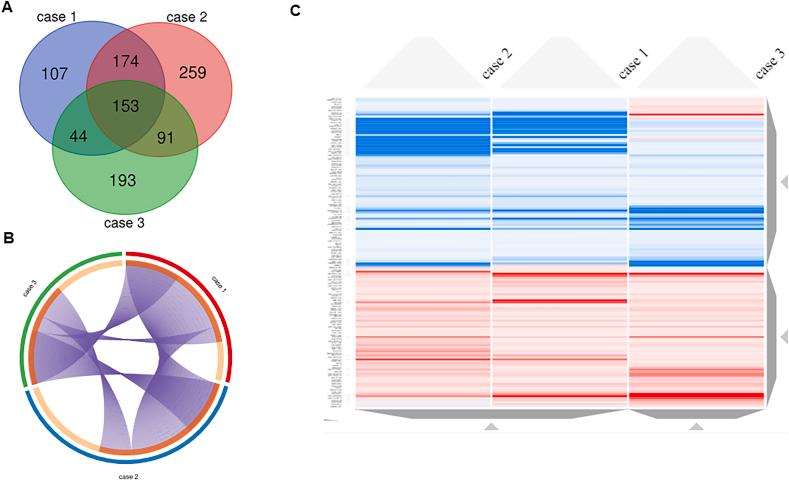
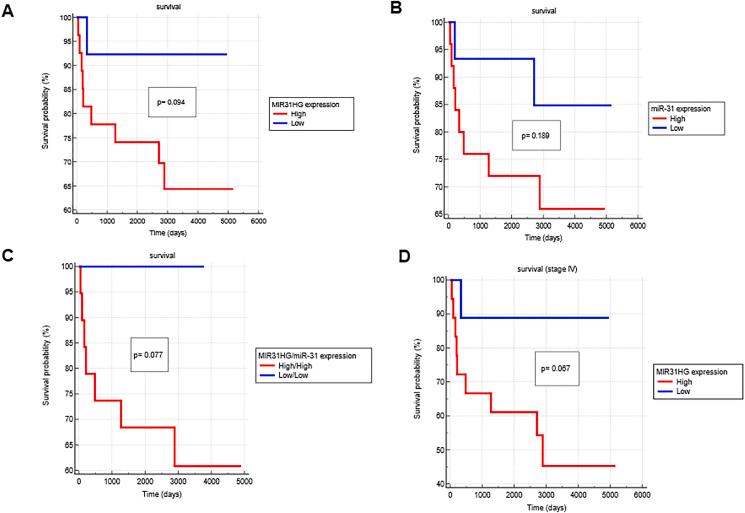
Microarray identified disrupted transcripts including and other 152 lncRNAs aberrantly expressed in OSCC tissues. algorithms annotated an eminent involvement of aberrant transcripts in the regulation of cell cycle, extracellular modulation, adhesion, and wound healing. The enhancement of proliferation, wound healing, invasion and anchorage-independent colony formation mediated by was ascertained by ectopic expression in OECM1 cells. Besides, co-upregulation of and was conspicuous in OSCC tissues. High expression of and designated a trend of worse OSCC prognosis. Interestingly, high expression defined a very poor survival in stage IV diseases. By contrast, high expression predicted nodal metastasis in stage I-III diseases.
CONCLUSION
Assessment of miR-31 and MIR31HG expression in OSCC may enable the prognostic prediction. The candidate lncRNAs isolated from this work can be further validated as crucial factors contributing to OSCC pathogenesis.
背景/目的:几种长链非编码RNA(lncRNA)在其基因组中含有微小RNA(miRNA)。MIR31HG在其内含子中含有miR-31,据推测它们在肿瘤中共同表达。本研究探讨了miR-31和MIR31HG在口腔鳞状细胞癌(OSCC)中是否频繁共同上调及其临床意义。
材料与方法
进行微阵列分析以从组织样本中检索失调的lncRNA。进行异位基因表达以确定从生物信息学算法筛选出的选定lncRNA的表型影响。使用qRT-PCR分析组织或刮取样本中[具体基因名称未给出]和[具体基因名称未给出]的表达。进一步剖析基因表达与转移或生存相关的意义。
结果
微阵列鉴定出包括[具体基因名称未给出]和其他152种在OSCC组织中异常表达的lncRNA的转录本中断。[具体算法名称未给出]算法注释异常转录本在细胞周期调节、细胞外调节、粘附和伤口愈合中显著参与。通过在OECM1细胞中的异位表达确定了由[具体基因名称未给出]介导的增殖、伤口愈合、侵袭和非锚定依赖性集落形成的增强。此外,[具体基因名称未给出]和[具体基因名称未给出]在OSCC组织中共同上调明显。[具体基因名称未给出]和[具体基因名称未给出]的高表达表明OSCC预后较差的趋势。有趣的是,[具体基因名称未给出]的高表达定义了IV期疾病中非常差的生存率。相比之下,[具体基因名称未给出]的高表达预测I-III期疾病中的淋巴结转移。
结论
评估OSCC中miR-31和MIR31HG的表达可能有助于预后预测。从这项工作中分离出的候选lncRNA可进一步验证为导致OSCC发病机制的关键因素。




 Zotero 插件