
严重 COVID-19 发病机制的特征:病毒和宿主因素之间。
Hallmarks of Severe COVID-19 Pathogenesis: Between Viral and Host Factors.
机构信息
Clinic of Infectious Diseases and Tropical Medicine, Azienda Socio Sanitaria Territoriale (ASST) Santi Paolo e Carlo, Department of Health Sciences, University of Milan, Milan, Italy.
出版信息
Front Immunol. 2022 Jun 10;13:912336. doi: 10.3389/fimmu.2022.912336. eCollection 2022.
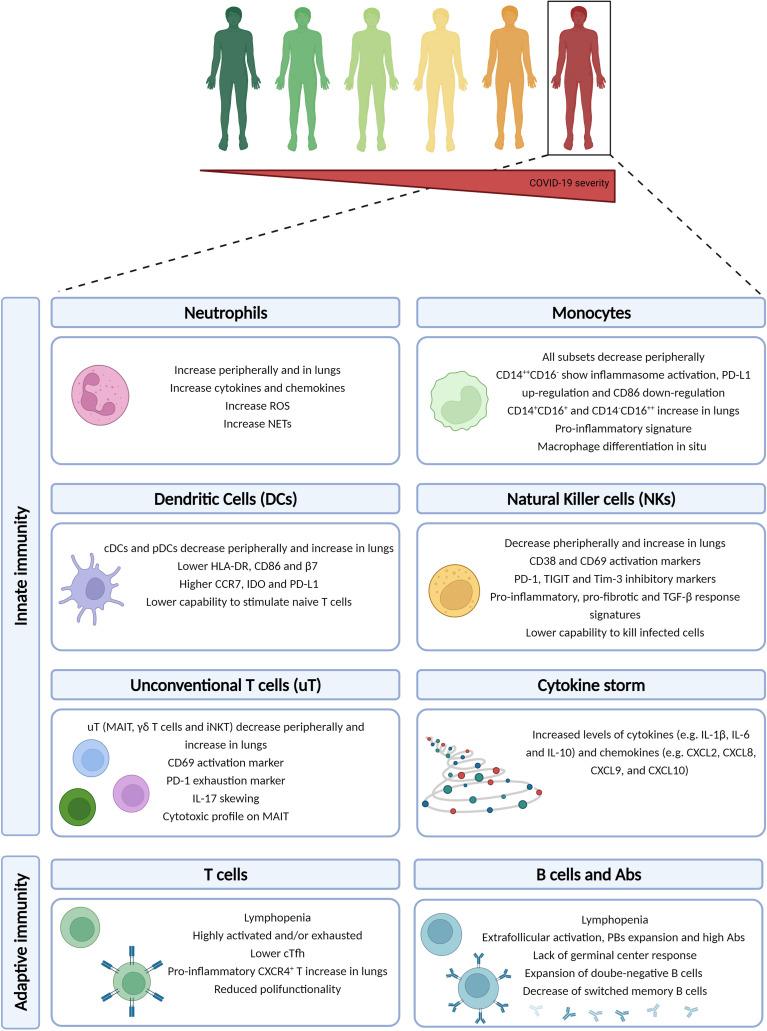
Two years into Coronavirus Disease 2019 (COVID-19) pandemic, a comprehensive characterization of the pathogenesis of severe and critical forms of COVID-19 is still missing. While a deep dysregulation of both the magnitude and functionality of innate and adaptive immune responses have been described in severe COVID-19, the mechanisms underlying such dysregulations are still a matter of scientific debate, in turn hampering the identification of new therapies and of subgroups of patients that would most benefit from individual clinical interventions. Here we review the current understanding of viral and host factors that contribute to immune dysregulation associated with COVID-19 severity in the attempt to unfold and broaden the comprehension of COVID-19 pathogenesis and to define correlates of protection to further inform strategies of targeted therapeutic interventions.
在 2019 冠状病毒病(COVID-19)大流行两年后,对于严重和危急形式 COVID-19 的发病机制仍缺乏全面的描述。尽管在严重 COVID-19 中已经描述了先天和适应性免疫反应的幅度和功能的深度失调,但导致这种失调的机制仍然是科学争论的问题,这反过来又阻碍了新疗法的确定以及最受益于个体临床干预的患者亚群的确定。在这里,我们回顾了导致 COVID-19 严重程度相关免疫失调的病毒和宿主因素的现有认识,试图阐明和拓宽对 COVID-19 发病机制的理解,并确定保护相关性,以进一步为有针对性的治疗干预策略提供信息。

 Zotero 插件