
妊娠期糖尿病的肠道真菌微生物群特征及其与饮食干预的关联
The Gut Mycobiome Characterization of Gestational Diabetes Mellitus and Its Association With Dietary Intervention.
作者信息
Wu Na, Mo Heng, Mu Qing, Liu Peng, Liu Guoli, Yu Weidong
机构信息
Department of Central Laboratory and Institute of Clinical Molecular Biology, Peking University People's Hospital, Beijing, China.
Department of Stomatology, Peking University People's Hospital, Beijing, China.
出版信息
Front Microbiol. 2022 Jun 15;13:892859. doi: 10.3389/fmicb.2022.892859. eCollection 2022.
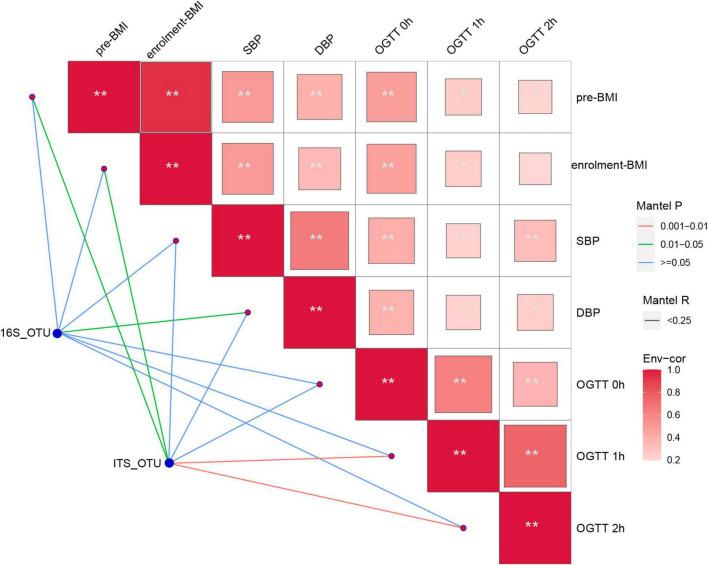
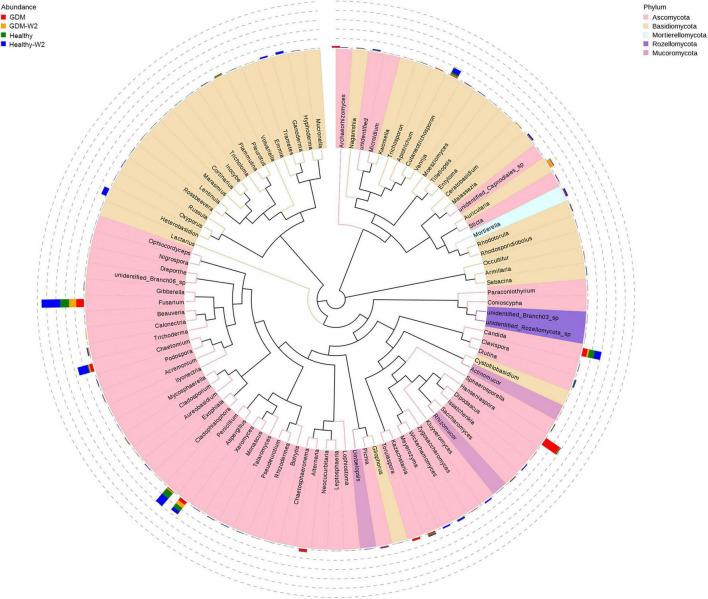
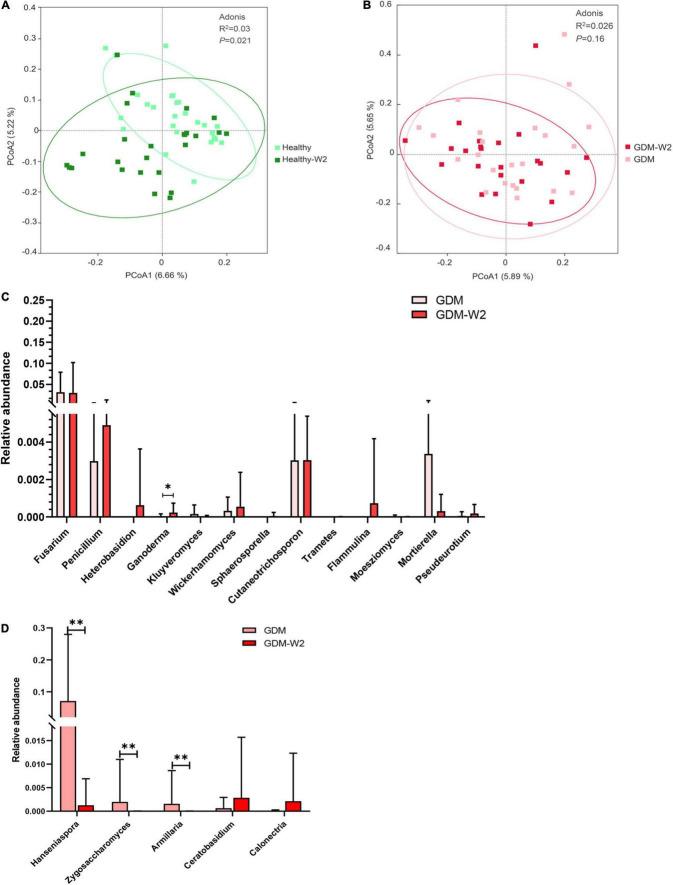
Gestational diabetes mellitus (GDM) is a high-risk pregnancy complication that is associated with metabolic disorder phenotypes, such as abnormal blood glucose and obesity. The active interface between gut microbiota and diet contributes to metabolic homeostasis in GDM. However, the contributions of gut mycobiome have been neglected. Here, we profiled the gut fungi between GDM and healthy subjects at two time points and investigate whether variations in gut mycobiome correlate with key features of host metabolism and diet management in this observational study. We identified that , and contributed to GDM patient clustering, indicating that these fungal taxa are associated with abnormal blood glucose levels, and the causality needs to be further explored. While , and had significant explanatory effects on healthy subject clustering. In addition, spearman analysis further indicated that blood glucose levels were negatively correlated with polysaccharide-producing genera, , which could be reshaped by the short-term diet. The which was negatively correlates with metabolic parameters, also exhibited the antimicrobial attribute by the fungal-bacterial interaction analysis. These data suggest that host metabolic homeostasis in GDM may be influenced by variability in the mycobiome and could be reshaped by the diet intervention. This work reveals the potential significance of the gut mycobiome in health and has implications for the beneficial effects of diet intervention on host metabolic homeostasis through regulating gut fungal abundance and metabolites.
妊娠期糖尿病(GDM)是一种高危妊娠并发症,与代谢紊乱表型相关,如血糖异常和肥胖。肠道微生物群与饮食之间的活跃界面有助于GDM患者的代谢稳态。然而,肠道真菌群的作用一直被忽视。在这项观察性研究中,我们在两个时间点分析了GDM患者和健康受试者的肠道真菌,并研究肠道真菌群的变化是否与宿主代谢和饮食管理的关键特征相关。我们发现,[具体真菌种类1]、[具体真菌种类2]和[具体真菌种类3]促成了GDM患者的聚类,表明这些真菌类群与血糖水平异常有关,其因果关系有待进一步探索。而[具体真菌种类4]、[具体真菌种类5]和[具体真菌种类6]对健康受试者的聚类有显著的解释作用。此外,Spearman分析进一步表明,血糖水平与产多糖属[具体属名]呈负相关,该属可通过短期饮食重塑。与代谢参数呈负相关的[具体真菌种类7],通过真菌-细菌相互作用分析也表现出抗菌特性。这些数据表明,GDM患者的宿主代谢稳态可能受真菌群变化的影响,并可通过饮食干预重塑。这项工作揭示了肠道真菌群在健康中的潜在意义,并暗示了饮食干预通过调节肠道真菌丰度和代谢产物对宿主代谢稳态的有益作用。


 Zotero 插件