
运动和衰老对骨骼肌线粒体稳态的影响:ROS 和表观遗传学的作用。
Impact of Exercise and Aging on Mitochondrial Homeostasis in Skeletal Muscle: Roles of ROS and Epigenetics.
机构信息
Tianjin Key Laboratory of Exercise Physiology and Sports Medicine, Institute of Exercise and Health, Tianjin University of Sport, Tianjin 301617, China.
Department of Military Training Medicines, Logistics University of Chinese People's Armed Police Force, Tianjin 300162, China.
出版信息
Cells. 2022 Jun 30;11(13):2086. doi: 10.3390/cells11132086.
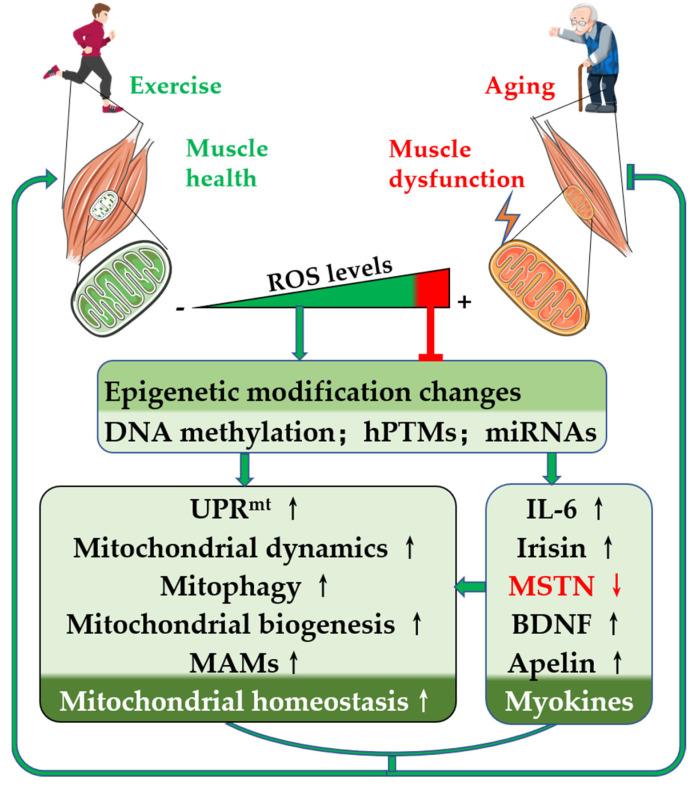
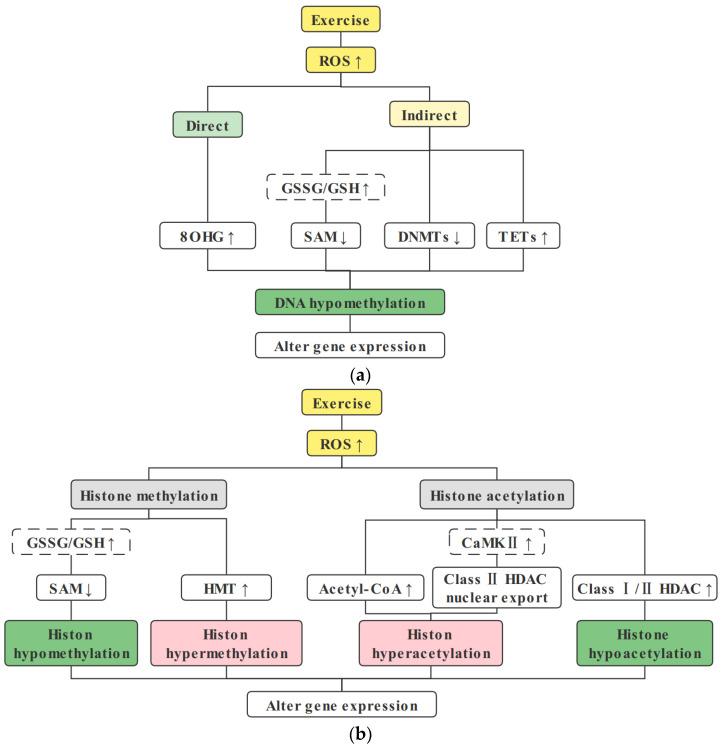
Aging causes degenerative changes such as epigenetic changes and mitochondrial dysfunction in skeletal muscle. Exercise can upregulate muscle mitochondrial homeostasis and enhance antioxidant capacity and represents an effective treatment to prevent muscle aging. Epigenetic changes such as DNA methylation, histone posttranslational modifications, and microRNA expression are involved in the regulation of exercise-induced adaptive changes in muscle mitochondria. Reactive oxygen species (ROS) play an important role in signaling molecules in exercise-induced muscle mitochondrial health benefits, and strong evidence emphasizes that exercise-induced ROS can regulate gene expression via epigenetic mechanisms. The majority of mitochondrial proteins are imported into mitochondria from the cytosol, so mitochondrial homeostasis is regulated by nuclear epigenetic mechanisms. Exercise can reverse aging-induced changes in myokine expression by modulating epigenetic mechanisms. In this review, we provide an overview of the role of exercise-generated ROS in the regulation of mitochondrial homeostasis mediated by epigenetic mechanisms. In addition, the potential epigenetic mechanisms involved in exercise-induced myokine expression are reviewed.
衰老会导致骨骼肌发生退行性变化,如表观遗传改变和线粒体功能障碍。运动可以上调肌肉线粒体的稳态,增强抗氧化能力,是预防肌肉衰老的有效治疗方法。表观遗传变化,如 DNA 甲基化、组蛋白翻译后修饰和 microRNA 表达,参与了运动诱导的肌肉线粒体适应性变化的调节。活性氧(ROS)在运动诱导的肌肉线粒体健康益处的信号分子中发挥重要作用,强有力的证据强调,运动诱导的 ROS 可以通过表观遗传机制调节基因表达。大多数线粒体蛋白都是从细胞质中输入到线粒体的,因此线粒体的稳态受到核表观遗传机制的调节。运动可以通过调节表观遗传机制来逆转衰老引起的肌因子表达变化。在这篇综述中,我们概述了运动产生的 ROS 在由表观遗传机制介导的线粒体稳态调节中的作用。此外,还回顾了运动诱导肌因子表达涉及的潜在表观遗传机制。

 Zotero 插件