
通过热量限制治疗代谢失调和衰老:一石二鸟?
Treating Metabolic Dysregulation and Senescence by Caloric Restriction: Killing Two Birds with One Stone?
作者信息
Russo Lara, Babboni Serena, Andreassi Maria Grazia, Daher Jalil, Canale Paola, Del Turco Serena, Basta Giuseppina
机构信息
Institute of Clinical Physiology, National Research Council, Via Moruzzi 1, 56124 Pisa, Italy.
Department of Biology, Faculty of Arts and Sciences, University of Balamand, El-Koura 100, Lebanon.
出版信息
Antioxidants (Basel). 2025 Jan 16;14(1):99. doi: 10.3390/antiox14010099.
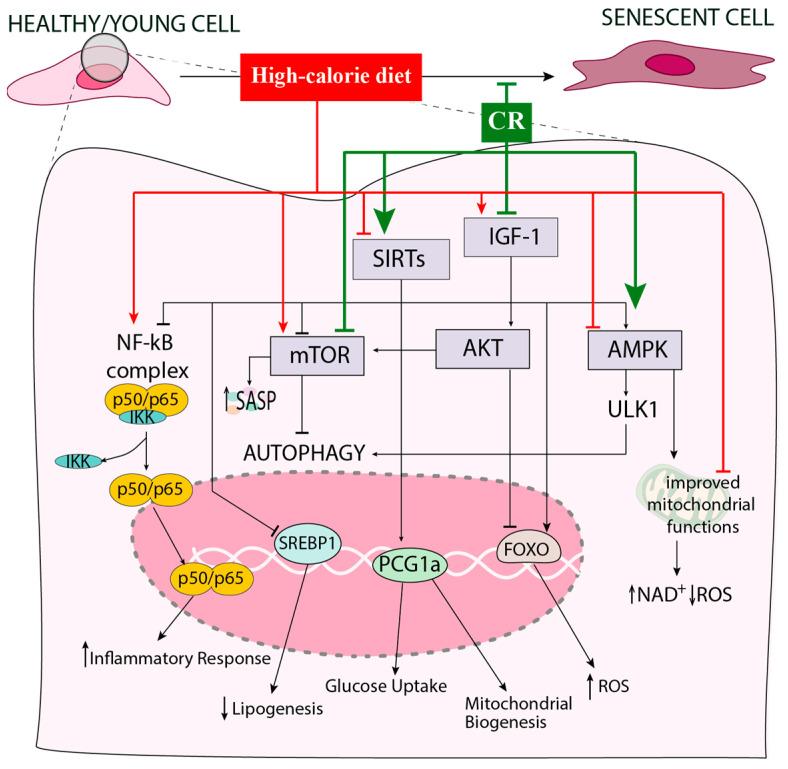
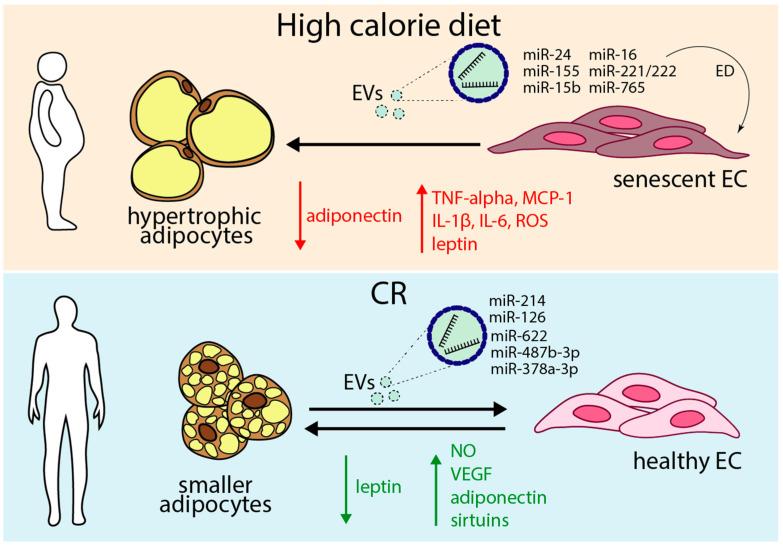
Cellular senescence is a state of permanent cell cycle arrest accompanied by metabolic activity and characteristic phenotypic changes. This process is crucial for developing age-related diseases, where excessive calorie intake accelerates metabolic dysfunction and aging. Overnutrition disturbs key metabolic pathways, including insulin/insulin-like growth factor signaling (IIS), the mammalian target of rapamycin (mTOR), and AMP-activated protein kinase. The dysregulation of these pathways contributes to insulin resistance, impaired autophagy, exacerbated oxidative stress, and mitochondrial dysfunction, further enhancing cellular senescence and systemic metabolic derangements. On the other hand, dysfunctional endothelial cells and adipocytes contribute to systemic inflammation, reduced nitric oxide production, and altered lipid metabolism. Numerous factors, including extracellular vesicles, mediate pathological communication between the vascular system and adipose tissue, amplifying metabolic imbalances. Meanwhile, caloric restriction (CR) emerges as a potent intervention to counteract overnutrition effects, improve mitochondrial function, reduce oxidative stress, and restore metabolic balance. CR modulates pathways such as IIS, mTOR, and sirtuins, enhancing glucose and lipid metabolism, reducing inflammation, and promoting autophagy. CR can extend the health span and mitigate age-related diseases by delaying cellular senescence and improving healthy endothelial-adipocyte interactions. This review highlights the crosstalk between endothelial cells and adipocytes, emphasizing CR potential in counteracting overnutrition-induced senescence and restoring vascular homeostasis.
细胞衰老 是一种永久性细胞周期停滞状态,伴有代谢活性和特征性表型变化。这一过程对于与年龄相关疾病的发展至关重要,其中过多的热量摄入会加速代谢功能障碍和衰老。营养过剩会扰乱关键的代谢途径,包括胰岛素/胰岛素样生长因子信号通路(IIS)、哺乳动物雷帕霉素靶蛋白(mTOR)和AMP激活的蛋白激酶。这些途径的失调会导致胰岛素抵抗、自噬受损、氧化应激加剧和线粒体功能障碍,进一步加剧细胞衰老和全身代谢紊乱。另一方面,功能失调的内皮细胞和脂肪细胞会导致全身炎症、一氧化氮生成减少和脂质代谢改变。包括细胞外囊泡在内的众多因素介导了血管系统与脂肪组织之间的病理通讯,加剧了代谢失衡。与此同时,热量限制(CR)成为一种有效的干预措施,可抵消营养过剩的影响、改善线粒体功能、减少氧化应激并恢复代谢平衡。CR调节IIS、mTOR和sirtuins等途径,增强葡萄糖和脂质代谢、减轻炎症并促进自噬。CR可通过延缓细胞衰老和改善健康的内皮-脂肪细胞相互作用来延长健康寿命并减轻与年龄相关的疾病。本综述强调了内皮细胞与脂肪细胞之间的相互作用,强调了CR在对抗营养过剩诱导的衰老和恢复血管稳态方面的潜力。
 Zotero 插件