
通过社交媒体招募自闭症患者的研究中的代表性问题。
Representativeness of autistic samples in studies recruiting through social media.
机构信息
Department of Psychology, University of Copenhagen, Copenhagen, Denmark.
Department of Psychiatry and Addictology, Université de Montréal, Montreal, Quebec, Canada.
出版信息
Autism Res. 2022 Aug;15(8):1447-1456. doi: 10.1002/aur.2777. Epub 2022 Jul 9.
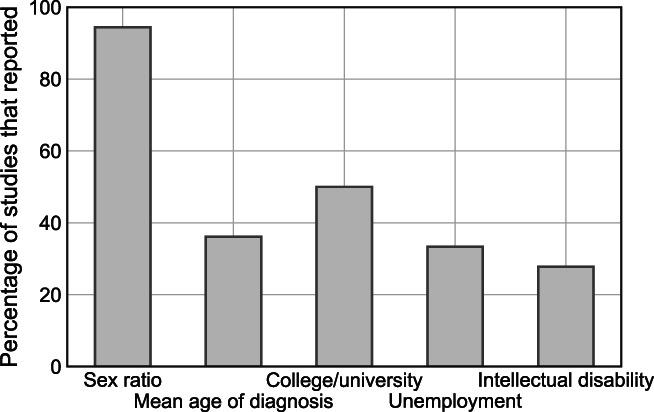
Survey-based research with recruitment through online channels is a convenient way to obtain large samples and has recently been increasingly used in autism research. However, sampling from online channels may be associated with a high risk of sampling bias causing findings not to be generalizable to the autism population. Here we examined autism studies that have sampled on social media for markers of sampling bias. Most samples showed one or more indicators of sampling bias, in the form of reversed sex ratio, higher employment rates, higher education level, lower fraction of individuals with intellectual disability, and later age of diagnosis than would be expected when comparing with for example population study results from published research. Findings from many of the included studies are therefore difficult to generalize to the broader autism population. Suggestions for how research strategies may be adapted to address some of the problems are discussed. LAY SUMMARY: Online surveys offer a convenient way to recruit large numbers of participants for autism research. However, the resulting samples may not fully reflect the autism population. Here we investigated the samples of 36 autism studies that recruited participants online and found that the demographic composition tended to deviate from what has been reported about the autism population in previous research. The results may thus not be generalizable to autism in general.
基于调查的研究通过在线渠道招募是获得大样本的一种便捷方式,最近在自闭症研究中越来越多地被采用。然而,从在线渠道进行抽样可能存在抽样偏差的高风险,导致研究结果无法推广到自闭症人群。在这里,我们检查了在社交媒体上抽样的自闭症研究,以寻找抽样偏差的标志物。大多数样本显示出一种或多种抽样偏差的指标,表现为性别比例逆转、更高的就业率、更高的教育水平、更低的智障个体比例,以及比从已发表的研究中获得的人口研究结果相比更晚的诊断年龄。因此,许多纳入研究的结果难以推广到更广泛的自闭症人群。讨论了如何调整研究策略以解决一些问题的建议。
非专业人士精简版:
在线调查为招募大量自闭症研究参与者提供了一种便捷的方式。然而,由此产生的样本可能无法完全反映自闭症人群的情况。在这里,我们调查了 36 项在线招募参与者的自闭症研究样本,发现其人口统计学构成往往与之前研究中报道的自闭症人群有所不同。因此,结果可能无法推广到一般的自闭症。

 Zotero 插件