
SARS-CoV-2 与中枢神经系统:出血相关神经后果及治疗考虑的新见解。
SARS-CoV-2 and the central nervous system: Emerging insights into hemorrhage-associated neurological consequences and therapeutic considerations.
机构信息
Division of DNA Repair Research, Center for Neuroregeneration, Department of Neurosurgery, Houston Methodist Research Institute, Houston, TX 77030, USA.
Division of DNA Repair Research, Center for Neuroregeneration, Department of Neurosurgery, Houston Methodist Research Institute, Houston, TX 77030, USA.
出版信息
Ageing Res Rev. 2022 Sep;80:101687. doi: 10.1016/j.arr.2022.101687. Epub 2022 Jul 16.
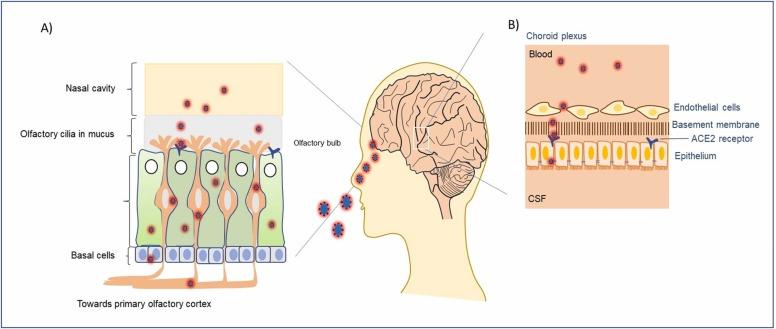
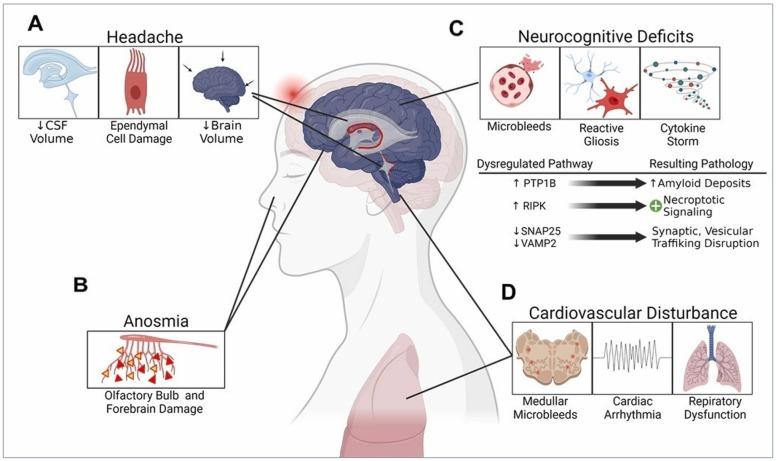
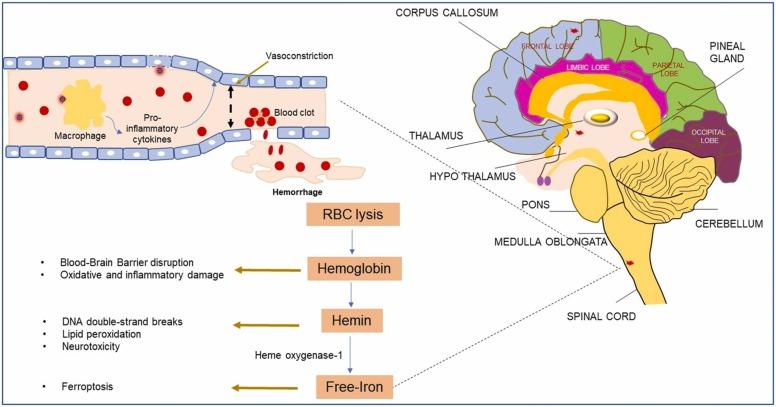
Coronavirus disease 2019 (COVID-19), caused by the Severe Acute Respiratory Syndrome Coronavirus 2 (SARS-CoV-2) continues to impact our lives by causing widespread illness and death and poses a threat due to the possibility of emerging strains. SARS-CoV-2 targets angiotensin-converting enzyme 2 (ACE2) before entering vital organs of the body, including the brain. Studies have shown systemic inflammation, cellular senescence, and viral toxicity-mediated multi-organ failure occur during infectious periods. However, prognostic investigations suggest that both acute and long-term neurological complications, including predisposition to irreversible neurodegenerative diseases, can be a serious concern for COVID-19 survivors, especially the elderly population. As emerging studies reveal sites of SARS-CoV-2 infection in different parts of the brain, potential causes of chronic lesions including cerebral and deep-brain microbleeds and the likelihood of developing stroke-like pathologies increases, with critical long-term consequences, particularly for individuals with neuropathological and/or age-associated comorbid conditions. Our recent studies linking the blood degradation products to genome instability, leading to cellular senescence and ferroptosis, raise the possibility of similar neurovascular events as a result of SARS-CoV-2 infection. In this review, we discuss the neuropathological consequences of SARS-CoV-2 infection in COVID survivors, focusing on possible hemorrhagic damage in brain cells, its association to aging, and the future directions in developing mechanism-guided therapeutic strategies.
新型冠状病毒病 2019(COVID-19)由严重急性呼吸系统综合症冠状病毒 2(SARS-CoV-2)引起,通过造成广泛的疾病和死亡,以及由于可能出现新的病毒株而构成威胁,继续影响着我们的生活。SARS-CoV-2 在进入人体重要器官(包括大脑)之前,靶向血管紧张素转换酶 2(ACE2)。研究表明,在感染期间会发生全身炎症、细胞衰老和病毒毒性介导的多器官衰竭。然而,预后研究表明,急性和长期的神经系统并发症,包括对不可逆神经退行性疾病的易感性,可能是 COVID-19 幸存者的严重问题,尤其是老年人群。随着新的研究揭示 SARS-CoV-2 在大脑不同部位的感染部位,慢性病变的潜在原因包括脑和深部脑微出血,以及出现类似中风的病理的可能性增加,这会带来严重的长期后果,尤其是对有神经病理学和/或与年龄相关的合并症的个体。我们最近的研究将血液降解产物与基因组不稳定性联系起来,导致细胞衰老和铁死亡,这增加了 SARS-CoV-2 感染导致类似神经血管事件的可能性。在这篇综述中,我们讨论了 COVID 幸存者中 SARS-CoV-2 感染的神经病理学后果,重点讨论了脑细胞可能出现的出血性损伤,及其与衰老的关联,以及开发基于机制的治疗策略的未来方向。

 Zotero 插件