
基于益生菌的干预措施作为炎症性肠病治疗方法的疗效:最新进展
Efficacy of Probiotics-Based Interventions as Therapy for Inflammatory Bowel Disease: A Recent Update.
作者信息
Selvamani Shanmugaprakasham, Mehta Vijay, Ali El Enshasy Hesham, Thevarajoo Suganthi, El Adawi Hala, Zeini Ibrahim, Pham Khoa, Varzakas Theodoros, Abomoelak Bassam
机构信息
Institute of Bioproduct Development, Universiti Teknologi Malaysia (UTM), 81310 Skudai, Johor Bahru, Malaysia.
School of Chemical and Energy Engineering, Faculty of Engineering, Universiti Teknologi Malaysia (UTM), 81310 Skudai, Johor Bahru, Malaysia.
出版信息
Saudi J Biol Sci. 2022 May;29(5):3546-3567. doi: 10.1016/j.sjbs.2022.02.044. Epub 2022 Mar 1.
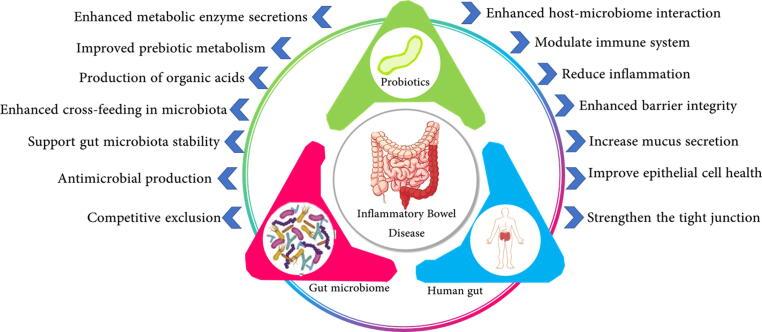
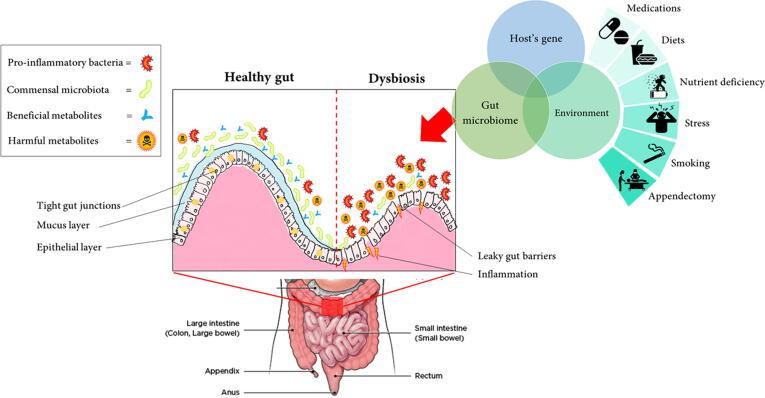
Probiotics such as spp. play an important role in human health as they embark beneficial effect on the human gastrointestinal microflora composition and immune system. Dysbiosis in the gastrointestinal microbial composition has been identified as a major contributor to chronic inflammatory conditions, such as inflammatory bowel disease (IBD). Higher prevalence of IBD is often recorded in most of the developed Western countries, but recent data has shown an increase in previously regarded as lower risk regions, such as Japan, Malaysia, Singapore, and India. Although the IBD etiology remains a subject of speculation, the disease is likely to have developed because of interaction between extrinsic environmental elements; the host's immune system, and the gut microbial composition. Compared to conventional treatments, probiotics and probiotic-based interventions including the introduction of specific prebiotics, symbiotic and postbiotic products had been demonstrated as more promising therapeutic measures. The present review discusses the association between gut dysbiosis, the pathogenesis of IBD, and risk factors leading to gut dysbiosis. In addition, it discusses recent studies focused on the alteration of the gastrointestinal microbiome as an effective therapy for IBD. The impact of the COVID-19 pandemic and other viral infections on IBD are also discussed in this review. Clinical and animal-based studies have shown that probiotic-based therapies can restore the gastrointestinal microbiota balance and reduce gut inflammations. Therefore, this review also assesses the status quo of these microbial-based therapies for the treatment of IBD. A better understanding of the mechanisms of their actions on modulating altered gut microbiota is required to enhance the effectiveness of the IBD therapeutics.
诸如 spp. 等益生菌对人类健康起着重要作用,因为它们对人类胃肠道微生物群组成和免疫系统产生有益影响。胃肠道微生物组成的失调已被确定为慢性炎症性疾病(如炎症性肠病,IBD)的主要促成因素。在大多数西方发达国家,IBD 的患病率较高,但最近的数据显示,在以前被认为风险较低的地区,如日本、马来西亚、新加坡和印度,IBD 的患病率也有所上升。尽管 IBD 的病因仍是一个猜测的话题,但该疾病很可能是由于外部环境因素、宿主免疫系统和肠道微生物组成之间的相互作用而发展起来的。与传统治疗方法相比,益生菌和基于益生菌的干预措施,包括引入特定的益生元、共生菌和后生元产品,已被证明是更有前景的治疗措施。本综述讨论了肠道菌群失调、IBD 的发病机制以及导致肠道菌群失调的风险因素之间的关联。此外,还讨论了最近专注于改变胃肠道微生物群作为 IBD 有效治疗方法的研究。本综述还讨论了 COVID-19 大流行和其他病毒感染对 IBD 的影响。临床和基于动物的研究表明,基于益生菌的疗法可以恢复胃肠道微生物群平衡并减轻肠道炎症。因此,本综述还评估了这些基于微生物的疗法治疗 IBD 的现状。为了提高 IBD 治疗的有效性,需要更好地了解它们调节肠道微生物群改变的作用机制。
 Zotero 插件