
线粒体适应性在癌症耐药中的作用:普遍性、机制与管理。
Mitochondrial adaptation in cancer drug resistance: prevalence, mechanisms, and management.
机构信息
State Key Laboratory of Biotherapy and Cancer Center, West China Hospital and West China School of Basic Medical Sciences and Forensic Medicine, Sichuan University and Collaborative Innovation Center for Biotherapy, Chengdu, 610041, People's Republic of China.
Department of Biochemistry and Molecular Biology, Monash University, Clayton, VIC, 3800, Australia.
出版信息
J Hematol Oncol. 2022 Jul 18;15(1):97. doi: 10.1186/s13045-022-01313-4.
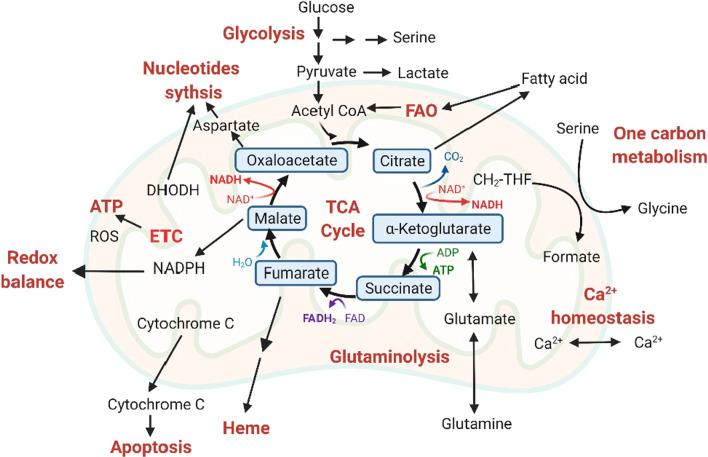
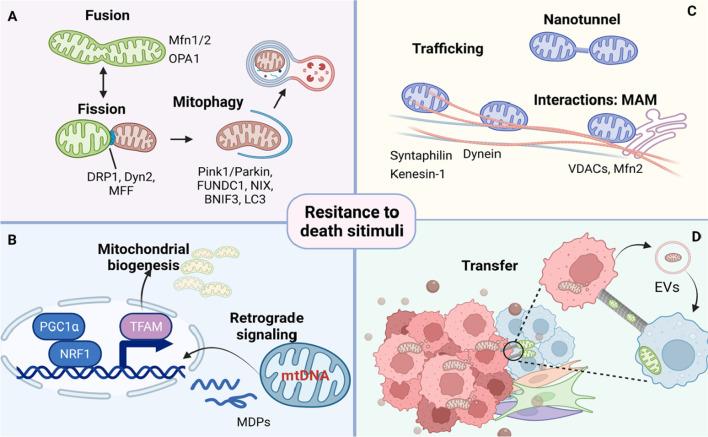
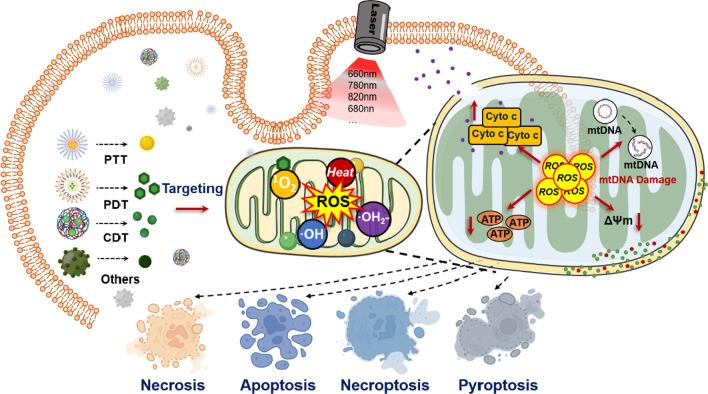
Drug resistance represents a major obstacle in cancer management, and the mechanisms underlying stress adaptation of cancer cells in response to therapy-induced hostile environment are largely unknown. As the central organelle for cellular energy supply, mitochondria can rapidly undergo dynamic changes and integrate cellular signaling pathways to provide bioenergetic and biosynthetic flexibility for cancer cells, which contributes to multiple aspects of tumor characteristics, including drug resistance. Therefore, targeting mitochondria for cancer therapy and overcoming drug resistance has attracted increasing attention for various types of cancer. Multiple mitochondrial adaptation processes, including mitochondrial dynamics, mitochondrial metabolism, and mitochondrial apoptotic regulatory machinery, have been demonstrated to be potential targets. However, recent increasing insights into mitochondria have revealed the complexity of mitochondrial structure and functions, the elusive functions of mitochondria in tumor biology, and the targeting inaccessibility of mitochondria, which have posed challenges for the clinical application of mitochondrial-based cancer therapeutic strategies. Therefore, discovery of both novel mitochondria-targeting agents and innovative mitochondria-targeting approaches is urgently required. Here, we review the most recent literature to summarize the molecular mechanisms underlying mitochondrial stress adaptation and their intricate connection with cancer drug resistance. In addition, an overview of the emerging strategies to target mitochondria for effectively overcoming chemoresistance is highlighted, with an emphasis on drug repositioning and mitochondrial drug delivery approaches, which may accelerate the application of mitochondria-targeting compounds for cancer therapy.
耐药性是癌症治疗的主要障碍,而癌症细胞对治疗诱导的恶劣环境的应激适应的机制在很大程度上尚不清楚。线粒体作为细胞能量供应的核心细胞器,可以快速发生动态变化,并整合细胞信号通路,为癌细胞提供生物能量和生物合成的灵活性,这有助于肿瘤特征的多个方面,包括耐药性。因此,针对线粒体进行癌症治疗和克服耐药性已引起各种类型癌症的越来越多的关注。已经证明多种线粒体适应过程,包括线粒体动力学、线粒体代谢和线粒体凋亡调节机制,是潜在的靶点。然而,最近对线粒体的深入了解揭示了线粒体结构和功能的复杂性、线粒体在肿瘤生物学中的难以捉摸的功能以及线粒体靶向的不可及性,这给基于线粒体的癌症治疗策略的临床应用带来了挑战。因此,迫切需要发现新型的线粒体靶向剂和创新的线粒体靶向方法。在这里,我们综述了最新的文献,总结了线粒体应激适应的分子机制及其与癌症耐药性的复杂联系。此外,还强调了针对线粒体的新兴策略的概述,重点介绍了药物重定位和线粒体药物传递方法,这可能会加速线粒体靶向化合物在癌症治疗中的应用。


 Zotero 插件