
血小板通过诱导羟自由基介导的凋亡样细胞死亡来抑制耐甲氧西林金黄色葡萄球菌。
Platelets Inhibit Methicillin-Resistant Staphylococcus aureus by Inducing Hydroxyl Radical-Mediated Apoptosis-Like Cell Death.
机构信息
Department of Transfusion Medicine, Xijing Hospital, Fourth Military Medical University, Xi'an, Shanxi, China.
出版信息
Microbiol Spectr. 2022 Aug 31;10(4):e0244121. doi: 10.1128/spectrum.02441-21. Epub 2022 Jul 19.
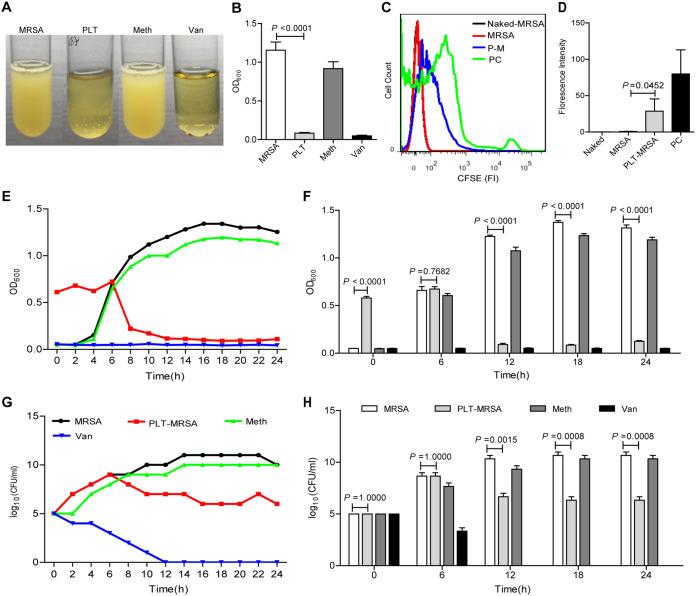
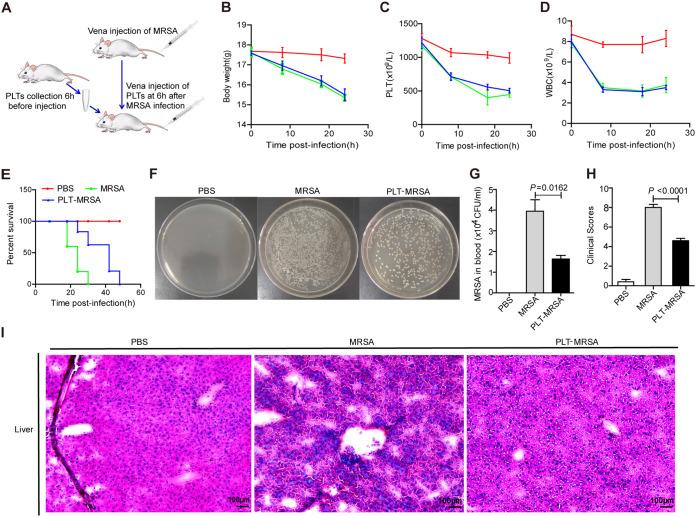
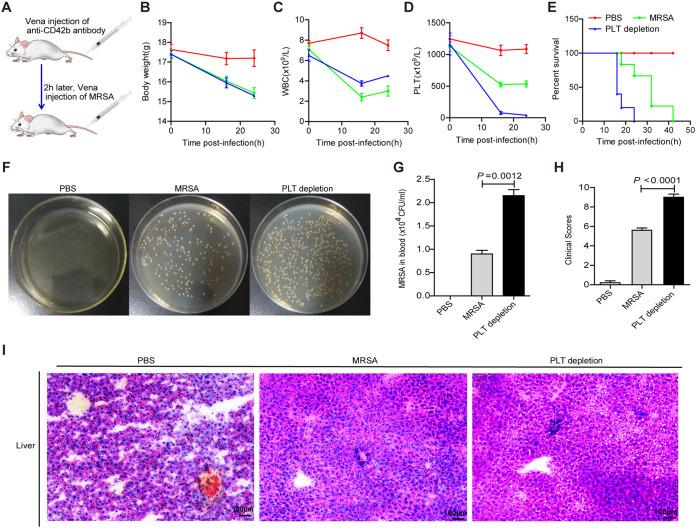
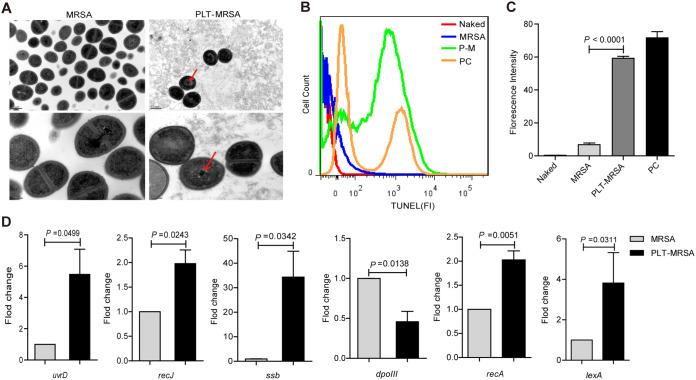
Methicillin-resistant Staphylococcus aureus (MRSA) is one of the most common drug-resistant bacteria and poses a significant threat to human health. Due to the emergence of multidrug resistance, limited drugs are available for the treatment of MRSA infections. In recent years, platelets have been reported to play important roles in inflammation and immune responses, in addition to their functions in blood hemostasis and clotting. We and other researchers have previously reported that platelets can inhibit Staphylococcus aureus growth. However, it remained unclear whether platelets have the same antibacterial effect on drug-resistant strains. In this study, we hypothesized that platelets may also inhibit the growth of MRSA; the results confirmed that platelets significantly inhibited the growth of MRSA . In a murine model of MRSA infection, we found that a platelet transfusion alleviated the symptoms of MRSA infection; in contrast, depletion of platelets aggravated infective symptoms. Moreover, we observed an overproduction of hydroxyl radicals in MRSA following platelet treatment, which induced apoptosis-like death of MRSA. Our findings demonstrate that platelets can inhibit MRSA growth by promoting the overproduction of hydroxyl radicals and inducing apoptosis-like death. The widespread use of antibiotics has led to the emergence of drug-resistant bacteria, particularly multidrug-resistant bacteria. MRSA is the most common drug-resistant bacterium that causes suppurative infections in humans. As only a limited number of drugs are available to treat the infections caused by drug-resistant pathogens, it is imperative to develop novel and effective biological agents for treating MRSA infections. This is the first study to show that platelets can inhibit MRSA growth and . Our results revealed that platelets enhanced the production of hydroxyl radicals in MRSA, which induced a series of apoptosis hallmarks in MRSA, including DNA fragmentation, chromosome condensation, phosphatidylserine exposure, membrane potential depolarization, and increased intracellular caspase activity. These findings may further our understanding of platelet function.
耐甲氧西林金黄色葡萄球菌(MRSA)是最常见的耐药菌之一,对人类健康构成重大威胁。由于出现了多种药物耐药性,用于治疗 MRSA 感染的药物有限。近年来,血小板除了在血液止血和凝血中的作用外,还被报道在炎症和免疫反应中发挥重要作用。我们和其他研究人员之前曾报道过,血小板可以抑制金黄色葡萄球菌的生长。然而,血小板对耐药菌株是否具有相同的抗菌作用尚不清楚。在本研究中,我们假设血小板也可能抑制 MRSA 的生长;结果证实血小板可显著抑制 MRSA 的生长。在 MRSA 感染的小鼠模型中,我们发现血小板输注可缓解 MRSA 感染的症状;相反,血小板耗竭则加重感染症状。此外,我们观察到血小板处理后 MRSA 中羟基自由基的过度产生,这诱导了 MRSA 的凋亡样死亡。我们的研究结果表明,血小板通过促进羟基自由基的过度产生和诱导凋亡样死亡来抑制 MRSA 的生长。抗生素的广泛使用导致了耐药菌的出现,特别是多药耐药菌。MRSA 是最常见的耐药菌,可引起人类化脓性感染。由于仅有少数几种药物可用于治疗耐药病原体引起的感染,因此迫切需要开发新型有效的生物制剂来治疗 MRSA 感染。这是第一项表明血小板可以抑制 MRSA 生长的研究。我们的结果表明,血小板增强了 MRSA 中羟基自由基的产生,这诱导了 MRSA 中的一系列凋亡特征,包括 DNA 片段化、染色体浓缩、磷脂酰丝氨酸暴露、膜电位去极化和细胞内 caspase 活性增加。这些发现可能进一步加深我们对血小板功能的理解。



 Zotero 插件