
人血小板中防御素的抗菌活性:抑制耐甲氧西林菌生长。
Anti-bacterial activity of dermcidin in human platelets: suppression of methicillin-resistant growth.
作者信息
Liu Erxiong, Gu Shunli, Xi Weizhen, Wang Wenting, Xu Jinmei, An Ning, Zhang Lingling, Xin Jiajia, Hu Xingbin, Chen Yaozhen, An Qunxing, Yin Wen
机构信息
Department of Transfusion Medicine, Xijing Hospital, Fourth Military Medical University, Xi 'an, Shaanxi, China.
Department of Geriatrics, Xi 'an North Hospital, Xi 'an, Shaanxi, China.
出版信息
Microbiol Spectr. 2025 Jul;13(7):e0327324. doi: 10.1128/spectrum.03273-24. Epub 2025 May 27.
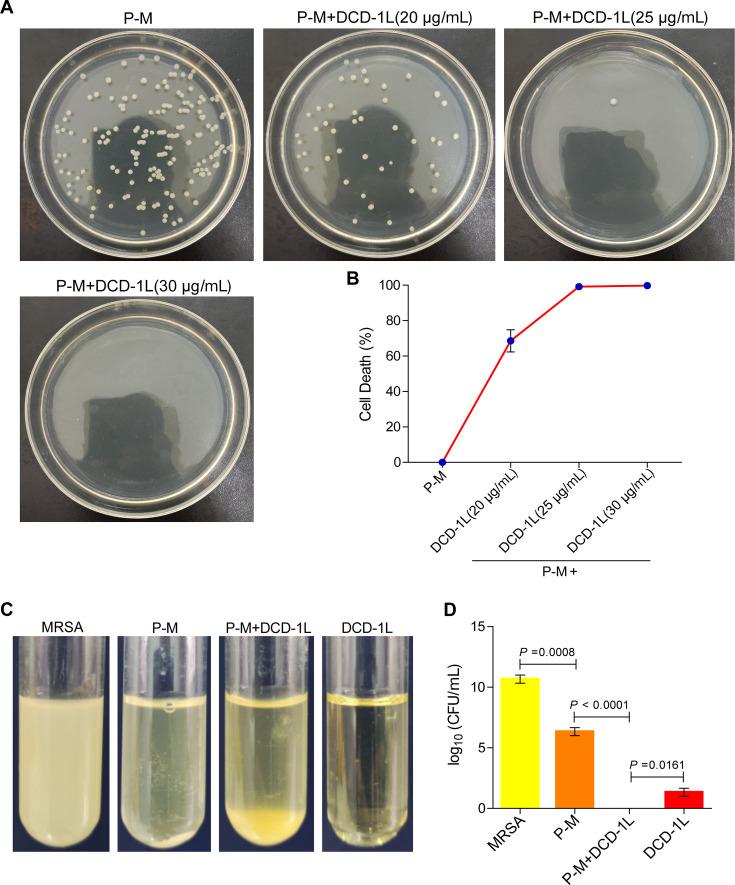
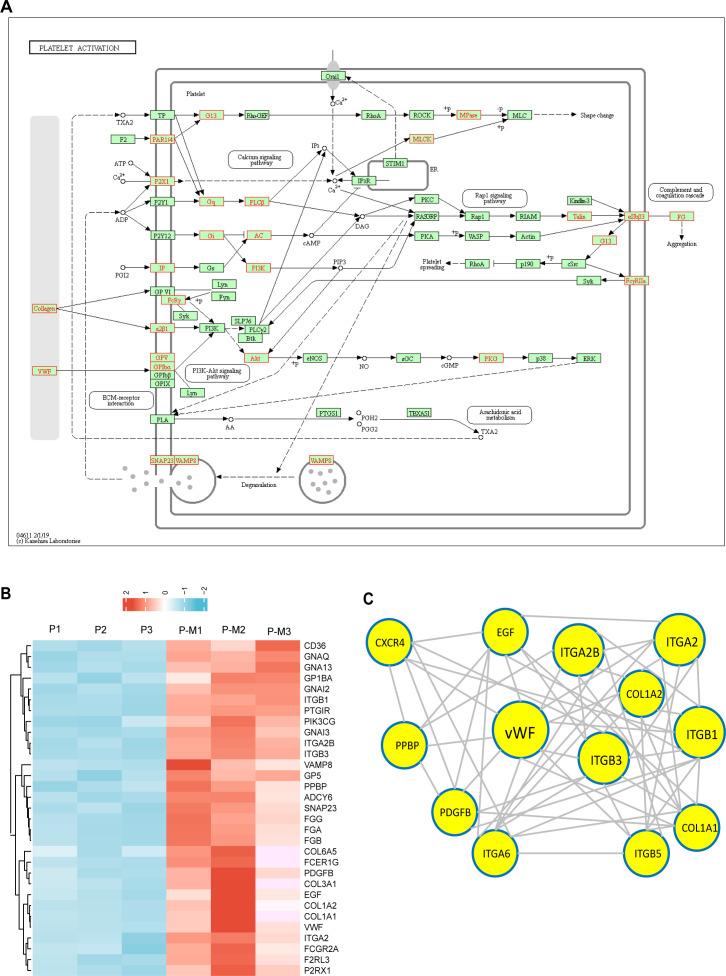
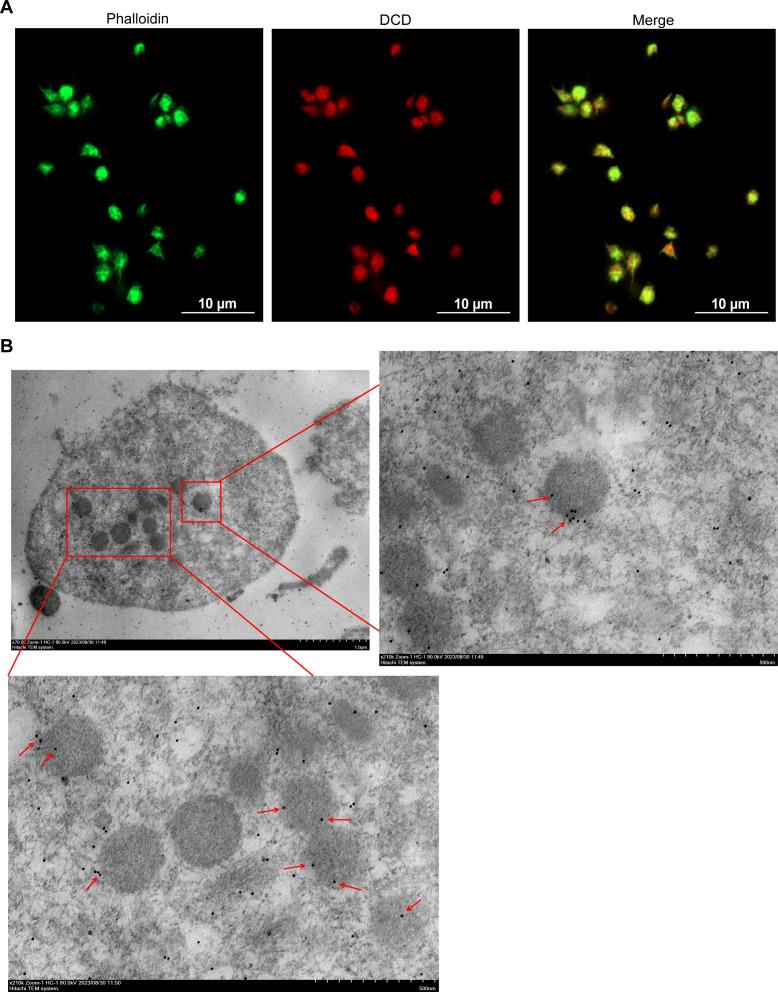
Methicillin-resistant (MRSA) is one of the most common drug-resistant bacteria that cause community and hospital infections. As one of the most common "superbugs" and the pathogen with the highest global incidence of hospital-acquired infections, MRSA has developed resistance to multiple antibiotics, posing a serious threat to public health. The rapid emergence and spread of multidrug resistance have increased the urgent need for new antimicrobial strategies and agents to combat MRSA-associated infections. In recent years, platelets have been widely recognized to play an important role in human immune defense. We have previously reported that platelets inhibit MRSA by inducing hydroxyl radical (OH)-mediated apoptosis-like cell death. To further explore the platelet antibacterial mechanism, supernatants from co-culture of platelets and MRSA were used for proteomic analysis. Based on our observations using confocal and immunoelectron microscopy, we found a previously unrecognized platelet antimicrobial peptide, dermcidin (DCD), in the alpha (-) granules. Furthermore, after co-culturing with MRSA , activated platelets secreted large amounts of DCD. Additionally, we confirmed that DCD displayed anti-MRSA activity in a concentration-dependent manner and contributed to the inhibition of MRSA growth by platelets . Our findings provide important insights into the immune defense functions of platelets.IMPORTANCEThe emerging multidrug resistance in many pathogenic bacterial species poses a serious problem worldwide. Methicillin-resistant (MRSA), one of the most common gram-positive pathogenic bacteria, has also evolved strains with multidrug resistance. This calls for the urgent development of novel and effective treatments or bactericidal agents to mitigate this issue in clinical settings. In this study, we identified for the first time a previously unrecognized platelet antimicrobial peptide, DCD, which impedes the proliferation of MRSA and promotes the antibacterial effect of platelets on MRSA. Our findings enrich our understanding of platelet physiological function and antibacterial mechanisms and provide new insights into the development of novel natural antimicrobial agents for controlling infections.
耐甲氧西林金黄色葡萄球菌(MRSA)是引起社区和医院感染的最常见耐药细菌之一。作为最常见的“超级细菌”之一以及全球医院获得性感染发病率最高的病原体,MRSA已对多种抗生素产生耐药性,对公众健康构成严重威胁。多重耐药性的迅速出现和传播,使得对抗MRSA相关感染的新抗菌策略和药物的需求更加迫切。近年来,血小板在人体免疫防御中的重要作用已得到广泛认可。我们之前曾报道,血小板通过诱导羟基自由基(OH)介导的凋亡样细胞死亡来抑制MRSA。为进一步探究血小板的抗菌机制,我们对血小板与MRSA共培养的上清液进行了蛋白质组学分析。基于共聚焦显微镜和免疫电子显微镜观察,我们在α(-)颗粒中发现了一种此前未被识别的血小板抗菌肽——皮肤杀菌肽(DCD)。此外,与MRSA共培养后,活化的血小板会分泌大量DCD。另外,我们证实DCD呈浓度依赖性地展现出抗MRSA活性,并有助于血小板对MRSA生长的抑制作用。我们的研究结果为血小板的免疫防御功能提供了重要见解。
重要性
许多致病细菌物种中出现的多重耐药性在全球范围内构成了严重问题。耐甲氧西林金黄色葡萄球菌(MRSA)作为最常见的革兰氏阳性致病细菌之一,也进化出了多重耐药菌株。这就迫切需要开发新的有效治疗方法或杀菌剂,以在临床环境中缓解这一问题。在本研究中,我们首次鉴定出一种此前未被识别的血小板抗菌肽DCD,它可阻碍MRSA的增殖,并增强血小板对MRSA的抗菌作用。我们的研究结果丰富了我们对血小板生理功能和抗菌机制的理解,并为开发用于控制感染的新型天然抗菌剂提供了新的见解。



 Zotero 插件