
重构培养基上海洋异养生物的代谢表型分析揭示了多样的代谢适应和生活方式策略。
Metabolic Phenotyping of Marine Heterotrophs on Refactored Media Reveals Diverse Metabolic Adaptations and Lifestyle Strategies.
机构信息
Department of Biology, Boston University, Boston, Massachusetts, USA.
Biological Design Center, Boston University, Boston, Massachusetts, USA.
出版信息
mSystems. 2022 Aug 30;7(4):e0007022. doi: 10.1128/msystems.00070-22. Epub 2022 Jul 20.
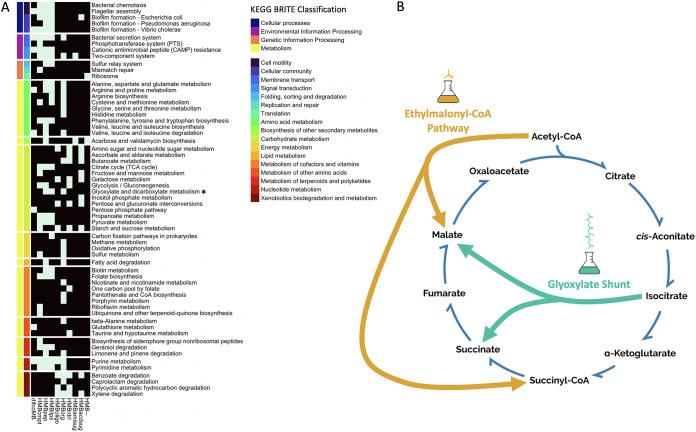
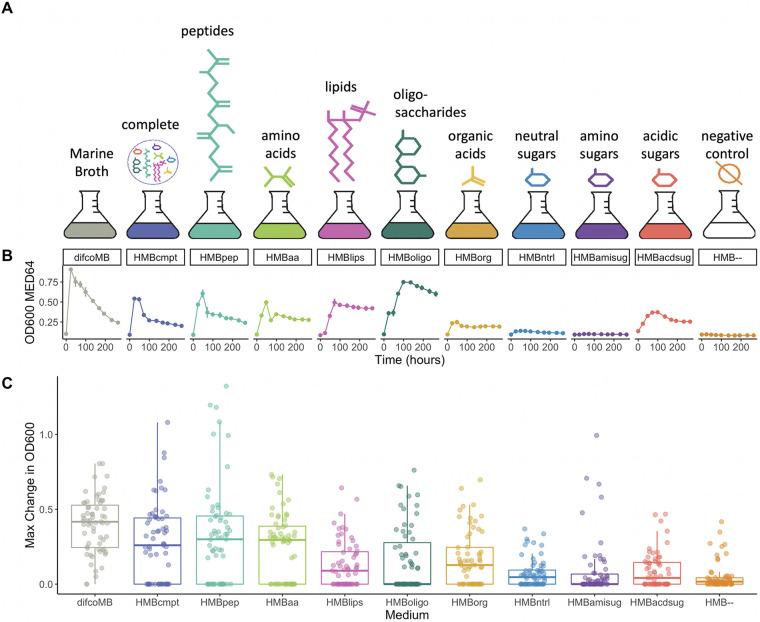
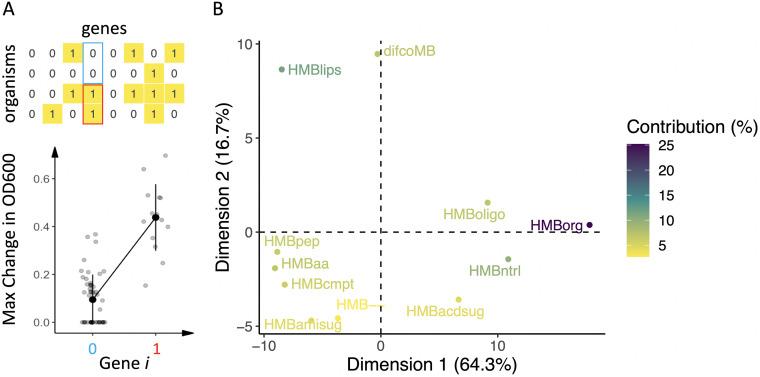
Microbial communities, through their metabolism, drive carbon cycling in marine environments. These complex communities are composed of many different microorganisms including heterotrophic bacteria, each with its own nutritional needs and metabolic capabilities. Yet, models of ecosystem processes typically treat heterotrophic bacteria as a "black box," which does not resolve metabolic heterogeneity nor address ecologically important processes such as the successive modification of different types of organic matter. Here we directly address the heterogeneity of metabolism by characterizing the carbon source utilization preferences of 63 heterotrophic bacteria representative of several major marine clades. By systematically growing these bacteria on 10 media containing specific subsets of carbon sources found in marine biomass, we obtained a phenotypic fingerprint that we used to explore the relationship between metabolic preferences and phylogenetic or genomic features. At the class level, these bacteria display broadly conserved patterns of preference for different carbon sources. Despite these broad taxonomic trends, growth profiles correlate poorly with phylogenetic distance or genome-wide gene content. However, metabolic preferences are strongly predicted by a handful of key enzymes that preferentially belong to a few enriched metabolic pathways, such as those involved in glyoxylate metabolism and biofilm formation. We find that enriched pathways point to enzymes directly involved in the metabolism of the corresponding carbon source and suggest potential associations between metabolic preferences and other ecologically relevant traits. The availability of systematic phenotypes across multiple synthetic media constitutes a valuable resource for future quantitative modeling efforts and systematic studies of interspecies interactions. Half of the Earth's annual primary production is carried out by phytoplankton in the surface ocean. However, this metabolic activity is heavily impacted by heterotrophic bacteria, which dominate the transformation of organic matter released from phytoplankton. Here, we characterize the diversity of metabolic preferences across many representative heterotrophs by systematically growing them on different fractions of dissolved organic carbon. Our analysis suggests that different clades of bacteria have substantially distinct preferences for specific carbon sources, in a way that cannot be simply mapped onto phylogeny. These preferences are associated with the presence of specific genes and pathways, reflecting an association between metabolic capabilities and ecological lifestyles. In addition to helping understand the importance of heterotrophs under different conditions, the phenotypic fingerprint we obtained can help build higher resolution quantitative models of global microbial activity and biogeochemical cycles in the oceans.
微生物群落通过其代谢作用驱动海洋环境中的碳循环。这些复杂的群落由许多不同的微生物组成,包括异养细菌,每种微生物都有自己的营养需求和代谢能力。然而,生态系统过程模型通常将异养细菌视为一个“黑箱”,既不能解决代谢异质性,也不能解决生态上重要的过程,如不同类型有机物质的连续修饰。在这里,我们通过描述 63 种代表海洋几个主要类群的异养细菌的碳源利用偏好,直接解决代谢异质性问题。通过系统地在 10 种含有海洋生物量中特定子集碳源的培养基上培养这些细菌,我们获得了一个表型指纹图谱,用于探索代谢偏好与系统发育或基因组特征之间的关系。在类水平上,这些细菌对不同碳源的偏好显示出广泛保守的模式。尽管存在这些广泛的分类趋势,但生长曲线与系统发育距离或全基因组基因含量相关性较差。然而,代谢偏好与少数关键酶密切相关,这些酶优先属于少数几种富集代谢途径,如参与乙醛酸代谢和生物膜形成的途径。我们发现,富集途径指向直接参与相应碳源代谢的酶,并暗示代谢偏好与其他生态相关特征之间存在潜在联系。在多种合成培养基中获得的系统表型构成了未来定量建模工作和种间相互作用系统研究的宝贵资源。 地球每年的初级生产力有一半是由海洋表面的浮游植物完成的。然而,这种代谢活动受到异养细菌的严重影响,异养细菌主导着从浮游植物释放的有机物质的转化。在这里,我们通过系统地在不同的溶解有机碳馏分上培养它们来描述许多代表性异养菌的代谢偏好多样性。我们的分析表明,不同的细菌类群对特定碳源有明显不同的偏好,这种偏好不能简单地映射到系统发育上。这些偏好与特定基因和途径的存在有关,反映了代谢能力与生态生活方式之间的联系。除了帮助了解不同条件下异养菌的重要性外,我们获得的表型指纹图谱还可以帮助构建更高分辨率的海洋全球微生物活性和生物地球化学循环的定量模型。


 Zotero 插件