
长短时记忆机器学习对纵向临床数据的准确预测有助于识别 COVID-19 患者急性肾损伤的发生:一项多中心研究。
Long-short-term memory machine learning of longitudinal clinical data accurately predicts acute kidney injury onset in COVID-19: a two-center study.
机构信息
Department of Radiology, Montefiore Medical Center, Albert Einstein College of Medicine, New York, USA.
Department of Radiology, Montefiore Medical Center, Albert Einstein College of Medicine, New York, USA.
出版信息
Int J Infect Dis. 2022 Sep;122:802-810. doi: 10.1016/j.ijid.2022.07.034. Epub 2022 Jul 22.
OBJECTIVES
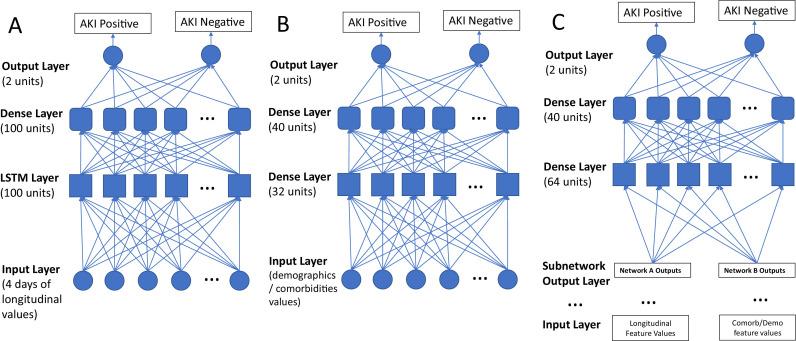
This study used the long-short-term memory (LSTM) artificial intelligence method to model multiple time points of clinical laboratory data, along with demographics and comorbidities, to predict hospital-acquired acute kidney injury (AKI) onset in patients with COVID-19.
METHODS
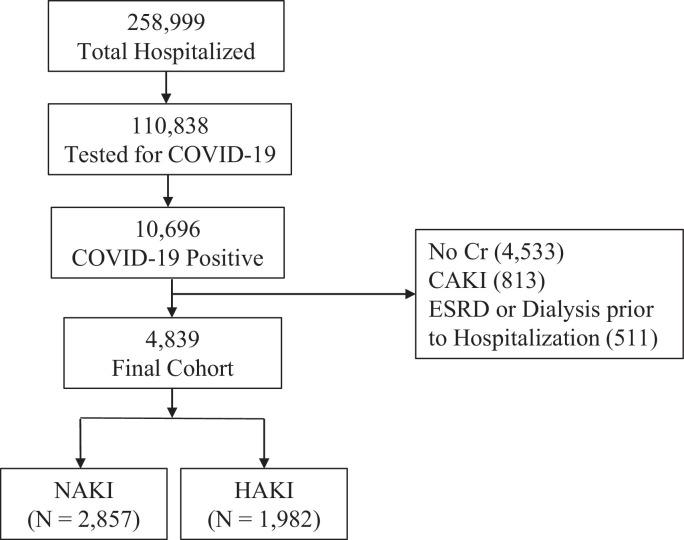
Montefiore Health System data consisted of 1982 AKI and 2857 non-AKI (NAKI) hospitalized patients with COVID-19, and Stony Brook Hospital validation data consisted of 308 AKI and 721 NAKI hospitalized patients with COVID-19. Demographic, comorbidities, and longitudinal (3 days before AKI onset) laboratory tests were analyzed. LSTM was used to predict AKI with fivefold cross-validation (80%/20% for training/validation).
RESULTS
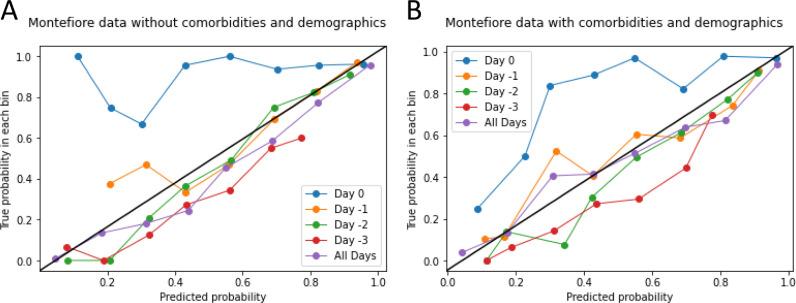
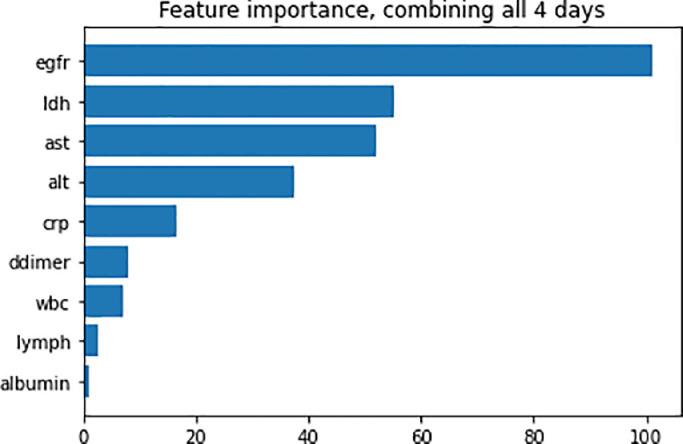
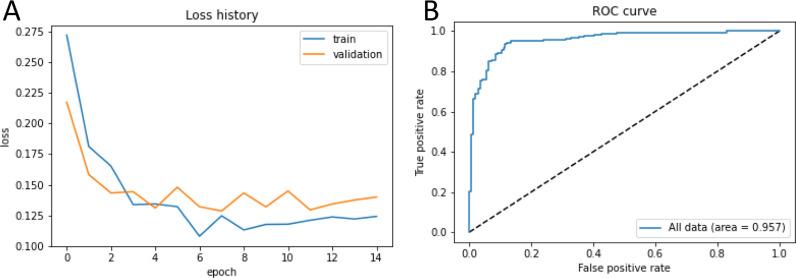
The top predictors of AKI onset were glomerular filtration rate, lactate dehydrogenase, alanine aminotransferase, aspartate aminotransferase, and C-reactive protein. Longitudinal data yielded marked improvement in prediction accuracy over individual time points. The inclusion of comorbidities and demographics further improves prediction accuracy. The best model yielded an area under the curve, accuracy, sensitivity, and specificity to be 0.965 ± 0.003, 89.57 ± 1.64%, 0.95 ± 0.03, and 0.84 ± 0.05, respectively, for the Montefiore validation dataset, and 0.86 ± 0.01, 83.66 ± 2.53%, 0.66 ± 0.10, 0.89 ± 0.03, respectively, for the Stony Brook Hospital validation dataset.
CONCLUSION
LSTM model of longitudinal clinical data accurately predicted AKI onset in patients with COVID-19. This approach could help heighten awareness of AKI complications and identify patients for early interventions to prevent long-term renal complications.
目的
本研究使用长短时记忆(LSTM)人工智能方法对多个时间点的临床实验室数据进行建模,同时结合人口统计学和合并症,以预测 COVID-19 患者的医院获得性急性肾损伤(AKI)发作。
方法
Montefiore 健康系统数据包括 1982 例 AKI 和 2857 例非 AKI(NAKI)COVID-19 住院患者,Stony Brook 医院验证数据包括 308 例 AKI 和 721 例 NAKI COVID-19 住院患者。分析人口统计学、合并症和纵向(AKI 发作前 3 天)实验室检查。使用五重交叉验证(80%/20%用于训练/验证)的 LSTM 预测 AKI。
结果
AKI 发作的主要预测因素是肾小球滤过率、乳酸脱氢酶、丙氨酸氨基转移酶、天冬氨酸氨基转移酶和 C 反应蛋白。纵向数据在预测准确性方面明显优于单个时间点。合并症和人口统计学数据的纳入进一步提高了预测准确性。最佳模型在 Montefiore 验证数据集中的曲线下面积、准确性、敏感性和特异性分别为 0.965±0.003、89.57±1.64%、0.95±0.03 和 0.84±0.05,在 Stony Brook 医院验证数据集中的曲线下面积、准确性、敏感性和特异性分别为 0.86±0.01、83.66±2.53%、0.66±0.10 和 0.89±0.03。
结论
LSTM 纵向临床数据模型准确预测了 COVID-19 患者的 AKI 发作。这种方法可以帮助提高对 AKI 并发症的认识,并识别出需要早期干预以预防长期肾脏并发症的患者。


 Zotero 插件