
2020 年至 2023 年世界卫生组织各区域新型冠状病毒肺炎与流感之间的跷跷板效应:相关性分析。
Seesaw Effect Between COVID-19 and Influenza From 2020 to 2023 in World Health Organization Regions: Correlation Analysis.
机构信息
School of Population Medicine and Public Health, Chinese Academy of Medical Sciences & Peking Union Medical College, Beijing, China.
Department of Statistics, Yunnan University, Kunming, China.
出版信息
JMIR Public Health Surveill. 2023 Jun 12;9:e44970. doi: 10.2196/44970.
BACKGROUND
Seasonal influenza activity showed a sharp decline in activity at the beginning of the emergence of COVID-19. Whether there is an epidemiological correlation between the dynamic of these 2 respiratory infectious diseases and their future trends needs to be explored.
OBJECTIVE
We aimed to assess the correlation between COVID-19 and influenza activity and estimate later epidemiological trends.
METHODS
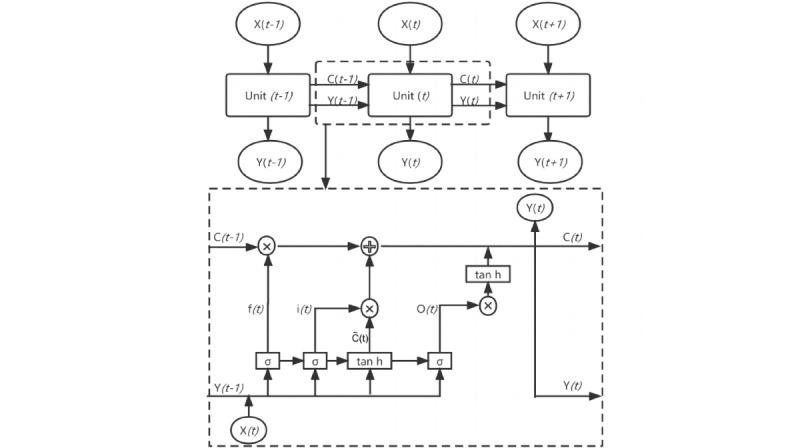
We retrospectively described the dynamics of COVID-19 and influenza in 6 World Health Organization (WHO) regions from January 2020 to March 2023 and used the long short-term memory machine learning model to learn potential patterns in previously observed activity and predict trends for the following 16 weeks. Finally, we used Spearman correlation coefficients to assess the past and future epidemiological correlation between these 2 respiratory infectious diseases.
RESULTS
With the emergence of the original strain of SARS-CoV-2 and other variants, influenza activity stayed below 10% for more than 1 year in the 6 WHO regions. Subsequently, it gradually rose as Delta activity dropped, but still peaked below Delta. During the Omicron pandemic and the following period, the activity of each disease increased as the other decreased, alternating in dominance more than once, with each alternation lasting for 3 to 4 months. Correlation analysis showed that COVID-19 and influenza activity presented a predominantly negative correlation, with coefficients above -0.3 in WHO regions, especially during the Omicron pandemic and the following estimated period. The diseases had a transient positive correlation in the European region of the WHO and the Western Pacific region of the WHO when multiple dominant strains created a mixed pandemic.
CONCLUSIONS
Influenza activity and past seasonal epidemiological patterns were shaken by the COVID-19 pandemic. The activity of these diseases was moderately or greater than moderately inversely correlated, and they suppressed and competed with each other, showing a seesaw effect. In the postpandemic era, this seesaw trend may be more prominent, suggesting the possibility of using one disease as an early warning signal for the other when making future estimates and conducting optimized annual vaccine campaigns.
背景
季节性流感活动在 COVID-19 出现初期急剧下降。这两种呼吸道传染病的动态及其未来趋势是否存在流行病学相关性,需要进行探讨。
目的
评估 COVID-19 与流感活动之间的相关性,并估计其未来的流行趋势。
方法
我们回顾性地描述了 2020 年 1 月至 2023 年 3 月期间世界卫生组织(WHO)6 个区域的 COVID-19 和流感动态,并使用长短时记忆机器学习模型学习之前观察到的活动中的潜在模式,并预测接下来 16 周的趋势。最后,我们使用 Spearman 相关系数评估这两种呼吸道传染病之间过去和未来的流行病学相关性。
结果
随着原始 SARS-CoV-2 株和其他变异株的出现,6 个 WHO 区域的流感活动在 1 年多的时间里一直保持在 10%以下。随后,随着 Delta 活动的下降,流感活动逐渐上升,但仍低于 Delta 峰值。在奥密克戎大流行及其后的时期,随着另一种疾病活动的减少,每种疾病的活动都有所增加,优势交替出现了不止一次,每次交替持续 3 到 4 个月。相关性分析表明,COVID-19 和流感活动呈现出主要的负相关,在 WHO 区域的相关系数超过-0.3,尤其是在奥密克戎大流行及其后的估计期间。当多种优势株造成混合大流行时,WHO 欧洲区域和 WHO 西太平洋区域的这两种疾病呈现出短暂的正相关。
结论
流感活动和过去的季节性流行模式受到 COVID-19 大流行的冲击。这两种疾病的活动呈中度或高度负相关,它们相互抑制和竞争,呈现出跷跷板效应。在后大流行时代,这种跷跷板趋势可能更加明显,这表明在进行未来估计和进行优化的年度疫苗接种活动时,有可能将一种疾病用作另一种疾病的早期预警信号。


 Zotero 插件