
严重急性呼吸综合征冠状病毒2与甲型流感病毒之间的病毒干扰
Viral interference between severe acute respiratory syndrome coronavirus 2 and influenza A viruses.
作者信息
Gilbert-Girard Shella, Piret Jocelyne, Carbonneau Julie, Hénaut Mathilde, Goyette Nathalie, Boivin Guy
机构信息
Research Center of the CHU de Québec-Université Laval, Quebec City, Quebec, Canada.
出版信息
PLoS Pathog. 2024 Jul 22;20(7):e1012017. doi: 10.1371/journal.ppat.1012017. eCollection 2024 Jul.
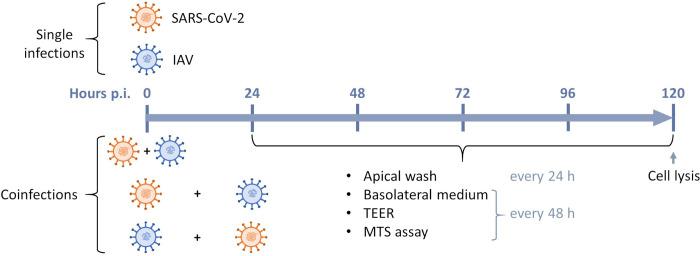
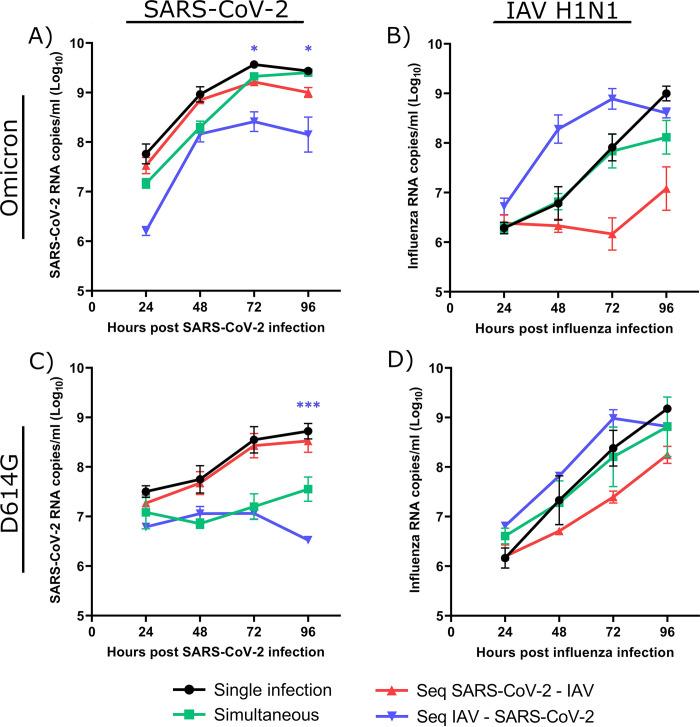
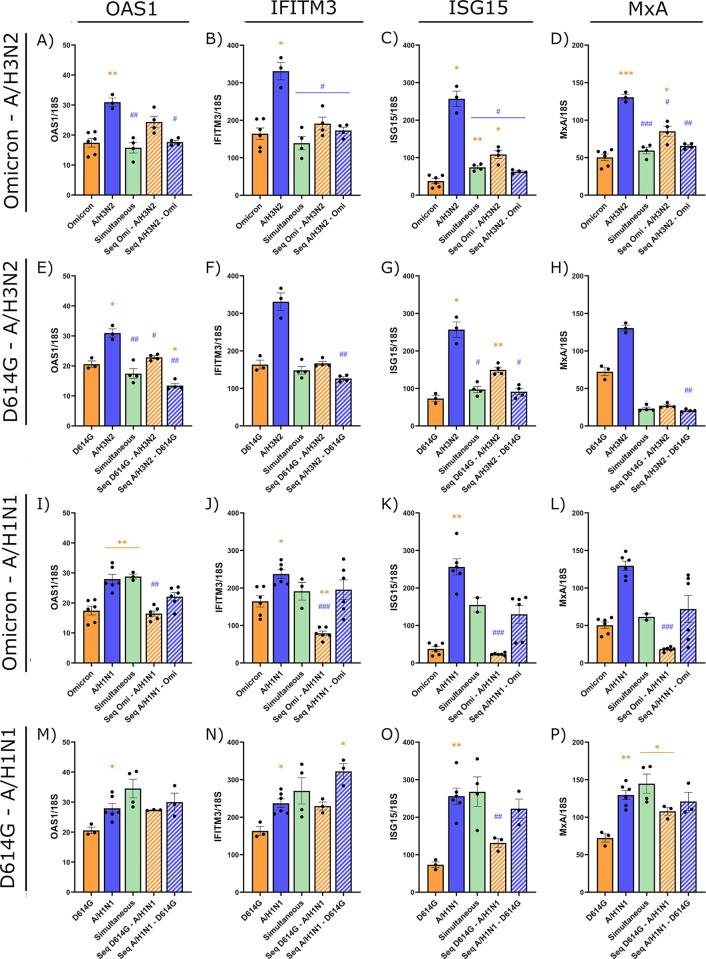
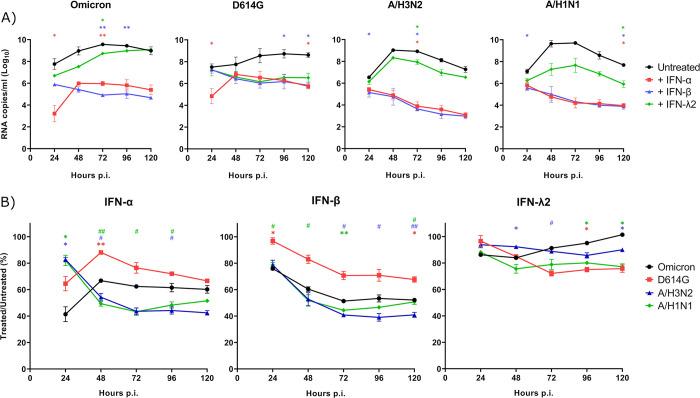
Some respiratory viruses can cause a viral interference through the activation of the interferon (IFN) pathway that reduces the replication of another virus. Epidemiological studies of coinfections between SARS-CoV-2 and other respiratory viruses have been hampered by non-pharmacological measures applied to mitigate the spread of SARS-CoV-2 during the COVID-19 pandemic. With the ease of these interventions, SARS-CoV-2 and influenza A viruses can now co-circulate. It is thus of prime importance to characterize their interactions. In this work, we investigated viral interference effects between an Omicron variant and a contemporary influenza A/H3N2 strain, in comparison with an ancestral SARS-CoV-2 strain and the 2009 pandemic influenza A/H1N1 virus. We infected nasal human airway epitheliums with SARS-CoV-2 and influenza, either simultaneously or 24 h apart. Viral load was measured by RT-qPCR and IFN-α/β/λ1/λ2 proteins were quantified by immunoassay. Expression of four interferon-stimulated genes (ISGs; OAS1/IFITM3/ISG15/MxA) was also measured by RT-droplet digital PCR. Additionally, susceptibility of each virus to IFN-α/β/λ2 recombinant proteins was determined. Our results showed that influenza A, and especially A/H3N2, interfered with both SARS-CoV-2 viruses, but that SARS-CoV-2 did not significantly interfere with A/H3N2 or A/H1N1. Consistently with these results, influenza, and particularly the A/H3N2 strain, caused a higher production of IFN proteins and expression of ISGs than SARS-CoV-2. SARS-CoV-2 induced a marginal IFN production and reduced the IFN response during coinfections with influenza. All viruses were susceptible to exogenous IFNs, with the ancestral SARS-CoV-2 and Omicron being less susceptible to type I and type III IFNs, respectively. Thus, influenza A causes a viral interference towards SARS-CoV-2 most likely through an IFN response. The opposite is not necessarily true, and a concurrent infection with both viruses leads to a lower IFN response. Taken together, these results help us to understand how SARS-CoV-2 interacts with another major respiratory pathogen.
一些呼吸道病毒可通过激活干扰素(IFN)途径引发病毒干扰,从而减少另一种病毒的复制。在新冠疫情期间,为减轻新冠病毒传播而采取的非药物措施阻碍了对新冠病毒与其他呼吸道病毒合并感染的流行病学研究。随着这些干预措施的放宽,新冠病毒和甲型流感病毒现在可以共同传播。因此,表征它们之间的相互作用至关重要。在这项研究中,我们调查了奥密克戎变体与当代甲型H3N2流感毒株之间的病毒干扰效应,并与原始新冠病毒毒株和2009年甲型H1N1大流行性流感病毒进行了比较。我们用新冠病毒和流感病毒同时或间隔24小时感染人鼻气道上皮细胞。通过逆转录定量聚合酶链反应(RT-qPCR)测量病毒载量,通过免疫测定法定量干扰素-α/β/λ1/λ2蛋白。还通过逆转录液滴数字PCR测量四个干扰素刺激基因(ISG;OAS1/IFITM3/ISG15/MxA)的表达。此外,还测定了每种病毒对干扰素-α/β/λ2重组蛋白的敏感性。我们的结果表明,甲型流感,尤其是H3N2,会干扰两种新冠病毒,但新冠病毒不会显著干扰H3N2或H1N1。与这些结果一致的是,流感,尤其是H3N2毒株,比新冠病毒引发了更高水平的干扰素蛋白产生和ISG表达。新冠病毒在与流感合并感染期间诱导产生少量干扰素,并降低了干扰素反应。所有病毒对外源干扰素均敏感,原始新冠病毒和奥密克戎分别对I型和III型干扰素敏感性较低。因此,甲型流感很可能通过干扰素反应对新冠病毒产生病毒干扰。反之则不一定成立,两种病毒同时感染会导致较低的干扰素反应。综上所述,这些结果有助于我们了解新冠病毒与另一种主要呼吸道病原体的相互作用方式。



 Zotero 插件