
新冠疫情后流感、呼吸道合胞病毒及其他呼吸道病毒的季节性变化:墨西哥哈利斯科州的一项八年回顾性研究
Seasonal Shifts in Influenza, Respiratory Syncytial Virus, and Other Respiratory Viruses After the COVID-19 Pandemic: An Eight-Year Retrospective Study in Jalisco, Mexico.
作者信息
Quintero-Salgado Ernestina, Briseno-Ramírez Jaime, Vega-Cornejo Gabriel, Damian-Negrete Roberto, Rosales-Chavez Gustavo, De Arcos-Jiménez Judith Carolina
机构信息
State Public Health Laboratory, Zapopan 45170, Jalisco, Mexico.
Health Division, Tlajomulco University Center, University of Guadalajara, Tlajomulco de Zuñiga 45641, Jalisco, Mexico.
出版信息
Viruses. 2024 Dec 8;16(12):1892. doi: 10.3390/v16121892.
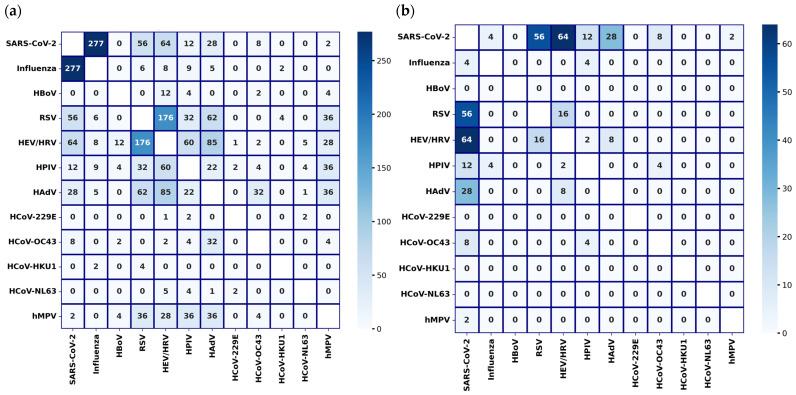
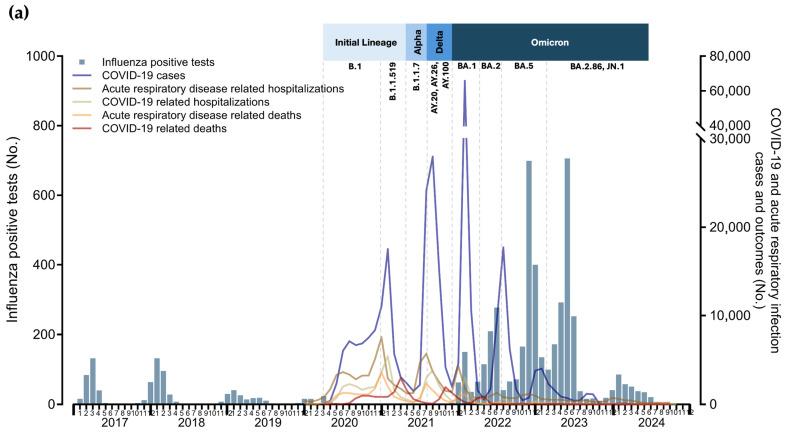
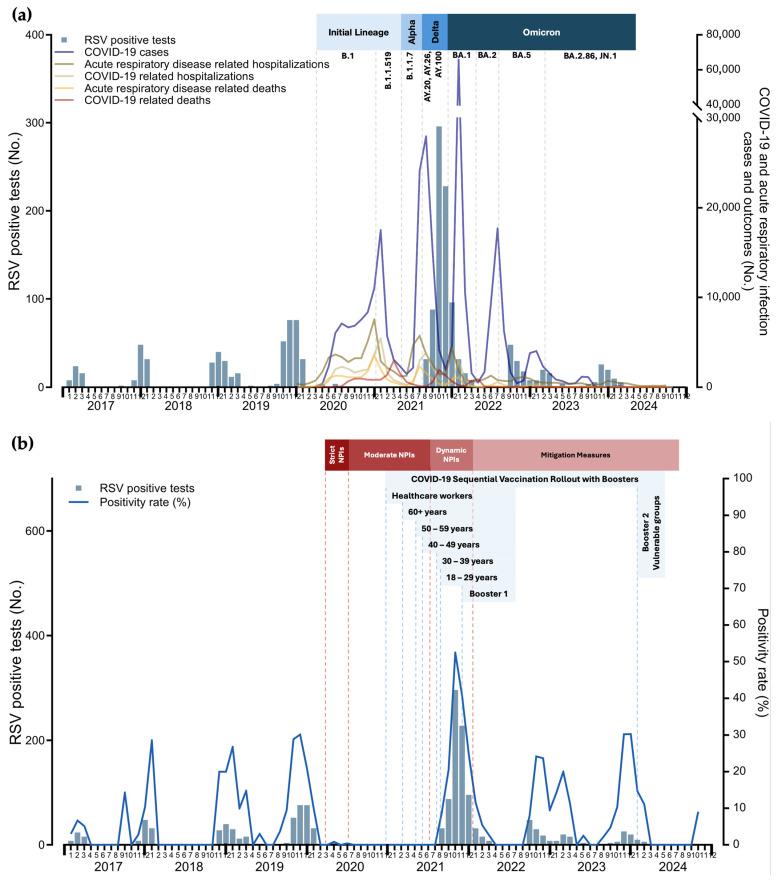
The coronavirus disease 2019 (COVID-19) pandemic profoundly disrupted the epidemiology of respiratory viruses, driven primarily by widespread non-pharmaceutical interventions (NPIs) such as social distancing and masking. This eight-year retrospective study examines the seasonal patterns and incidence of influenza virus, respiratory syncytial virus (RSV), and other respiratory viruses across pre-pandemic, pandemic, and post-pandemic phases in Jalisco, Mexico. Weekly case counts were analyzed using an interrupted time series (ITS) model, segmenting the timeline into these three distinct phases. Significant reductions in respiratory virus circulation were observed during the pandemic, followed by atypical resurgences as NPIs were relaxed. Influenza displayed alternating subtype dominance, with influenza A H3 prevailing in 2022, influenza B surging in 2023, and influenza A H1N1 increasing thereafter, reflecting potential immunity gaps. RSV activity was marked by earlier onset and higher intensity post-pandemic. Other viruses, including human rhinovirus/enterovirus (HRV/HEV) and parainfluenza virus (HPIV), showed altered dynamics, with some failing to return to pre-pandemic seasonality. These findings underscore the need for adaptive surveillance systems and vaccination strategies to address evolving viral patterns. Future research should investigate the long-term public health implications, focusing on vaccination, clinical outcomes, and healthcare preparedness.
2019年冠状病毒病(COVID-19)大流行极大地扰乱了呼吸道病毒的流行病学,主要是由社交距离和戴口罩等广泛的非药物干预措施(NPIs)驱动的。这项为期八年的回顾性研究调查了墨西哥哈利斯科州在大流行前、大流行期间和大流行后阶段流感病毒、呼吸道合胞病毒(RSV)及其他呼吸道病毒的季节性模式和发病率。使用中断时间序列(ITS)模型分析每周的病例数,将时间线分为这三个不同阶段。在大流行期间观察到呼吸道病毒传播显著减少,随着非药物干预措施的放松,随后出现了非典型的复苏。流感显示出交替的亚型优势,2022年甲型H3流感占主导,2023年乙型流感激增,此后甲型H1N1流感增加,反映出潜在的免疫差距。呼吸道合胞病毒的活动特点是大流行后发病更早、强度更高。包括人鼻病毒/肠道病毒(HRV/HEV)和副流感病毒(HPIV)在内的其他病毒显示出动态变化,一些病毒未能恢复到大流行前的季节性规律。这些发现强调了需要适应性监测系统和疫苗接种策略来应对不断变化的病毒模式。未来的研究应调查长期的公共卫生影响,重点关注疫苗接种、临床结果和医疗准备情况。


 Zotero 插件