
SARS-CoV-2 的多种动物源性的分子流行病学。
The molecular epidemiology of multiple zoonotic origins of SARS-CoV-2.
机构信息
Bioinformatics and Systems Biology Graduate Program, University of California, San Diego, La Jolla, CA 92093, USA.
Department of Biomedical Informatics, University of California, San Diego, La Jolla, CA 92093, USA.
出版信息
Science. 2022 Aug 26;377(6609):960-966. doi: 10.1126/science.abp8337. Epub 2022 Jul 26.
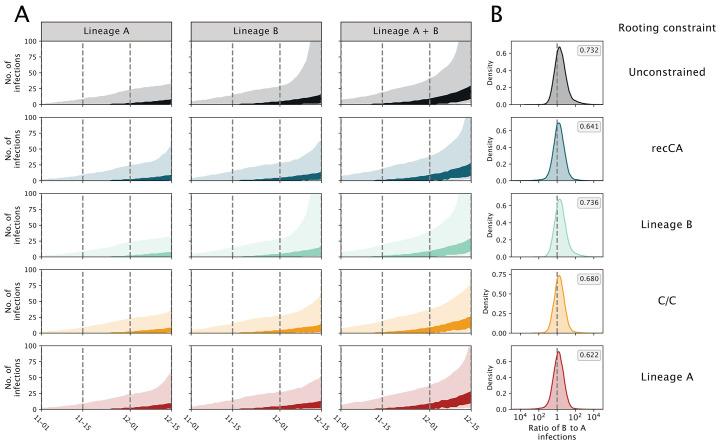
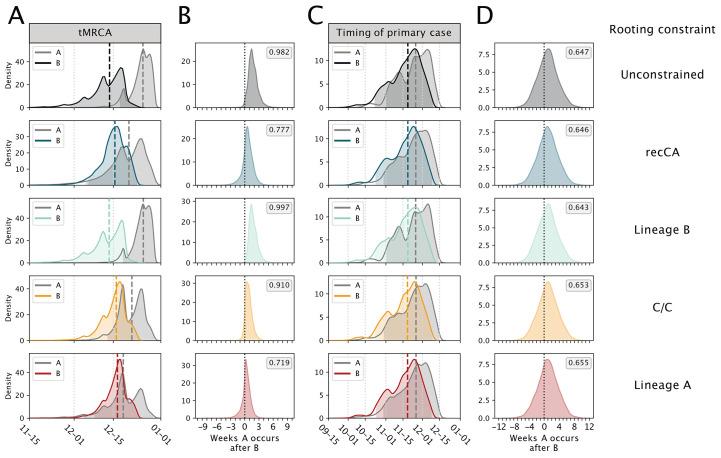
Understanding the circumstances that lead to pandemics is important for their prevention. We analyzed the genomic diversity of severe acute respiratory syndrome coronavirus 2 (SARS-CoV-2) early in the coronavirus disease 2019 (COVID-19) pandemic. We show that SARS-CoV-2 genomic diversity before February 2020 likely comprised only two distinct viral lineages, denoted "A" and "B." Phylodynamic rooting methods, coupled with epidemic simulations, reveal that these lineages were the result of at least two separate cross-species transmission events into humans. The first zoonotic transmission likely involved lineage B viruses around 18 November 2019 (23 October to 8 December), and the separate introduction of lineage A likely occurred within weeks of this event. These findings indicate that it is unlikely that SARS-CoV-2 circulated widely in humans before November 2019 and define the narrow window between when SARS-CoV-2 first jumped into humans and when the first cases of COVID-19 were reported. As with other coronaviruses, SARS-CoV-2 emergence likely resulted from multiple zoonotic events.
了解导致大流行的情况对于大流行的预防很重要。我们在 2019 年冠状病毒病(COVID-19)大流行早期分析了严重急性呼吸综合征冠状病毒 2(SARS-CoV-2)的基因组多样性。我们表明,2020 年 2 月之前,SARS-CoV-2 的基因组多样性可能仅由两个不同的病毒谱系表示为“A”和“B”。系统发育树根方法结合流行模拟表明,这些谱系是至少两次单独的跨物种传播事件进入人类的结果。第一次人畜共患病传播可能涉及 2019 年 11 月左右的 B 谱系病毒(10 月 23 日至 12 月 8 日),而 A 谱系的单独引入可能发生在该事件发生后的数周内。这些发现表明,SARS-CoV-2 在 2019 年 11 月之前在人类中广泛传播的可能性不大,并确定了 SARS-CoV-2 首次跳跃到人类和首次报告 COVID-19 病例之间的狭窄窗口。与其他冠状病毒一样,SARS-CoV-2 的出现可能是多次人畜共患病事件的结果。

 Zotero 插件